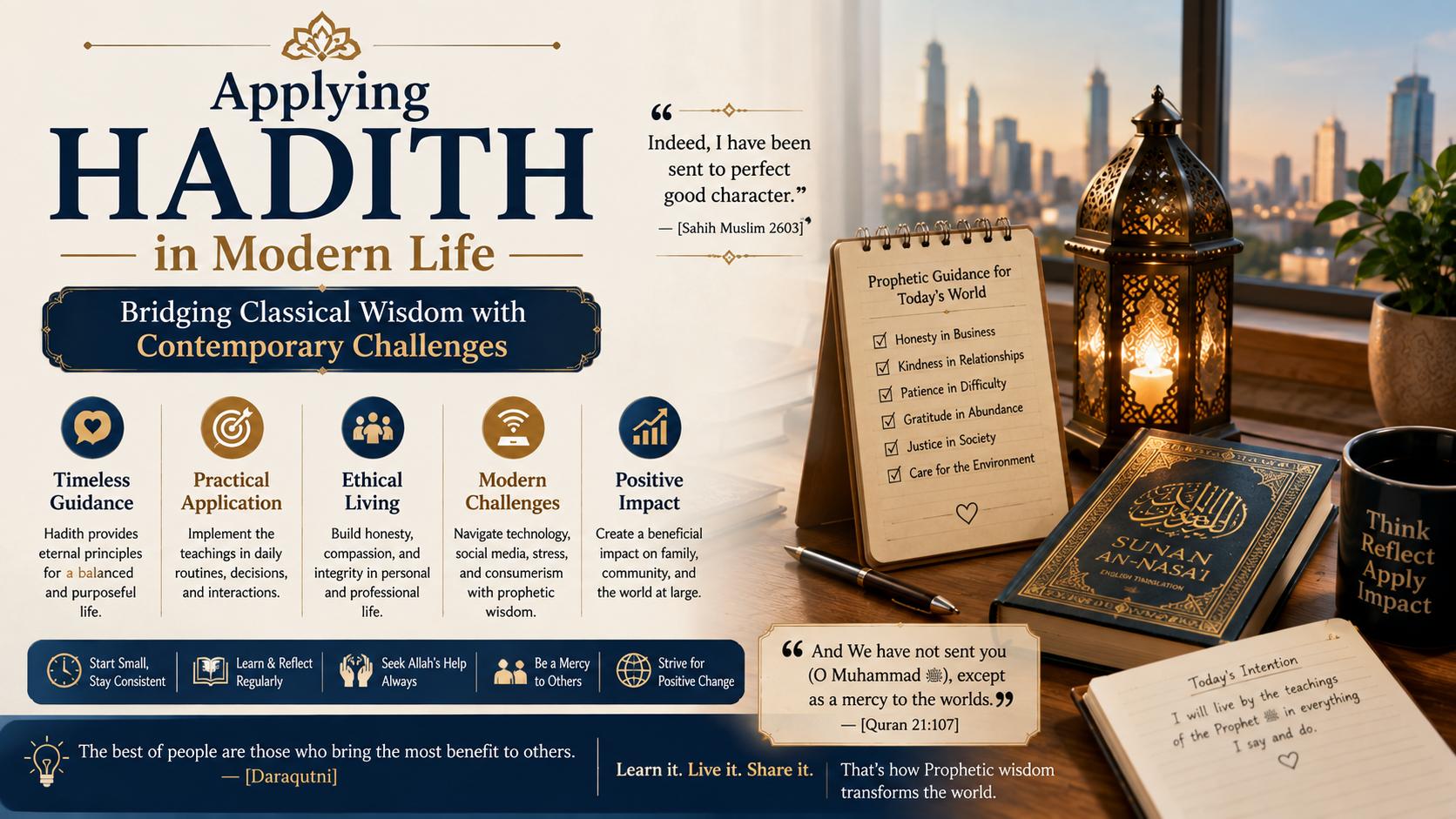
The relevance of prophetic guidance to twenty-first-century life sometimes raises questions about applicability across temporal and cultural distance. How do hadiths about seventh-century Arabian society address digital-age dilemmas? What does prophetic teaching offer regarding bioethical decisions, environmental crises, or global economic systems unimaginable in prophetic era? Exploring principled approaches to applying hadith in modern contexts reveals timeless wisdom capable of addressing novel situations through established interpretive frameworks.
General principles (qawa’id) extracted from hadith literature provide flexible guidance transcending specific contexts. The Prophet’s command to “give the worker his wage before his sweat dries” establishes labor justice principle applicable from construction sites to gig economy platforms. His prohibition of harm (la darar wa la dirar) creates basis for environmental regulation, consumer protection, and public health policy. These broad directives accommodate technological change while maintaining ethical constants.
Contextual consideration (taqdir) distinguishes between universal lessons and culturally specific applications. The Prophet’s specific dietary preferences (loving honey, disliking lizard meat) differ from binding nutritional principles (halal/haram distinctions, moderation, gratitude). Transportation modes changed from camels to cars to planes, but travel etiquettes—supplications, shortened prayers, leadership protocols—adapt smoothly when underlying purposes understood.
Scholarly consensus (ijma’) and analogical reasoning (qiyas) extend hadith coverage to unprecedented situations. Early jurists derived rulings on paper currency from gold/silver standards, applied commercial contract principles to electronic transactions, and extrapolated privacy protections to digital communications. This dynamic methodology keeps Islamic law responsive without sacrificing revealed foundations.
Prioritization (tarjih) helps when hadiths apparently conflict or when multiple principles compete. The Prophet’s emphasis on intentions over outcomes, mercy over strict justice in discretionary matters, ease over hardship, and greater goods over lesser ones provides hierarchy for decision-making. Complex modern scenarios often require weighing multiple legitimate factors—something the hadith tradition anticipates through nuanced examples.
Ethical business applications draw heavily from commercial hadiths. Prohibition of interest (riba), requirement of full disclosure, banning of deception (gharar), and mandate of contractual clarity directly inform Islamic finance alternatives gaining global traction. The Prophet’s market oversight—checking measurements, removing obstacles, protecting consumers—models regulatory frameworks needed in contemporary economies.
Social media behavior finds surprising prophetic parallels. Commands against backbiting (ghiba), slander (buhtan), and spying (tajassus) map onto cyberbullying, fake news propagation, and privacy invasion. The Prophet’s guidance on verifying information before spreading (“It is sufficient falsehood for man to relate all he hears”) prefigures fact-checking responsibilities in information-saturated environments.
Bioethical questions regarding end-of-life care, genetic engineering, and reproductive technologies benefit from foundational hadiths about sanctity of life, bodily autonomy, and intention purity. While specific procedures weren’t addressed, principles guiding decision-making were firmly established—respecting human dignity, preventing harm, seeking cure while accepting divine decree, and prioritizing genuine welfare over mere prolongation of biological function.
Environmental applications gain urgency from hadiths emphasizing creation’s praise of Allah, human stewardship responsibility, prohibition of waste, and animal welfare mandates. Climate change, biodiversity loss, and pollution represent collective violations of prophetic environmental ethics requiring corrective action grounded in these teachings.
Psychological wellbeing connections emerge from hadiths on contentment (rida), trust in Allah (tawakkul), gratitude (shukr), and community support. Mental health challenges rising globally find preventive and therapeutic resources in prophetic guidance on balanced living, meaningful purpose, social connection, and spiritual practice—areas increasingly validated by positive psychology research.
Implementation challenges include distinguishing authentic from fabricated hadiths, avoiding superficial proof-texting, resisting cultural appropriation that strips teachings from context, and developing competent scholarly capacity for contemporary ijtihad (independent reasoning). These hurdles are surmountable through proper education and institutional support.
Living hadith application ultimately requires sincere intention, adequate knowledge, contextual awareness, and humble consultation. No individual masters all relevant traditions; community deliberation produces better outcomes than isolated reasoning. The Prophet’s community model—consultation, consensus-seeking, and submission to best understanding of divine guidance—provides template for navigating modern complexities while remaining anchored in prophetic wisdom.