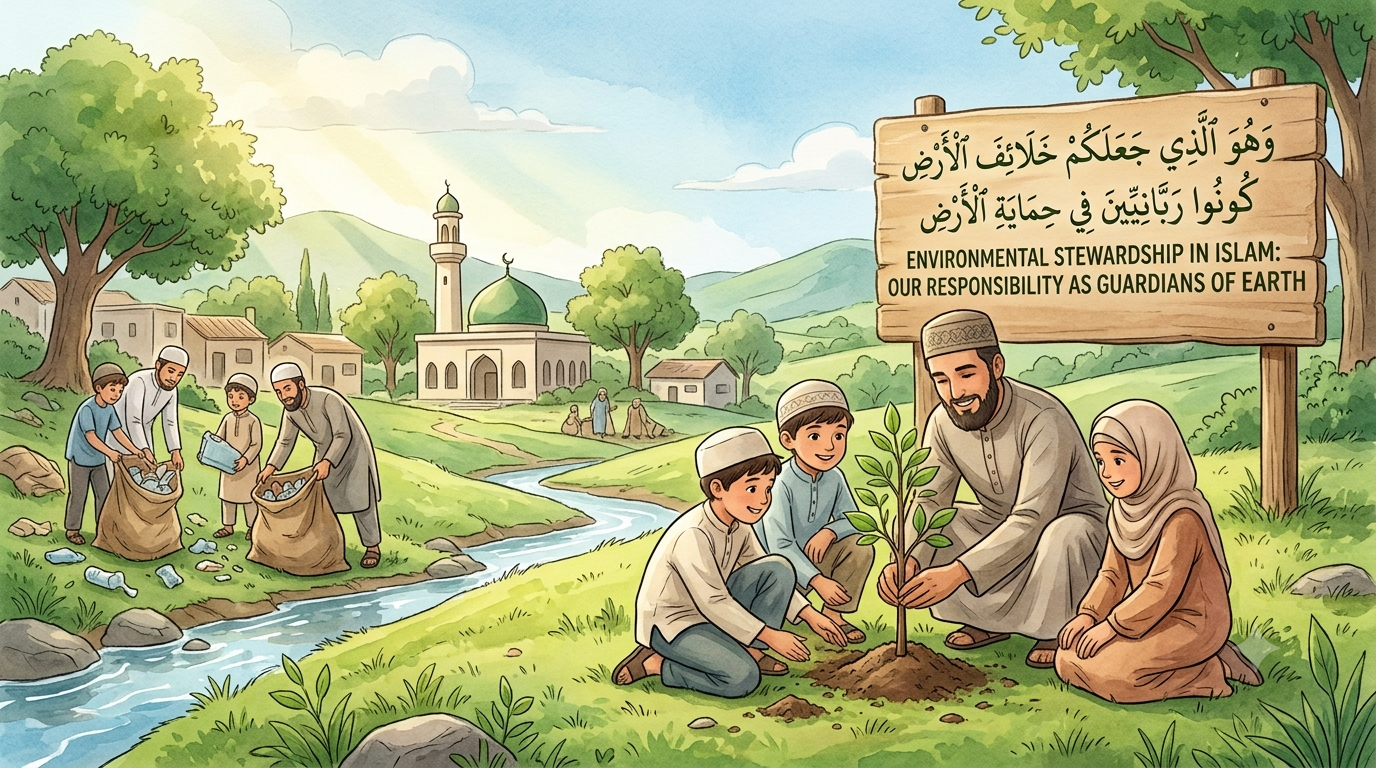
Islamic teachings on environmental stewardship offer profound guidance for contemporary ecological crises. The Quran and Sunnah establish clear principles regarding humanity’s role as trustees (khalifah) of Earth, our accountability for resource consumption, and the sacred nature of creation itself. These teachings, articulated fourteen centuries ago, remarkably anticipate modern environmental science’s conclusions about sustainable living and planetary limits. The concept of khalifah (trusteeship/guardianship) establishes fundamental relationship between humans and environment. Quranic verse (2:30) announces Allah’s intention to place “;a successor (khalifah)”; on Earth—indicating role of responsible stewardship rather than unlimited exploitation.
Humans hold creation in trust, accountable to Owner for how we manage resources during our temporary tenure. This theological framework transforms environmental concern from optional virtue into sacred duty. Ayat (signs) of Allah permeate natural world according to Quranic teaching. Mountains, rivers, seasons, celestial bodies, plant and animal life—all display Creator’s power and wisdom. Contemplating nature’s wonders strengthens faith while simultaneously generating appreciation that naturally leads to protective attitudes. Destroying creation means destroying evidence of Allah’s existence—an act of profound ingratitude (kufr). Waste prohibition (israf) appears repeatedly in Quranic guidance. “;Eat and drink, but waste not by excess—indeed, He likes not those who waste”; (7:31). This concise command establishes anti-consumption ethic directly relevant to modern overproduction, planned obsolescence, and throwaway culture. Islamic economics traditionally emphasized durability, repairability, and conservation—values urgently needed today. Animal welfare receives specific prophetic attention. Multiple hadiths prohibit animal cruelty, mandate proper treatment of livestock, and even extend compassion to animals used for transport or burden. The story of woman entering paradise for giving water to thirsty dog illustrates how mercy toward creatures earns divine reward. Contemporary factory farming practices would likely violate Islamic principles regarding animal treatment. Water conservation holds particular importance in Islamic teaching. Wudu (ritual ablution) itself models water efficiency—even from running tap, the Prophet used minimal water (approximately half liter to one liter). Prohibitions against polluting water sources, wasting water even when abundance exists, and using clean water for unnecessary purposes establish framework for sustainable water ethics especially crucial as freshwater scarcity intensifies globally. Trees and planting receive explicit prophetic endorsement. “;If the Final Hour comes while you have a palm-cutting in your hands and it is possible to plant it before the Hour comes, you should plant it”; (Ahmad). This remarkable hadith demonstrates continued environmental action even when apparent futility suggests otherwise—planting trees remains valuable regardless of whether one benefits from growth. Climate change response draws upon multiple Islamic principles. Prevention of harm (darar) is established legal maxim—actions causing environmental damage violate this principle. Public interest (maslaha) supports collective action addressing threats affecting entire populations. Intergenerational equity reflects Islamic emphasis on leaving inheritance for descendants—including inherited environmental quality. Carbon footprint reduction becomes religious obligation under these frameworks. Practical applications span lifestyle domains. Dietary choices affect environmental impact significantly—reducing meat consumption (without eliminating it), choosing local produce, avoiding wasteful packaging. Transportation decisions reflect environmental consciousness—public transit, carpooling, fuel-efficient vehicles. Home energy use offers opportunities for conservation—efficient appliances, reasonable temperature settings, minimizing standby consumption. Consumer choices support or undermine sustainability—repairing rather than replacing, buying quality items lasting years, avoiding fast fashion and disposable products. Islamic environmental movements have emerged globally. Green mosques initiatives reduce community carbon footprints while modeling sustainable practices. Islamic environmental organizations advocate policy changes rooted in religious teachings. Educational programs integrate ecological awareness into religious curricula. Hajj pilgrimage generates enormous environmental impact that authorities and scholars work to reduce through various initiatives. The spiritual dimension elevates environmentalism beyond mere pragmatism. Caring for creation expresses love for Creator. Protecting ecosystems honors divine artistry displayed in nature’s complexity and beauty. Conserving resources acknowledges Allah as true Provider (ar-Razzaq) whose bounty we must not squander. This integration of practical ecology with deep spirituality distinguishes Islamic environmental ethics from purely secular
approaches. Future generations will judge whether contemporary Muslims fulfilled trustee responsibility. Environmental decisions made today determine what kind of planet we bequeath to children and grandchildren. Islamic tradition offers wisdom accumulated over millennia—now is time to apply that wisdom to greatest challenge facing humanity’s shared home.