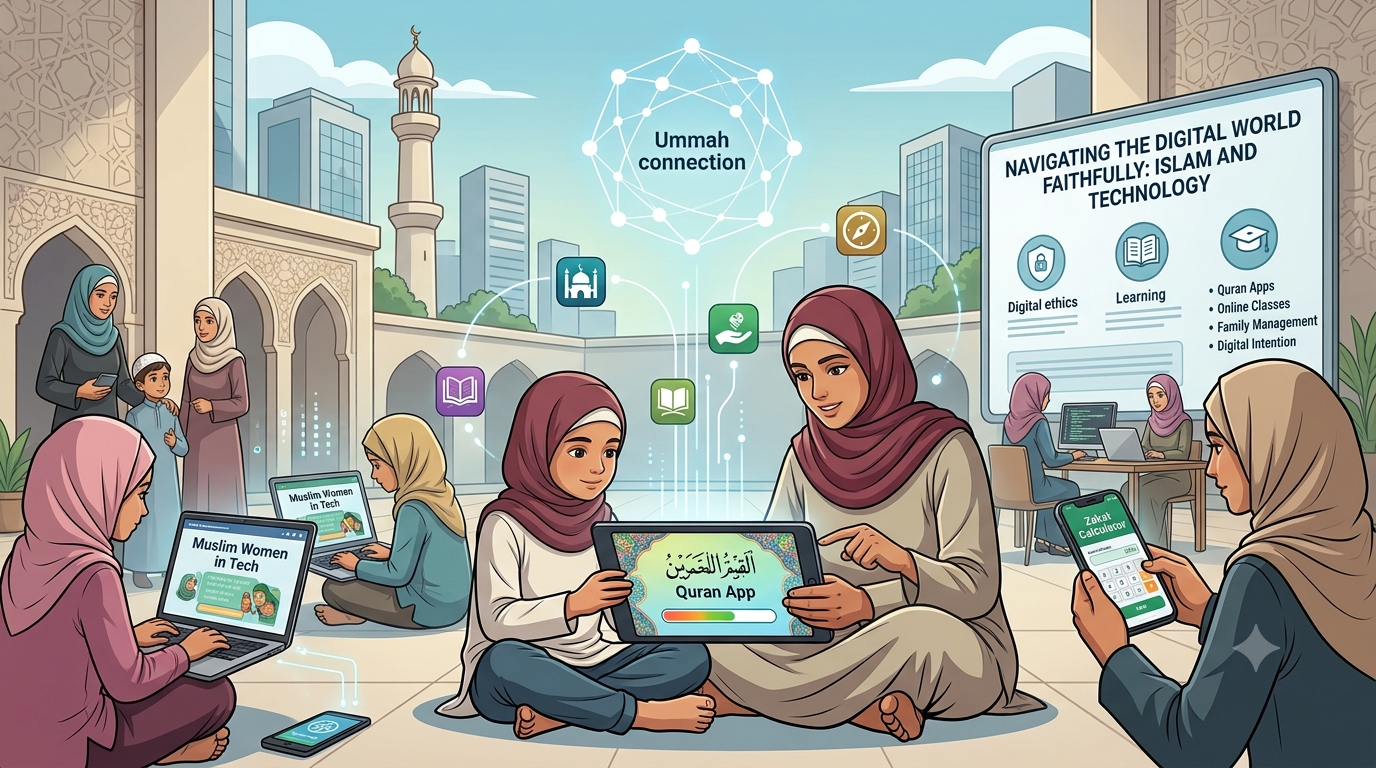
Technology has transformed every aspect of human life—including religious practice, community formation, knowledge acquisition, and moral decision-making. For Muslims navigating digital landscape, questions abound: How does social media affect spirituality? What constitutes permissible online content? Can technology enhance religious practice or only distract from it? How do classical Islamic principles apply to unprecedented technological capabilities? Islamic jurisprudence (fiqh) has begun developing systematic responses to these questions, though rapid technological change constantly generates new challenges requiring fresh consideration. Social media presents double-edged sword for Muslim communities. Positive applications include spreading beneficial knowledge (dawah), connecting global Ummah across geographical distances, accessing scholarly resources previously available only to elite students, organizing charitable campaigns efficiently, and providing platforms for voices traditionally marginalized. Negative impacts include distraction from worship through endless scrolling, exposure to prohibited content, comparison culture damaging to contentment and gratitude, cyberbullying and harassment, spread of misinformation including religious misinformation, and erosion of face-to-face community bonds. Discerning use requires conscious intentionality about why, how, and how much we engage digitally. Smartphone usage has become central concern for many Muslims. The device accompanying us everywhere offers constant connectivity—to information, entertainment, social interaction, and temptation. Notification interruptions fragment attention needed for focused prayer and Quran reading. Bedtime phone use displaces sleep and night prayers (tahajjud). Even bathroom usage (where remembering Allah is recommended) now typically involves phone engagement. Developing healthy relationships with technology requires establishing boundaries, creating phone-free zones and times, using apps that support rather than undermine spiritual goals, and regularly auditing digital habits against Islamic values. Artificial intelligence raises novel questions deserving serious scholarly attention. AI-generated content—including text, images, fatwas, and potentially Quranic exegesis—challenges concepts of authorship, authority, and authenticity. Automation threatens employment for millions of Muslims worldwide, raising questions about economic justice and social responsibility. Surveillance technologies enabled by AI create privacy concerns with Islamic dimensions (protection of honor and secrecy). Autonomous weapons systems implicate principles of warfare ethics. These developments require proactive engagement from Muslim technologists, scholars, and policymakers. Financial technology (fintech) intersects with Islamic finance principles in complex ways. Cryptocurrencies raise questions about intrinsic value, speculation prohibition (maysir), and monetary theory from Islamic perspective. Digital payment systems facilitate transactions but may enable forbidden commerce. Buy-now-pay-later services mimic interest-based lending structures. Meanwhile, fintech also enables innovative halal investment platforms, zakat calculation apps, and interest-free financing alternatives. The technology itself is neutral; applications range from clearly permissible to clearly forbidden with vast gray zone between. Online learning has revolutionized Islamic education. Students anywhere can access classes with renowned scholars, study Arabic language, memorize Quran with tajweed guidance, and pursue advanced degrees in Islamic studies without relocating. This democratization of religious education represents tremendous benefit. Yet limitations exist—absence of direct teacher-student relationship (suhba) traditionally considered essential for transmission of sacred knowledge, difficulty verifying credentials and qualifications of online teachers, lack of communal learning environment, and challenges maintaining motivation and consistency in self-paced formats. Gaming and virtual reality present emerging considerations. Time consumption obviously concerns—hours spent gaming displace worship, study,
family time, and productive work. Content issues include violence, sexual imagery, gambling mechanics (loot boxes), and themes contradicting Islamic values. Virtual reality adds immersion layer making virtual experiences more impactful—for better or worse. Metaverse concepts raise questions about virtual presence, avatar behavior, and whether actions in virtual spaces carry moral weight. Some games offer genuinely educational or artistic value; others provide harmless entertainment; still others pose clear spiritual dangers. Family technology management represents practical priority for Muslim households. Screen time limits for children, content filtering, modeling healthy digital habits, creating tech-free family times, discussing online safety and values—these practices help raise digitally savvy yet spiritually grounded young Muslims. Avoiding both excessive restriction (driving children to secrecy) and excessive permissiveness (abandoning children to algorithmic influence) requires wisdom adapted to each child’s age, temperament, and circumstances. The fundamental principle guiding technology use comes down to intention (niyyah) and consequence. Technology serving beneficial purposes, used with moderation, subordinated to higher priorities, and employed with consciousness of accountability before Allah—this represents faithful digital engagement. Technology dominating attention, facilitating sin, displacing worship, or addicting users—this requires radical reevaluation regardless of convenience or social pressure. Muslims have opportunity to model balanced, intentional technology use that witnesses to possibility of ancient faith thriving in digital age.