Media representation profoundly shapes how Muslims are perceived globally and how Muslims perceive themselves. From Hollywood stereotypes to news coverage of terrorism, from social media algorithms to Muslim-produced content platforms, the information ecosystem surrounding Islam and Muslims carries enormous weight for international relations, community relations, and individual wellbeing. Analyzing current representation patterns, identifying problems, and developing constructive strategies for improvement serves Muslims and non-Muslims alike seeking accurate understanding and respectful coexistence. Historical evolution of Muslim media representation reveals enduring patterns punctuated by shifts. Colonial era depicted Muslims as exotic, backward, threatening, or comic—supporting imperial projects by justifying “;civilizing mission.”; Mid-twentieth century saw slightly more nuanced portrayals amid Cold War framing (Muslims as anti-communist allies or Soviet-influenced threats). Iranian revolution (1979) introduced “;Islamic fundamentalism”; as dominant media frame that intensified after Soviet-Afghan war (mujahideen as freedom fighters until they became Taliban), Gulf Wars, and culminates catastrophically in post-9/11 coverage. Each period’s representations drew from existing cultural reservoirs (Orientalist painting, colonial administration literature, travel writing) while adapting to contemporary political needs. News coverage patterns demonstrate measurable bias in multiple studies. Terrorism perpetrated by Muslims receives dramatically more coverage than terrorism by non-Muslims—even when casualty counts favor reverse weighting. “;Muslim”; or “;Islamic”; modifiers appear routinely for violence by Muslims but rarely for violence by adherents of other faiths (contrast “;Islamic terrorist”; with absence of “;Christian terrorist”; or “;Hindu nationalist terrorist”; in equivalent coverage). Contextual information (political grievances, historical background, civilian harm from counterterrorism) appears less consistently for Muslim-related conflicts than others. Visual imagery favors veiled women, angry men, mosques, desert landscapes—reinforcing exoticization regardless of story’s actual subject matter. These patterns occur across outlets nominally spanning political spectrum, suggesting structural factors beyond explicit editorial bias. Entertainment media perpetuates stereotypes even more blatantly than news. Hollywood’s history of Arab/Muslim villains (from early desert sheikhs to contemporary bomb-plot terrorists) creates association between Muslim identity and violence in audiences’ unconscious minds. Television shows rarely
feature normal Muslim characters going about ordinary lives—when Muslims appear, plot usually involves terrorism, honor violence, or cultural clash drama. Video games frequently cast Muslims/Arabs as enemy combatants. Advertising either excludes Muslims entirely or departs into exotic Orientalism. These representations accumulate into background assumption that “;normal”; means non-Muslim, making Muslim presence remarkable by definition. Social media introduces new dynamics—both problematic and promising. Algorithmic amplification rewards outrage-inducing content, which often means extreme Muslim voices (both jihadist propagandists and Islamophobes) gain disproportionate reach compared to moderate mainstream perspectives. Echo chambers reinforce existing prejudices. Harassment of visible Muslims (especially women wearing hijab) occurs routinely across platforms. Yet social media also enables Muslim content creators bypassing traditional gatekeepers: YouTubers, Instagram influencers, TikTok creators presenting relatable Muslim life, podcasters discussing Islamic topics accessibly, Twitter/X commentators providing real-time perspective on news events. This democratization of representation offers corrective potential unprecedented in media history. The impact of negative representation affects multiple domains. Politically, hostile public opinion enables discriminatory policies (travel bans, surveillance programs, immigration restrictions) with popular support. Economically, employment discrimination affects Muslims in hiring, promotion, and entrepreneurial funding. Socially, Muslim children face bullying and identity confusion; adults experience microaggressions and social exclusion. Psychologically, constant exposure to negative imagery about one’s group correlates with mental health challenges. Security-wise, alienated populations become more vulnerable to recruitment by extremist groups claiming to defend Muslims against hostile world. Representation thus constitutes not merely symbolic concern but practical matter with material consequences for millions. Muslim-world media ecosystems present their own challenges. State-controlled media in many Muslim-majority countries serve government propaganda rather than accurate information. Commercial media often sensationalizes, avoids sensitive topics, or reinforces sectarian prejudices. Religious media ranges from scholarly depth to demagoguery. Quality journalism exists (Al Jazeera English at times, TRT World, various independent outlets) but competes with better-funded Western counterparts for global audience attention. Language barriers limit cross-cultural communication: Arabic-language discourse rarely reaches English speakers; Urdu, Persian, Bahasa Indonesia, Turkish, and other Muslim-world languages remain inaccessible to most international observers. Strategies for improving representation operate at multiple levels. Individual level: Muslims sharing authentic stories through social media, participating in mainstream media as sources and experts, correcting misinformation calmly and consistently, supporting Muslim creators financially. Organizational level: Muslim organizations developing media relations capacity, training spokespeople, producing quality content, partnering with sympathetic non-Muslim outlets. Industry level: advocating for diversity in newsrooms and production companies, supporting research documenting bias, creating awards recognizing accurate representation, filing complaints with regulatory bodies where appropriate. Policy level: supporting media literacy education, opposing censorship (even of offensive content, preferring counterspeech), promoting platform accountability for algorithmic harms, funding public broadcasting with diversity mandates. Interfaith coalition building amplifies these efforts: Jewish, Christian, Sikh, Hindu, and other faith communities facing stereotyping can ally around shared interests in fair representation. Academic research informs strategy through documentation (quantifying representation patterns), theorizing (explaining mechanisms producing bias), and evaluation (assessing intervention effectiveness). Media studies programs increasingly incorporate critical analysis of
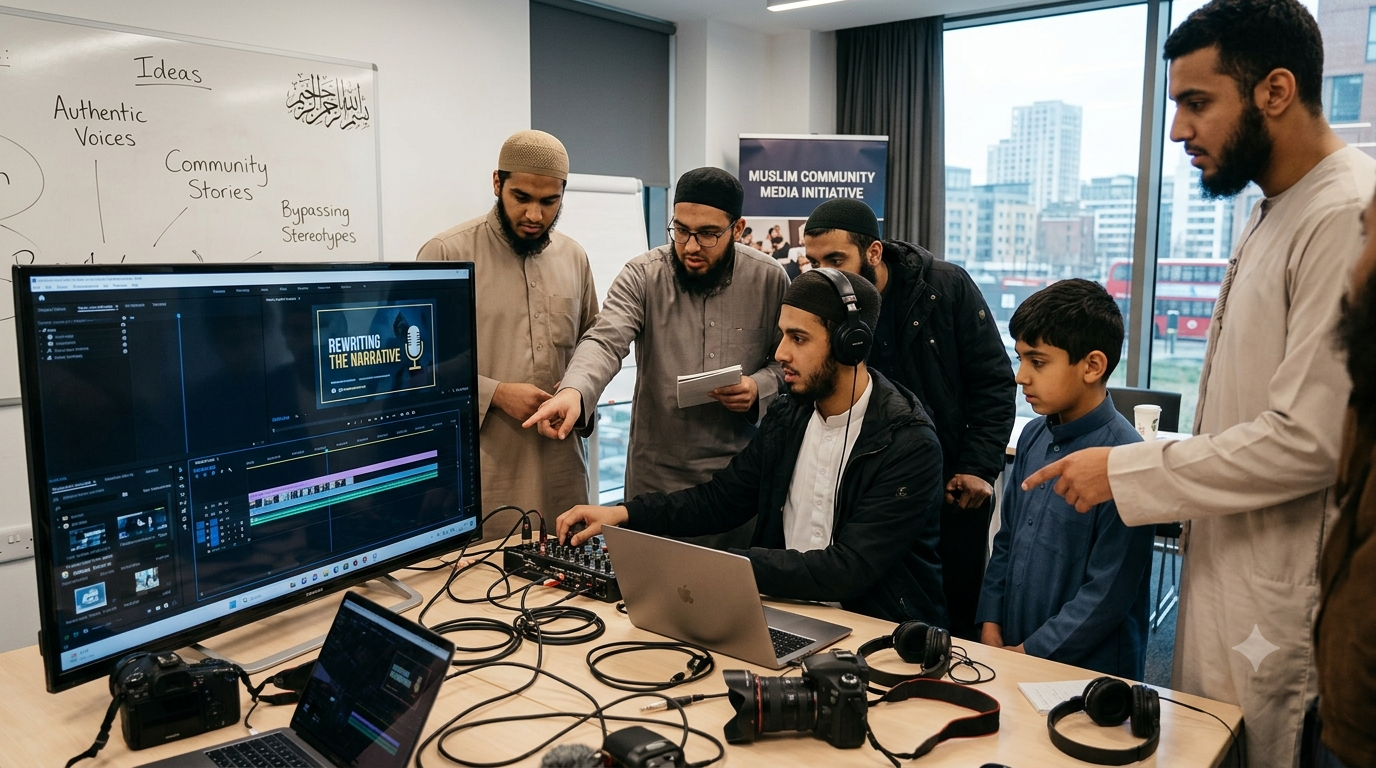
Islamophobia and representation; more needed. Journalists benefit from training on Islam/Muslims that moves beyond terrorism focus to cover religion, culture, politics, and ordinary life knowledgeably. The emergence of Muslim-owned media platforms represents significant development. Streaming services (like Halaflix attempting Netflix-style content for Muslim audiences), news sites (Muslim Insider, AboutIslam, various national outlets), podcasts (Muslim Central, etc.), and YouTube channels provide alternatives to mainstream representation. Quality varies; sustainability challenges abound; reach remains limited compared to established players. But these experiments expand representational possibilities and demonstrate audience appetite for content reflecting Muslim experiences authentically. Long-term vision for Muslim representation aims toward normalization: Muslims appearing in media as unremarkable characters whose religion may or may not be relevant to story—like Christians, Jews, Hindus, Buddhists, and atheists currently appear. This normalization doesn’t erase religious identity’s importance but removes automatic association with conflict, exoticism, or threat. Achieving normalization requires sustained effort across generations: producers creating content, consumers demanding and rewarding quality representation, educators teaching critical media literacy, researchers documenting progress and setbacks, advocates pushing industry accountability. The goal serves not only Muslim wellbeing but general societal health—accurate representation enables informed citizenry capable of making sound judgments about policies affecting Muslim populations domestically and internationally. Misrepresentation fuels prejudice that undermines both justice and security; correction serves everyone’s interest in functioning pluralistic society.