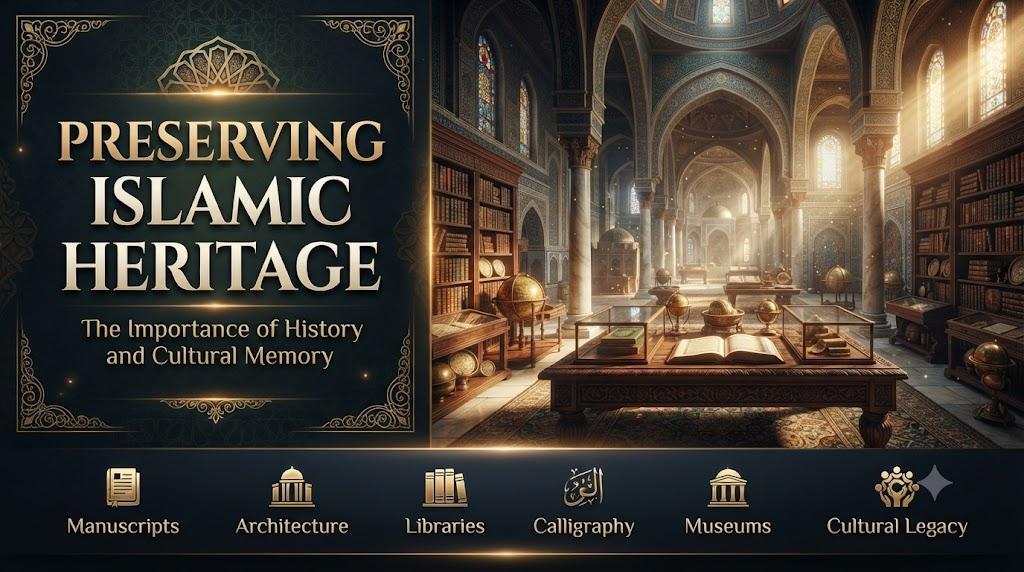
Cultural heritage preservation safeguards artifacts, sites, traditions, and knowledge constituting civilization’s material and immaterial legacy. For Muslims, preserving Islamic heritage maintains connection with prophetic era, golden age achievements, and diverse regional expressions of faith across time and geography. Understanding preservation’s importance motivates participation in safeguarding efforts while appreciating what previous generations bequeathed to present.
Material heritage includes physical objects and sites: mosques, madrasas, palaces, fortifications, manuscripts, ceramics, metalwork, textiles, and archaeological remains. These tangible traces connect us concretely with past—standing in a fourteenth-century mosque built by hands long dead creates visceral historical connection impossible through text alone. Material heritage bears witness to ancestors’ capabilities, values, and aesthetics.
Immaterial heritage encompasses intangible traditions: recitation styles (qira’at), calligraphic scripts, craft techniques (tile-making, weaving, metalworking), performance arts (nasheed, whirling), culinary traditions, medicinal knowledge, and customary practices. This living heritage exists in people’s memories and practices—vulnerable to interruption when practitioners pass without transmitting skills. Documenting and supporting immaterial preservation proves increasingly urgent as globalization homogenizes cultures.
Manuscript preservation represents particularly critical priority. Countless Islamic manuscripts—Quranic codices, hadith collections, scientific treatises, philosophical works, poetic compositions—exist in libraries, private collections, and sometimes neglected storage worldwide. Many face deterioration threats: acidic paper degrading, insect damage, humidity fluctuations, fire/flood risks, and simple neglect. Digitization projects preserve content while original conservation maintains material artifacts for future generations.
Archaeological sites reveal Islamic history’s material layers. Excavations uncover urban layouts, domestic artifacts, trade goods, and daily life evidence complementing textual records. Sites like Samarra (Iraq), Fustat (Egypt), and various locations along Silk Road illuminate Islamic civilization’s extent and character. Unfortunately, many sites face destruction from conflict, development pressure, looting, and inadequate protection—irrecoverable losses when destroyed.
Threats to Islamic heritage are multifaceted and severe. Armed conflict has damaged or destroyed numerous sites in Syria, Iraq, Afghanistan, Yemen, and Mali—sometimes deliberately targeting heritage as cultural genocide component. Development pressures demolish historic fabric for modern construction lacking sensitivity to existing context. Tourism, while providing economic justification for preservation, also damages sites through wear, commercialization, and inappropriate modifications. Climate change threatens coastal sites, intensifies weathering, and displaces communities maintaining traditional practices.
International frameworks provide some protection mechanisms. UNESCO World Heritage Site designation brings attention and resources (though political factors affect listing decisions). 1954 Hague Convention protects cultural property during armed conflict (though compliance varies). 1970 UNESCO Convention combats illicit trafficking in cultural property. ICOMOS (International Council on Monuments and Sites) sets professional standards. These instruments help but depend on national implementation and enforcement often lacking.
Community-based preservation proves most sustainable approach. When local communities value heritage economically (tourism revenue), spiritually (connection to sacred history), and culturally (identity marker), they maintain it effectively. External intervention without local buy-in fails once outsiders leave. Building local capacity for conservation, training craftsmen in traditional techniques, and integrating heritage into education curricula create ownership ensuring longevity.
Digital preservation expands possibilities dramatically. High-resolution scanning creates permanent records immune to physical destruction. 3D modeling reconstructs damaged or destroyed sites virtually. Online databases make manuscripts accessible globally. Virtual reality experiences enable remote “visitation.” Digital tools cannot replace physical preservation but provide backup against total loss and expand access beyond what physical sites could accommodate.
Ethical considerations complicate preservation discourse. Whose heritage gets prioritized when resources are limited? How balance preservation with development needs? Who decides appropriate restoration approaches (rebuilding ruins vs. stabilizing ruins)? How handle contested heritage (sites claimed by multiple communities)? Return of colonial-era acquisitions raises questions about rightful ownership. These issues require nuanced deliberation avoiding simplistic positions.
Muslim responsibility toward heritage stems from Quranic concepts of stewardship (khilafah) and trust (amanah). We inherit civilization’s achievements temporarily; we’re accountable for condition in which we pass them forward. Negligence violates trust; careful preservation fulfills obligation. This theological framing motivates preservation beyond aesthetic or historical interest alone.
Individual actions support preservation even modestly. Visiting heritage sites responsibly (following guidelines, not removing artifacts) contributes to maintenance funding. Supporting preservation organizations financially enables their work. Learning about heritage and sharing knowledge builds constituency for protection. Advocating for protective policies influences decision-makers. Documenting threatened heritage through photography or recording creates records potentially valuable for future recovery.
The urgency increases as threats multiply. Every year, manuscripts deteriorate unread, sites disappear under bulldozers, elders die taking unique knowledge with them, and conflicts destroy what centuries created. Current generation’s choices determine what survives for future Muslims’ connection with their rich heritage—or what exists only in fragmentary records of lost glory.
Preserving Islamic heritage isn’t nostalgia for past greatness but stewardship of resources enabling future flourishing. Just as Golden Age scholars built upon Greek, Persian, and Indian precedents, future Muslims will build upon what we preserve from our inheritance. Breaking the chain of transmission through negligence would impoverish descendants unimaginably. Active preservation ensures continuity of civilization’s benefits.