Prophet Muhammad’s life (570-632 CE) represents pivot point upon which human history turns for nearly two billion people. His biography (seerah) provides template for human excellence, context for Quranic revelation, and foundation for Islamic civilization. Understanding key events in his life enables deeper appreciation of Islam’s origins while offering guidance for contemporary believers seeking prophetic model.
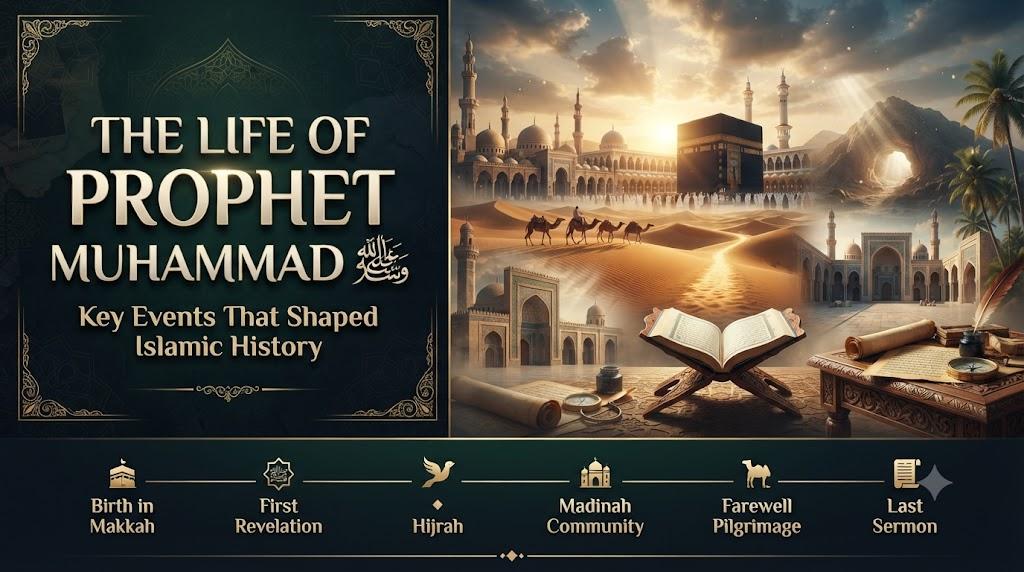
Birth and early life (570-590 CE) established character foundations. Born in Mecca to Banu Hashim clan of Quraysh tribe, orphaned young (father before birth, mother at age six), raised first by grandfather then uncle Abu Talib. Despite hardships, he earned reputation for trustworthiness (“Al-Amin”) and integrity that preceded prophetic mission. His experience as shepherd and merchant developed patience, observation skills, and business acumen serving later leadership roles.
Prophethood beginning (610 CE) marked cosmic turning point. Retreat to Cave Hira for contemplation during Ramadan brought first revelation through Angel Jibrail: “Read in the name of your Lord who created” (Alaq: 1). Initial fear gave way to certainty through wife Khadijah’s reassurance and Waraqah’s confirmation. Early revelations emphasized monotheism, accountability, and social justice—themes challenging Meccan polytheist establishment.
Meccan period (610-622 CE) tested nascent community through persecution. First converts included close family (Khadijah, Ali, Zayd), close friend (Abu Bakr), and vulnerable individuals (Bilal, Ammar) finding liberation in Islam’s egalitarian message. Quraysh opposition escalated from ridicule to economic boycott to physical violence. Migration to Abyssinia (615 CE) provided temporary refuge; eventual Hijrah to Madinah became necessary solution.
Hijrah (622 CE) establishes Islamic calendar beginning and marks transition from persecuted minority to community with territorial base. Madinan welcome (Ansar hosting Muhajirun) created brotherhood transcending tribal loyalties. Constitution of Madinah established multi-faith polity governing relationships between Muslim migrants, local believers, Jews, and pagan Arabs. This document represents early constitutional governance framework.
Madinan period (622-632 CE) saw transformation from refugee community to regional power. Major battles (Badr 624, Uhud 625, Trench 627) defended community against Meccan aggression. Conquest of Mecca (630 CE) achieved bloodless victory—forgiveness rather than revenge characterized treatment of former enemies. Farewell Pilgrimage (632 CE) culminated prophetic mission with sermon emphasizing racial equality, women’s rights, and message completion.
Personal life examples offer practical guidance. Marriage to Khadijah (25 years older widow) demonstrated valuing character over social conventions. Kindness to children (playing with them, carrying grandson during prayer) showed tenderness despite weighty responsibilities. Treatment of servants (freeing Zayd, adopting him as son) modeled emancipation and adoption ethics. Anger management (never striking anyone) exemplified emotional control.
Character traits defined prophetic excellence. Truthfulness so complete that even enemies acknowledged it. Humility despite holding highest authority—sitting where space permitted, mending own clothes, helping with household tasks. Mercy encompassed humans, animals, and even enemies. Courage manifested in facing threats without flinching while showing compassion toward captives. Wisdom balanced idealism with pragmatism.
Miracles confirmed prophetic status for contemporaries. Quran itself stands as lasting miracle—its linguistic excellence, historical accuracy, preserved authenticity, and transformative impact defy natural explanation. Splitting of moon, night journey (Isra wal Mi’raj), water flowing from fingers, and various healing events testified to divine support. However, Muhammad insisted he was merely human servant and messenger—not divine figure worthy of worship.
Companions (Sahabah) transmitted his example through hadith literature. Their meticulous preservation of his words, actions, approvals, and characteristics enables detailed knowledge of prophetic model fourteen centuries later. Their diversity—representing various ages, classes, temperaments, and backgrounds—shows Islam’s accessibility across human differences.
Death and legacy (632 CE) concluded physical presence but expanded spiritual influence. Burial in Aisha’s room (now part of Prophet’s Mosque in Madinah) created pilgrimage destination. Succession question generated initial political divisions but didn’t prevent Islam’s rapid expansion. His legacy encompasses spiritual guidance, ethical framework, legal tradition, social model, and civilization foundation affecting billions across fourteen centuries.
Contemporary relevance remains profound. His example addresses modern challenges: interfaith relations (Constitution of Madinah model), environmental stewardship (teaching about conservation), gender relations (kindness to women and girls), leadership ethics (consultation and service), poverty alleviation (emphasizing charity), and conflict resolution (treaty of Hudaybiyyah wisdom). The Prophet’s life offers not mere historical curiosity but living guidance for those seeking divine pleasure through human excellence.