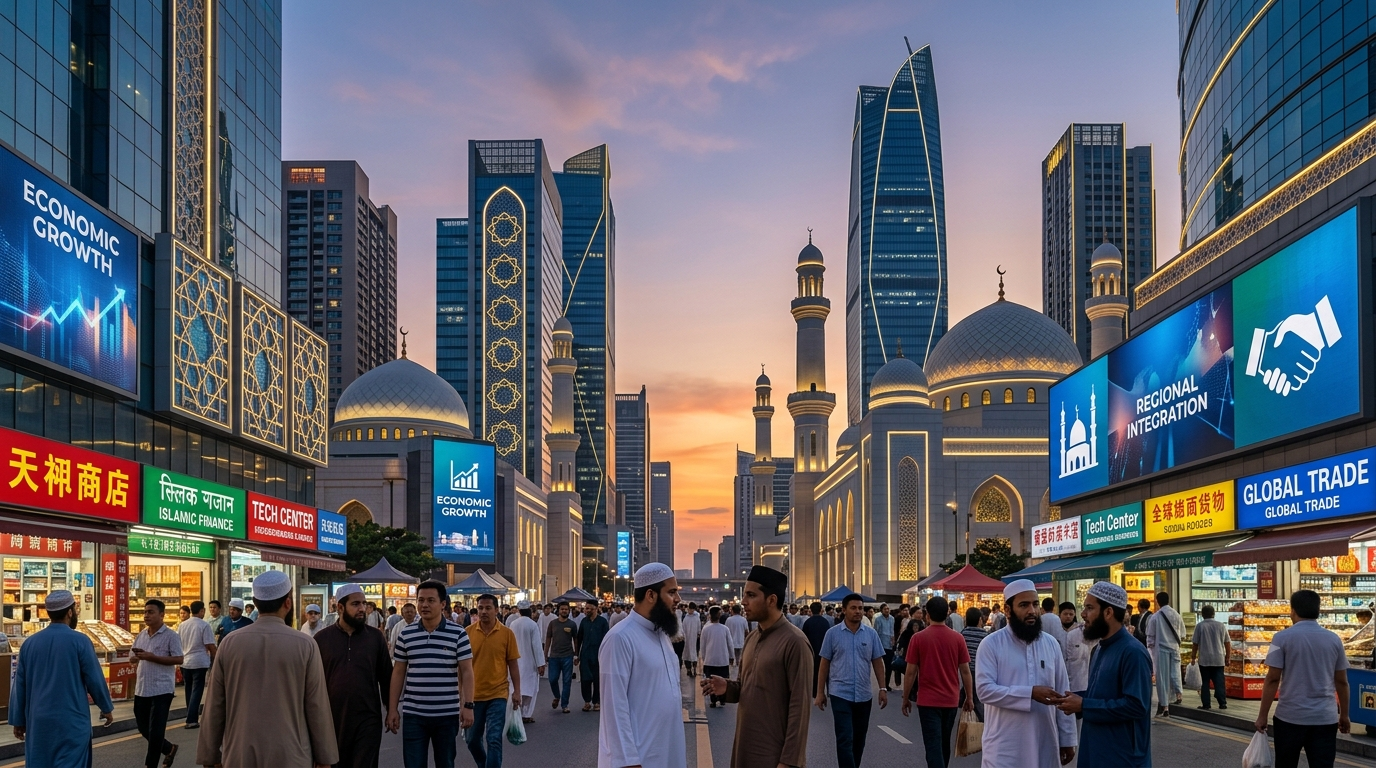
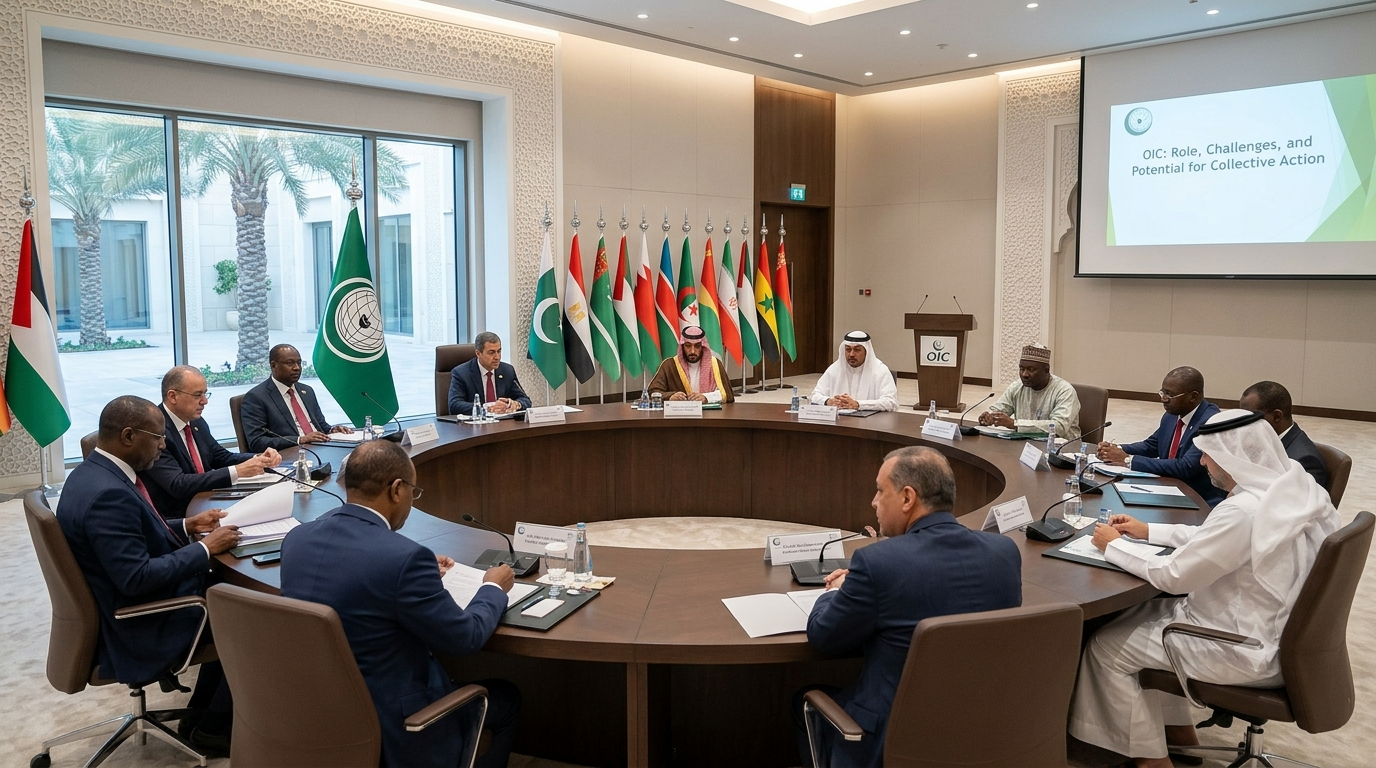
The Organization of Islamic Cooperation (OIC)—renamed from Organization of the Islamic Conference in 2011—represents the second-largest intergovernmental organization after United Nations, with 57 member states spanning four continents and representing approximately 1.8 billion people. Founded in 1969 following arson attack on Al-Aqsa Mosque in Jerusalem, OIC aims to promote Islamic solidarity, coordinate member states’ policies, and protect Muslim interests globally. Assessing OIC’s record, challenges, and potential reveals much about Muslim collective action possibilities and limits in contemporary international system. Founding context shaped OIC’s character and limitations. Emergency summit in Rabat responded to specific provocation (Al-Aqsa fire) rather than emerging from long-term institutional planning. Member states brought diverse (often competing) interests: Arab nationalism vs. pan-Islamism, Saudi-Iranian rivalry predating Islamic Revolution, Cold War alignments, developmental disparities, governance differences. Charter commitments to Islamic solidarity often yielded to national interest calculations—as expected in any international organization but
particularly acute where religious rhetoric raises expectations beyond what politics delivers. Institutional structure includes: Islamic Summit (heads of state/government, every three years), Council of Foreign Ministers (annual meetings), General Secretariat (Jeddah-based permanent bureaucracy), and specialized subsidiary organs (Islamic Development Bank, Islamic Educational, Scientific and Cultural Organization, and others). Decision-making requires consensus on major issues—ensuring all voices heard but enabling single member to block action. Budget depends on assessed contributions plus voluntary donations; financial constraints limit operational capacity. Comparison with other regional organizations (EU, AU, ASEAN) reveals both relative strengths and weaknesses. OIC’s scope (religious identity + broad policy coordination) differs from EU’s economic integration focus or ASEAN’s economic primacy. Membership criteria (significant Muslim population or historical Muslim connection) produce diverse membership unlike EU’s relatively homogeneous democracies. These structural features explain some performance variations while not excusing underachievement. OIC’s achievements deserve acknowledgment despite limitations. Humanitarian relief through various mechanisms has assisted Muslim (and non-Muslim) populations affected by conflicts and natural disasters. Educational and cultural programs preserve Islamic heritage while promoting exchange. The Independent Permanent Human Rights Commission (established 2011, though criticized for weaknesses) represents institutional commitment to human rights discourse. OIC has provided platform for Muslim states to coordinate positions on issues like Palestine, Kashmir, and Myanmar’s Rohingya—maintaining agenda items that might otherwise fade from international attention. The Ten-Year Programme of Action (2005) set ambitious targets across political, economic, social, and scientific domains—some progress achieved, many goals unmet. Significant challenges constrain OIC effectiveness. Internal divisions represent primary obstacle: Saudi Arabia and Iran’s rivalry poisons cooperation across multiple files (Yemen, Syria, Lebanon, Bahrain). Qatar crisis (2017-2021) saw several members sever diplomatic relations and impose blockade against fellow OIC member. Differences over Muslim Brotherhood designation (terrorist organization vs. legitimate movement) split membership. These fractures prevent unified positions even on issues of apparent common interest. Governance deficits affect many member states themselves—authoritarian regimes, corruption, weak institutions—which undermines collective credibility when OIC addresses democracy or human rights. Capacity limitations (small secretariat budget relative to mandate, dependence on voluntary contributions for major initiatives) restrict operational reach. External pressures compound internal challenges. Great powers (US, EU, China, Russia) engage OIC selectively—consulting when useful, ignoring when inconvenient. Israel-Palestine issue dominates OIC agenda (appropriately given member concerns) but crowds out attention to other matters requiring collective action. Post-9/11 security environment created pressure regarding terrorism definitions and counterterrorism cooperation that sometimes conflicted with member sensitivities about sovereignty and legitimate resistance movements. Specific policy areas reveal mixed record. On Palestine, OIC maintains consistent rhetorical support and provides some financial assistance to Palestinians, but has not achieved diplomatic breakthrough or meaningful pressure on Israel. On Kashmir, OIC resolutions express concern without affecting India’s behavior. On Myanmar/Rohingya, OIC raised international awareness but secured limited concrete results. On internal member-state violations (human rights abuses by OIC members against their own citizens), OIC’s silence or weakness undermines credibility. Counterterrorism cooperation improved post-9/11 but faces definitional disagreements. Economic cooperation through Islamic Development Bank shows promise but remains below potential. Reform proposals circulate regularly within policy circles.
Structural changes might include weighted voting (abandoning unanimity requirement for certain decisions), enhanced secretariat capacity (larger budget, more professional staff), specialized agencies with operational mandates (not just coordinating functions), civil society engagement mechanisms (currently minimal), and dispute resolution bodies with actual enforcement capability. Some proposals would require charter amendments difficult to achieve; others could proceed through administrative initiative. Political will for reform remains questionable when current structure serves powerful members’ interests adequately. Relationship with UN system involves both complementarity and tension. OIC holds observer status at UN; coordinates positions before key votes; submits parallel resolutions on issues like Islamophobia and Palestinian rights. Sometimes OIC advocacy advances Muslim interests within UN forums; other times UN mechanisms bypass OIC entirely. Formal cooperation agreements exist with various UN agencies. Potential exists for OIC to serve as regional coordination mechanism implementing UN decisions in Muslim-majority contexts—but this requires capacity OIC currently lacks. Civil society engagement represents largely untapped potential. Unlike some regional organizations incorporating social movement voices, OIC operates primarily as state-centric body. Muslim NGOs, business associations, academic networks, women’s organizations, and youth movements lack formal channels for input or influence. Creating consultative mechanisms could strengthen OIC’s legitimacy, broaden its information base, and generate implementation partners for its decisions. The question of whether OIC serves Muslim populations or primarily member-state governments deserves frank examination. Governments join OIC; peoples don’t elect representatives or hold OIC accountable directly. When governments violate citizens’ rights, OIC’s intergovernmental nature typically produces silence or mild statements rather than robust defense of oppressed Muslims. This structural limitation suggests that OIC reform must somehow incorporate people-centered dimensions without becoming tool for external interference in member states’ internal affairs—difficult balance to achieve. Looking ahead, OIC’s relevance depends on addressing fundamental questions: Can internal divisions be managed sufficiently to enable action on shared priorities? Will member states invest sufficient resources to make OIC effective? Can OIC develop expertise and credibility beyond rhetorical positions? Might OIC evolve toward something resembling Islamic Union with deeper integration—or will it remain talking shop producing resolutions without impact? The answers depend partly on member states’ choices and partly on broader trends in global governance that affect all international organizations. What remains certain is that collective Muslim action through some institutional form will remain desirable as long as Muslim populations face common challenges requiring coordinated responses. Whether OIC fulfills that role or successor organization emerges remains to be seen.