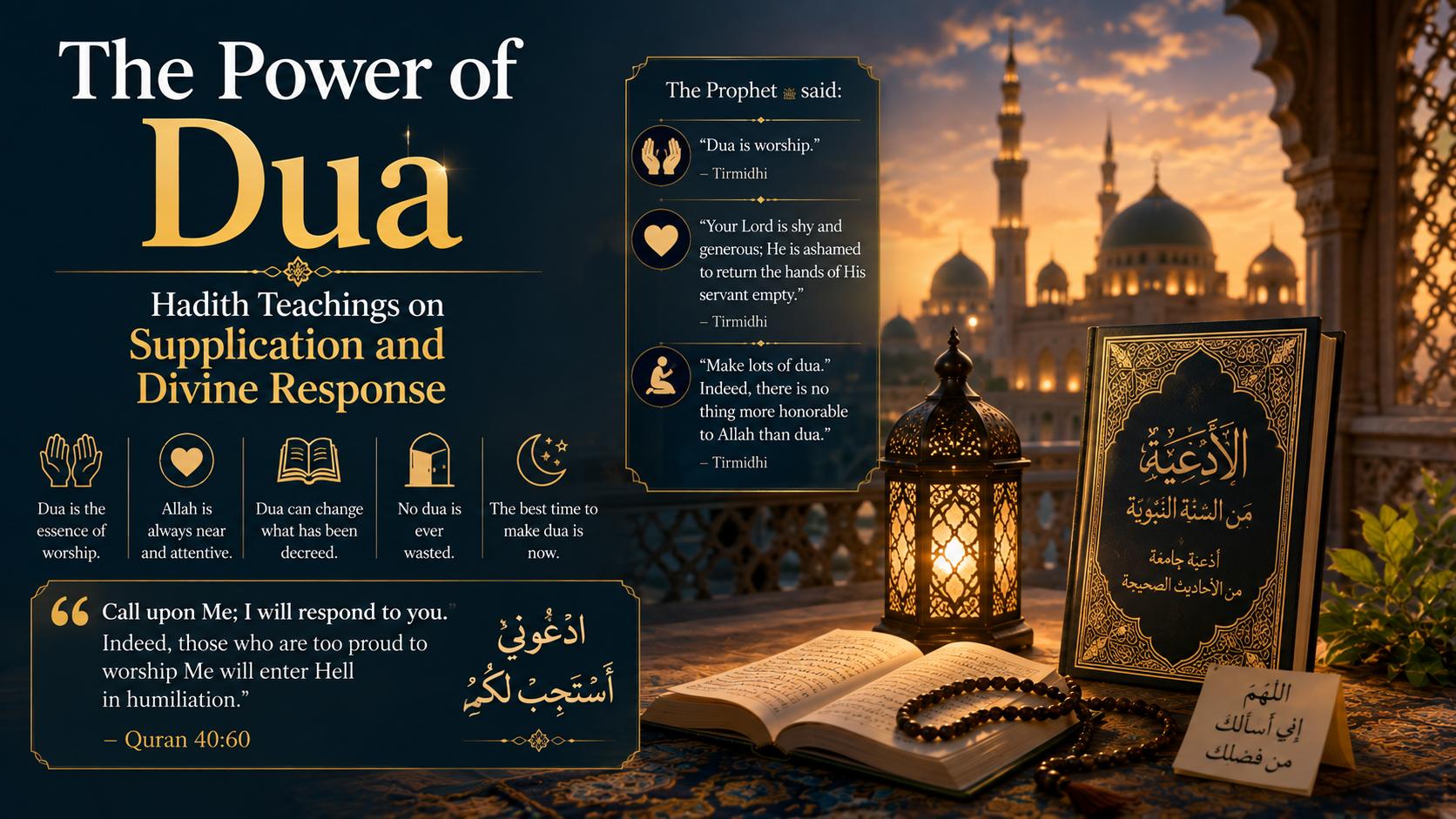
Dua (supplication) represents essence of worship according to hadith: “Dua is worship itself.” This elevation places supplication at center of Muslim spiritual life—not optional addition but core devotional practice connecting creature with Creator. The Prophet’s extensive teachings on dua cover timing, wording, etiquette, and expectations, providing comprehensive guide for effective invocation that transforms circumstances through divine intervention.
Divine promise regarding dua encourages persistent practice: “Call upon Me, I will respond to you” (Ghafir: 60). The Prophet elaborated that Allah is shy to return empty hands of servant who raises them in supplication. He also warned that abandoning dua invites divine anger—suggesting that asking maintains relationship even when answers delay. This paradox of guaranteed response yet apparent non-answers finds resolution in understanding response types.
Response modalities exceed simple yes/no categories. Sometimes dua receives immediate granting exactly as requested. Other times, equivalent difficulty is removed instead. Still other times, reward accumulates for hereafter when present granting would prove harmful. The Prophet assured that dua is never wasted; its benefit manifests somehow, though we may not recognize form immediately. Trust in divine wisdom accompanies sincere asking.
Timing opportunities enhance dua efficacy according to prophetic indications. Last third of night (tahajjud time), between adhan and iqama, during prostration, on Fridays (especially last hour before Maghrib), while fasting, during travel, and at rainfall moments—all carry special recommendation. These windows don’t restrict when we may ask, but strategic utilization increases likelihood of acceptance during spiritually heightened periods.
Wording preferences emerge from authenticated formulas. The Prophet taught specific supplications for various occasions—entering/exiting home, before/after eating, waking/sleeping, traveling, wearing clothes, experiencing fear or worry. Using established phrasing ensures comprehensive coverage of needs while aligning with prophetic vocabulary that Allah favors. Originality isn’t discouraged, but tested formulations provide reliable templates.
Etiquette (adab) of dua affects reception significantly. Beginning with Allah’s praise and blessings upon Prophet precedes personal requests. Facing qibla, raising hands (with palms outward, not upward), maintaining wudu state, voice moderation (between silent and loud), and certainty of response all optimize conditions. Conversely, hasty expectation, sin persistence without repentance, or requesting forbidden things hinder acceptance.
Persistence despite delay characterizes successful supplicators. The Prophet narrated story of three men trapped in cave who each invoked Allah through their best deeds, resulting in rock shifting until escape became possible. He also described man who traveled extensively asking for healing without cure, eventually dying from wounds classified as martyrdom—showing how unanswered (in conventional sense) dua may produce superior alternative outcomes.
Intercessory dua for others carries special blessing. The Prophet promised that dua made for absent brother is answered with “ameen” from angel, and identical good reaches the supplicant. Praying for fellow Muslims builds community bonds while generating personal benefit—multiplying returns on investment. Parents’ dua for children holds particular potency given their combined authority and affection.
Dua documentation helps track patterns and maintain consistency. Writing requests, reviewing periodically, noting answers when they arrive, and expressing gratitude upon fulfillment creates feedback loop strengthening faith. The Prophet’s own practice included lengthy night supplications covering community members by name—modeling thorough intercessory concern.
Combining dua with appropriate action avoids passive waiting trap. The Prophet taught tying camel then trusting Allah—meaning take necessary measures while attributing results to divine will. Job seeker makes dua while actively searching; patient prays for healing while pursuing medical treatment; student asks for success while studying diligently. Dua supplements rather than replaces effort.
Rejection causes deserve consideration too. Sometimes barriers include earned income source (haram sustance), unrepented sins blocking blessing, requesting harmful things unknowingly, or testing of sincerity. Self-audition against these possibilities removes obstacles when dua seems ineffective. The Prophet encouraged increasing good deeds alongside continued asking—purifying vessel for receiving divine gifts.
Ultimately, dua expresses relationship depth. Children ask parents constantly without hesitation; similarly, believers should approach Allah frequently with all concerns—major and minor, spiritual and material, individual and communal. No request too trivial for the King who values every approach from sincere servants.