
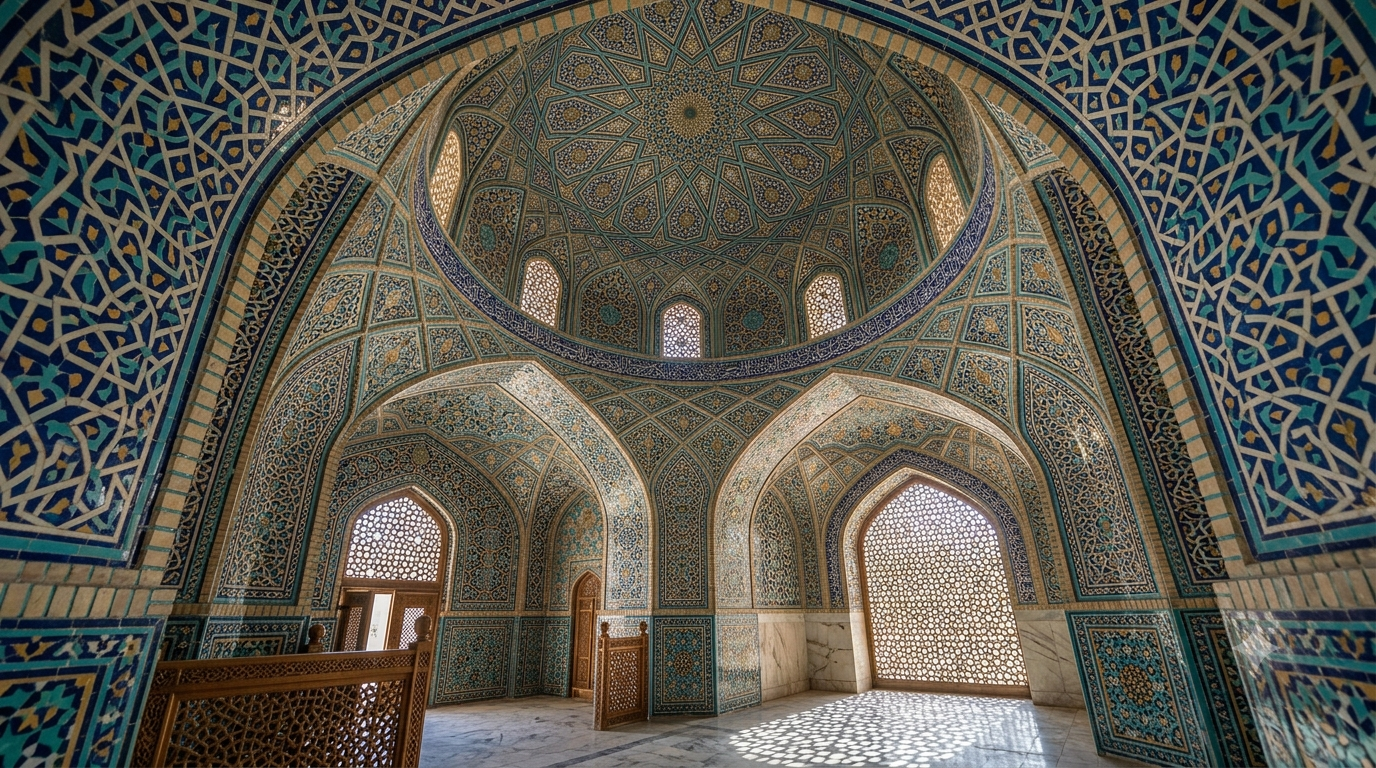
Geometric patterns constitute perhaps most recognizable element of Islamic visual arts—intricate star polygons, tessellations, and interlaced designs adorning mosques, madrasas, palaces, and everyday objects across Islamic world. These patterns represent sophisticated mathematical achievement while embodying theological concepts about divine order, infinity, and unity underlying apparent diversity. Understanding geometric art reveals intersection of mathematics, spirituality, and aesthetics characterizing Islamic civilization.
Mathematical foundations underpinning these patterns demonstrate advanced understanding centuries ahead of Western development. Circle subdivision generates regular polygons (triangle, square, pentagon, hexagon, octagon) forming basis for star patterns. Tessellation theory enables infinite repeat patterns covering surfaces without gaps. Symmetry operations (translation, rotation, reflection, glide reflection) create rhythmic variations maintaining overall coherence. These mathematical principles weren’t formalized abstractly but applied practically by artisans possessing intuitive geometric knowledge.
Construction methods using only compass and straightedge (classical tools) produce patterns reflecting constraint-based creativity. Artisans worked from center point outward, dividing circles into equal segments, connecting intersections to generate increasingly complex designs. This generative approach—simple rules producing complex outcomes—parallels natural processes and suggests divine creation’s analogous simplicity generating cosmic complexity from basic principles.
Theological interpretations attach spiritual significance to geometric features. Circles represent unity and completeness of Allah—no beginning, no end, no corners or directions. Star patterns suggest radiating divine light or heavenly bodies. Interlacing indicates interconnectedness of creation. Infinite repeat patterns (tessellations) hint at infinite nature of divine attributes. Central point from which patterns emanate symbolizes Tawhid (divine unity) as source of all existence. These readings enrich visual appreciation with contemplative depth.
Regional variations develop distinctive geometric vocabularies. Moroccan zellige tilework features complex curved-line patterns with vibrant color glazes. Persian girih patterns emphasize precise straight-line constructions often combining with floral elements. Mughal Pietra dura inlay incorporates geometric designs into marble surfaces using precious stone. Andalusian arabesques blend geometry with vegetal motifs in intricate stucco work. Ottoman patterns favor bold central compositions with surrounding detail. Each regional style reflects local materials, techniques, and aesthetic preferences while sharing underlying geometric principles.
Architectural applications transform spaces spiritually. Mosque interiors covered in geometric patterns create immersive environments encouraging contemplation. Light filtering through geometric lattice screens (mashrabiya) casts moving shadow patterns suggesting divine presence in changing light. Floor patterns guide movement through space toward mihrab. Dome decorations draw gaze upward symbolizing ascent toward heavenly realm. Architecture becomes vehicle for spiritual experience through geometric intervention.
Craft applications extend geometric art beyond architecture. Textiles feature woven geometric patterns in carpets, clothing, and hangings. Metalwork inlays geometric designs into bronze, brass, silver, and gold objects. Ceramics decorate tiles, vessels, and lamps with geometric motifs. Book illumination uses geometric frames
around text and illustrations. Woodwork carves geometric panels into furniture, doors, and minbars. This ubiquity makes geometric art part of daily life, not just elite architectural experience.
Contemporary designers draw inspiration from Islamic geometric traditions. Parametric design software enables generation of complex patterns impossible manually. Architects incorporate geometric principles in modern buildings referencing Islamic heritage without direct imitation. Fashion designers use geometric prints in contemporary clothing. Graphic designers adapt patterns for digital media. This ongoing engagement keeps tradition alive through creative reinterpretation.
Studying geometric construction offers educational benefits beyond art appreciation. Students learn mathematical concepts (symmetry, proportion, tessellation) through hands-on activity. Cultural connections demonstrate mathematics’ global history beyond Eurocentric narratives. Meditative focus during construction provides stress relief similar to mindfulness practices. Cross-curricular integration possibilities span art, math, history, and religious studies.
Preservation challenges threaten traditional geometric art skills. Master craftsmen aging without sufficient apprentices threatens transmission of specialized knowledge (especially in Morocco’s zellige tradition). Mass-produced imitations lack authentic geometric precision and cultural context. Restoration projects sometimes use inappropriate modern materials or techniques. Supporting traditional artisans through patronage, documentation, and education helps preserve living heritage.
Creating geometric art personally connects with tradition meaningfully. Beginners can start with simple patterns using compass, ruler, and pencil—progressing to ink and color as skill develops. Online tutorials demonstrate specific construction sequences. Pattern books provide ready reference for common designs. Community workshops offer guided instruction. Even modest personal engagement deepens appreciation for masterworks seen in mosques and museums worldwide.
Geometric patterns ultimately express Islamic worldview visually: unity within diversity, order underlying complexity, infinity suggesting divine transcendence, and beauty as pointer toward divine beauty (jamal). When we contemplate these patterns with understanding, we participate in tradition spanning continents and centuries—connecting with artisans who found in geometry language for truths beyond words.


