
Islamic art serves not merely aesthetic function but spiritual purpose—beauty acting as vehicle for divine contemplation, reminder of transcendence reality, and means of drawing heart toward Allah. This spiritual dimension distinguishes genuinely Islamic art from merely Islamic-styled decoration lacking deeper intention. Understanding art’s spiritual potential enriches both creation and appreciation, transforming aesthetic experience into devotional opportunity.
Theological foundation for art’s spiritual role rests on beauty’s connection to divine attributes. Allah is al-Jamil (Beautiful) and the source of all beauty (jamal). Created beauty reflects divine beauty imperfectly—pointing toward perfect original. Contemplating beautiful art can thus become contemplation of divine beauty’s earthly traces, leading naturally toward appreciation of Beauty’s Source. This Neoplatonic-influenced reasoning (transmitted through Islamic philosophers like al-Ghazali) provides framework for legitimate spiritual engagement with aesthetic experience.
Quran itself employs aesthetic strategies inviting contemplation. Descriptions of paradise gardens appeal to sensory beauty: flowing rivers, shade trees, comfortable couches, purified spouses. Accounts of hell’s horrors use vivid imagery evoking appropriate fear. Nature descriptions highlight creation’s wonders as signs (ayat)
pointing toward Creator. Literary devices—parallelism, metaphor, rhythm, rhetorical questions—enhance textual beauty alongside doctrinal content. If Quran uses beauty for spiritual purposes, artistic beauty serving similar ends follows precedent.
Prophetic approval of beauty in certain contexts supports positive assessment. The Prophet appreciated beauty in natural settings (flowers, mountains), approved mosque beautification within limits, and encouraged cleanliness and adornment for Fridays and gatherings. His description of Allah’s throne as “;singing in praise of its Lord”; suggests beauty exists even in unseen realms. His objection was to excess (israf) and distraction from remembrance, not beauty per se. Balanced appreciation characterized his example.
Sufi tradition particularly emphasizes art’s spiritual potential. Whirling dervishes (Mevlevi order) use movement as devotional practice—rotation symbolizing cosmic order and spiritual ascent. Sama’ (listening sessions) employ music and poetry to induce ecstatic states drawing soul toward divine love. Poetry (especially Persian mystical verse) becomes vehicle for expressing ineffable spiritual experiences. Sufi lodges (khanqah) often feature aesthetic environments enhancing spiritual practice. While mainstream scholarship views some Sufi practices cautiously, their aesthetic spirituality offers valuable insights.
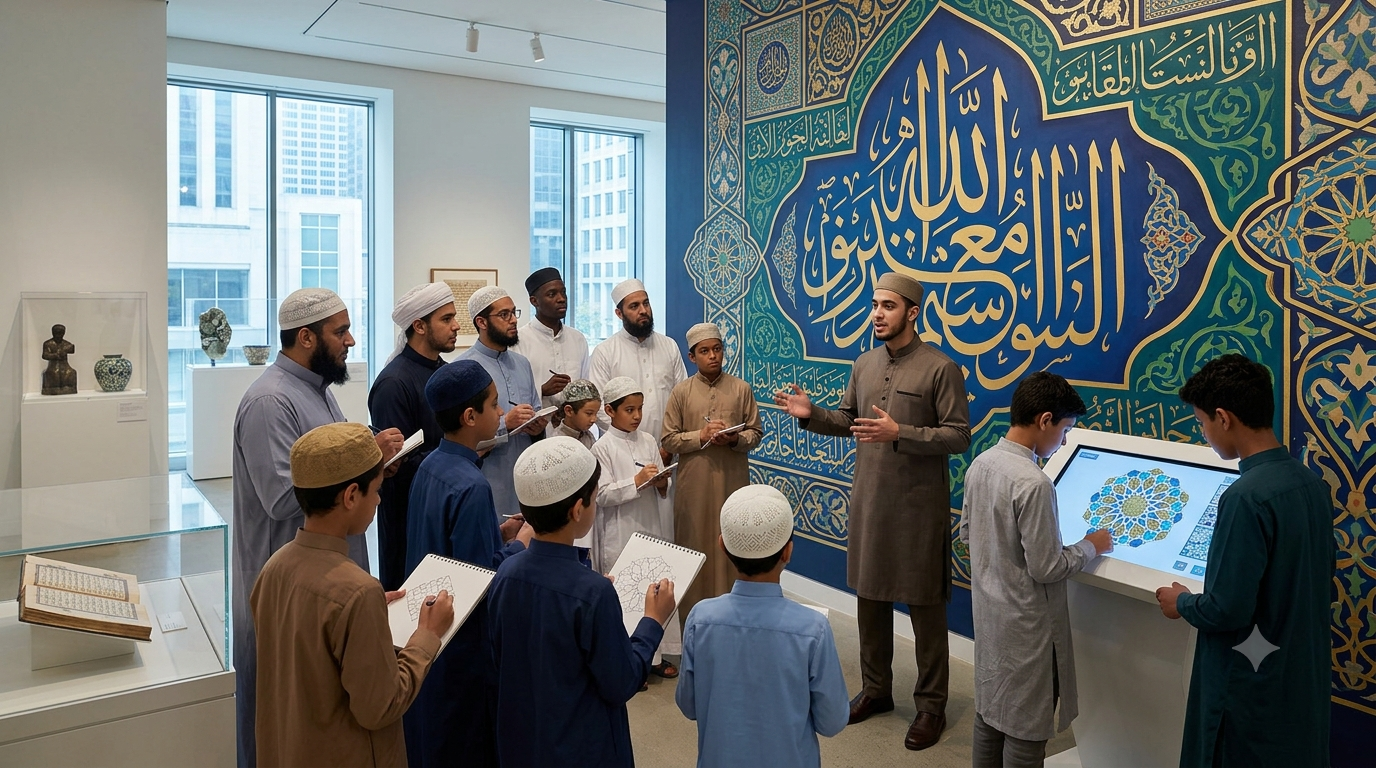
Calligraphy as spiritual practice exemplifies art-devotion integration. Writing sacred text beautifully honors divine word through skilled effort. The calligrapher’s concentration, breath control, and repetitive motion parallel meditation techniques. Producing beautiful Bismillah or Quranic verse becomes act of worship when intention (niyyah) is properly directed. Viewing beautiful calligraphy invites lingering on divine words’ meaning and form simultaneously—double engagement with sacred text.
Geometric patterns invite contemplation of divine order. Mathematical perfection underlying patterns suggests cosmic governance by wise Creator. Infinite repeat implies divine infinity. Unity generating diversity from simple starting points mirrors Tawhid (divine unity) as source of creation’s multiplicity. Center point from which patterns emanate symbolizes divine presence as reality’s foundation. Gazing at geometric patterns can thus become meditation on core Islamic theological concepts made visible.
Architecture creates spatial spirituality. Mosque design guides movement and gaze toward sacred focus (mihrab/qibla). Proportions based on harmonic ratios (golden section, root rectangles) create visual harmony suggesting divine harmony. Light manipulation through domes, screens, and windows creates temporal variation symbolizing divine presence across time. Spatial sequence from street to courtyard to prayer hall creates progressive transition from secular to sacred. Built environment becomes three-dimensional theology.
Floral and vegetal motifs (arabesque) suggest paradise and divine generosity. Infinite growth patterns without realistic termination imply eternal abundance. Tendrils intertwining suggest connection and interdependence within creation. Organic forms combined with geometric structure show nature governed by divine order. Garden imagery (courtyard fountains, Paradise-like planting) explicitly evokes Quranic descriptions of afterlife rewards. These elements make concrete theological concepts about divine provision and beauty.
Experiencing art spiritually requires intentional approach. Rushed viewing misses contemplative opportunity; slow, attentive engagement allows meaning to unfold. Preparing heart through brief dhikr or intention-setting opens spiritual receptivity. Reflecting on what art evokes—emotions, thoughts, memories,
aspirations—deepens experience beyond surface pleasure. Sharing insights with others extends individual contemplation into communal reflection.
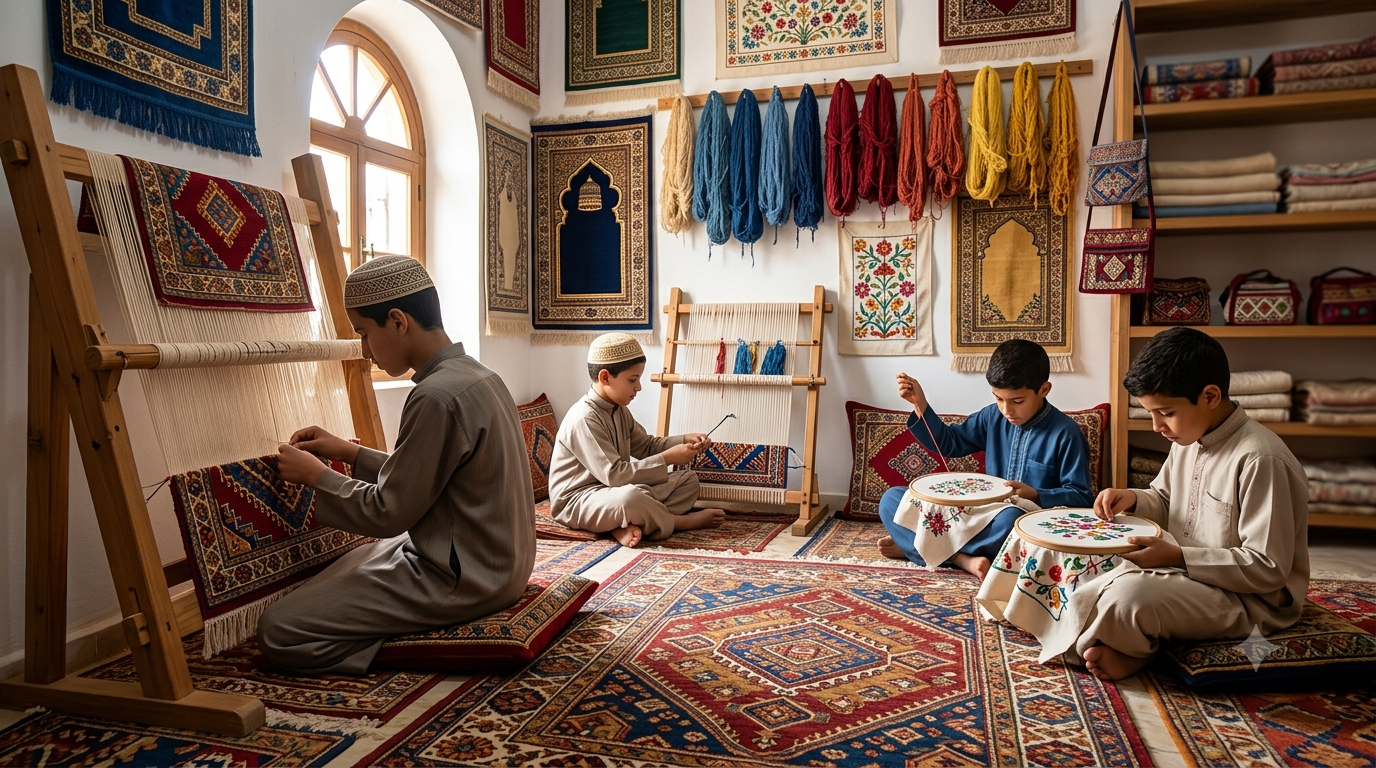
Creating art spiritually transforms production process. Artist’s intention (to please Allah, to serve community, to express gratitude) infuses work with spiritual dimension absent from purely commercial creation. Process itself becomes devotion when undertaken with God-consciousness (taqwa). Struggle with technical challenges becomes patience-building exercise. Completion and offering of work to viewers becomes act of service. Entire creative cycle becomes potential worship when properly oriented.
Avoiding spiritual pitfalls protects against misuse. Art shouldn’t replace direct worship (prayer, Quran reading, dhikr). Aesthetic pleasure shouldn’t become ultimate end displacing divine pleasure. Artist’s ego shouldn’t inflate through admiration received. Consumerism surrounding art (expensive pieces as status symbols) contradicts spiritual values. Balance keeps art in proper relation to primary spiritual obligations.
The goal of Islamic art’s spiritual dimension isn’t escape from world into aesthetic trance but deeper engagement with world as sign of Creator. Beautiful art doesn’t distract from reality but reveals reality’s depths—its beauty, order, generosity, and ultimate dependence upon Divine Artist who created everything. When art achieves this function, it fulfills highest possibility: becoming lens through which created beauty leads beholder toward Uncreated Beauty.