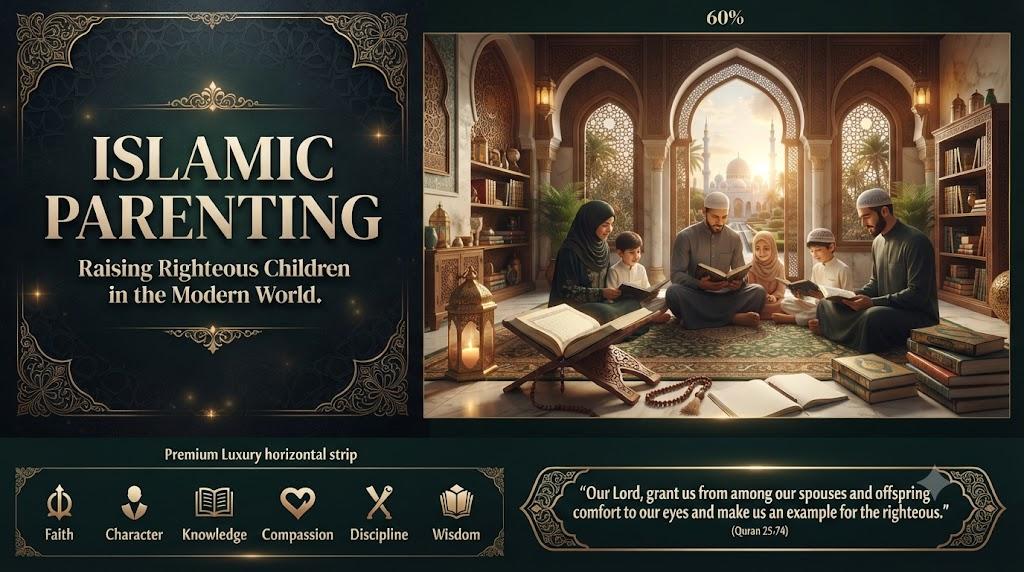
Parenting represents perhaps the most consequential responsibility Muslims undertake—shaping next generation of believers who will carry faith forward. Islamic parenting integrates spiritual development with emotional, intellectual, and physical nurturing, drawing upon Quranic guidance, prophetic example, and scholarly wisdom accumulated over centuries. Contemporary parents face unique challenges requiring adaptation of timeless principles to present realities.
The Quran frames children as both blessing and test: “Wealth and children are [but] adornment of the worldly life” (Kahf: 46). This dual nature keeps parenting balanced—gratitude for gift without idolizing possession, effort without attachment to outcomes beyond our control. Parents provide guidance and environment; ultimately Allah guides whomever He wills. This theological framework prevents both neglect (they’re just tests) and controlling anxiety (their guidance depends entirely on us).
Early childhood foundation receives emphatic attention in Islamic tradition. The Prophet instructed teaching prayer at seven, disciplining (gently) at ten if prayer neglected by then—establishing gradual religious training timeline. Before formal instruction begins, children absorb environment’s spiritual atmosphere: hearing Quran recitation, observing parents’ worship routines, feeling loved unconditionally. These formative experiences shape lifelong orientation toward faith.
Leading by example proves more effective than verbal instruction alone. Children who see parents praying sincerely, speaking honestly, treating others kindly, and managing anger maturely internalize these behaviors naturally. Hypocrisy—preaching what we don’t practice—undermines credibility and confuses developing moral sense. The Prophet’s statement that every newborn comes fitra (pure nature) suggests environment shapes subsequent direction—making parental modeling crucial.
Gentle discipline characterizes Islamic approach, contrasting with harsh methods sometimes mistakenly attributed to religion. The Prophet never hit any person—woman, child, or servant—and prohibited facial striking entirely. When correction becomes necessary, physical punishment is last resort after reasoning, gesture, and verbal warning. Even then, severity must never exceed the misdeed, and immediate reconciliation should follow. These principles align with modern child psychology findings about positive discipline effectiveness.
Education encompasses religious and secular learning integrated coherently. Classical Islamic civilization produced polymaths excelling in religious sciences alongside mathematics, medicine, astronomy, and philosophy. Contemporary Muslim parents face choice between secular schools (potentially exposing children to values conflicting with Islamic teachings), Islamic schools (varying in academic quality), and homeschooling (requiring significant resources). Each option carries trade-offs requiring careful family decision-making.
Technology management presents novel parenting challenge. Screen time limits, content filtering, online safety education, and modeling healthy digital habits become essential modern parenting skills. The internet exposes children to beneficial knowledge and harmful influences simultaneously; proactive guidance helps navigation. Some families implement tech-free times/spaces; others emphasize critical thinking about media consumption. Balance between isolation and exposure requires ongoing adjustment.
Gender-specific guidance addresses developmental differences respectfully. Boys and girls both need love, education, moral formation, and skill development—but expression methods may differ by temperament and social context. Avoiding rigid stereotypes while acknowledging general patterns helps each child develop fully. Same-gender role models (especially important for single-parent families) provide identification figures children need.
Adolescent period demands particular sensitivity. Identity formation, peer influence, romantic feelings, and independence assertion intensify during teen years. Maintaining open communication, respecting growing autonomy while maintaining appropriate boundaries, and choosing battles carefully preserve relationship through turbulent phase. The Prophet’s gentle treatment of youth—including an angry young man he calmed with kindness rather than rebuke—models effective adolescent engagement.
Special needs children hold honored position in Islamic ethic. Their care brings extra reward; their families demonstrate patience earning divine pleasure. Communities should support families raising children with disabilities through practical assistance and inclusive attitudes. These children aren’t punishments but trusts carrying unique blessings—their purity, innocence, and dependence on Allah model states all should cultivate.
Balancing protection with independence challenges overprotective tendencies. Children eventually navigate world independently; preparation requires gradually increasing responsibility, allowing age-appropriate failure, and building resilience through overcoming obstacles. Helicopter parenting (excessive control) produces dependent adults unable to function autonomously. Trust in Allah’s care complements prudent preparation.
Community involvement extends parenting resources beyond nuclear family. Mosques offer youth programs; Islamic schools provide peer environments; extended family offers backup support; mentors provide additional guidance. Raising children truly does “take village”—Islamic community ideally functions as supportive village for member families.
Ultimately, parents are stewards (amin) of children belonging ultimately to Allah. We guide, nurture, correct, and pray—but outcomes rest with Divine wisdom. Doing our best while trusting Allah’s plan for our children brings peace amidst parenting’s inherent uncertainties. The Prophet’s supplication for children’s righteousness (both worldly and spiritual good) models appropriate parental aspiration.