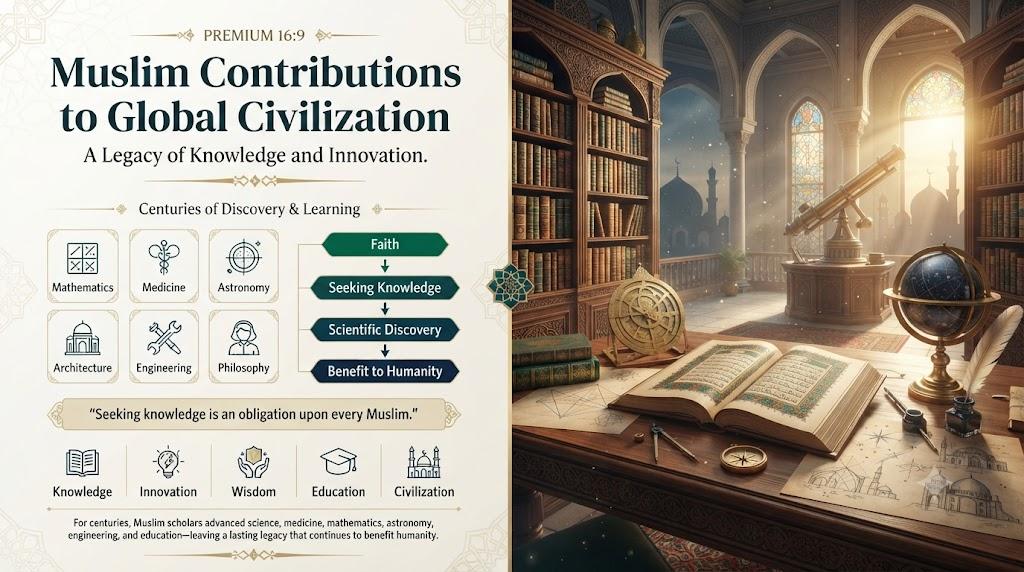
Islamic civilization’s contributions to human knowledge, science, technology, arts, and governance shaped modern world in ways often underrecognized. During Islam’s Golden Age (roughly 8th-14th centuries CE), Muslim scholars preserved ancient learning, advanced original research, developed transformative technologies, and transmitted knowledge to Europe enabling Renaissance. Recovering this history counters narratives of inherent civilizational conflict while inspiring contemporary Muslim engagement with knowledge production.
Translation movement represents foundational achievement. Caliph al-Ma’mun’s Bayt al-Hikma (House of Wisdom) in Baghdad sponsored massive translation project rendering Greek, Persian, Indian, and Syriac texts into Arabic. Works by Aristotle, Galen, Ptolemy, Euclid, and countless others survived because Muslim scholars valued and preserved them. Without this transmission, much classical heritage would have been lost—Europe later retranslated Arabic versions back into Latin, recovering philosophy and science enabling modern development.
Mathematics saw revolutionary advances. Al-Khwarizmi systematized algebra (his name gives us “algorithm”); his book Kitab al-Jabr introduced systematic solving of equations. Decimal positional numbering reached Islamic world from India and spread to Europe via Arabic texts. Trigonometry developed for astronomical purposes (sinus theorem, tangent functions). Mathematical terminology reveals Islamic origin: algorithm, algebra, zero (sifr), sine, azimuth, zenith, and many others derive from Arabic.
Medicine advanced significantly through figures like Ibn Sina (Avicenna), whose Canon of Medicine served as European textbook for centuries. Al-Razi (Rhazes) differentiated smallpox from measles, wrote clinical observations still studied. Ibn al-Nafis described pulmonary circulation centuries before Harvey. Hospitals (bimaristans) with specialized wards, medical libraries, and teaching functions modeled institutions later adopted in Europe. Pharmacy developed systematically with formularies and drug testing protocols.
Optics science transformed through Ibn al-Haytham’s experimental method. His Book of Optics overturned Greek emission theory (that eyes emit rays), establishing intromission theory (eyes receive reflected light) with experimental proof. Perspective geometry, camera obscura principles, and scientific methodology he pioneered influenced Roger Bacon and eventually Renaissance art techniques for realistic representation.
Astronomy reached sophisticated levels in Islamic observatories. Accurate star charts improved navigation (enabling Age of Exploration). Planetary models refined Ptolemaic systems. Astronomical instruments (astrolabe, quadrant, sextant) were perfected. Size of earth was calculated with impressive accuracy. Timekeeping for prayer times drove precision in astronomical calculation applicable broadly.
Philosophy and theology engaged reason with revelation productively. Al-Kindi, al-Farabi, Ibn Sina, Ibn Rushd (Averroes) developed sophisticated philosophical systems integrating Greek thought with Islamic principles. Kalam (speculative theology) employed logical argumentation defending doctrine. Mutazilite rationalism and Ash’arite occasionalism represented different epistemological approaches influencing subsequent Islamic thought and, through translation, medieval European scholasticism.
Literature produced enduring masterpieces. Poetry flourished from pre-Islamic odes through mystical verse (Rumi, Hafez, Attar) still widely read. One Thousand and Nights (Alf Layla wa-Layla) entered world literature canon. Travel writing (Ibn Battuta’s Rihla) provided geographic and ethnographic knowledge. Maqamat literature developed picaresque narrative forms anticipating modern fiction techniques.
Architecture developed distinctive aesthetic vocabulary. Dome, minaret, arch, courtyard, geometric ornamentation, calligraphic decoration, water features—these elements created recognizable Islamic architectural style adapted from Spain to India. Engineering innovations included sophisticated irrigation systems (qanat, noria), windmills, and construction techniques enabling monumental structures (Alhambra, Taj Mahal, Blue Mosque).
Governance concepts contributed to political theory. Caliphal legitimacy discussions, shura (consultation) principles, bay’ah (pledge) contracts, welfare state economics (zakat, waqf, public treasury management), and legal protections for non-Muslims (dhimmi system) offered alternatives to contemporaneous governance models. While practice often fell short of ideals, theoretical contributions merit study.
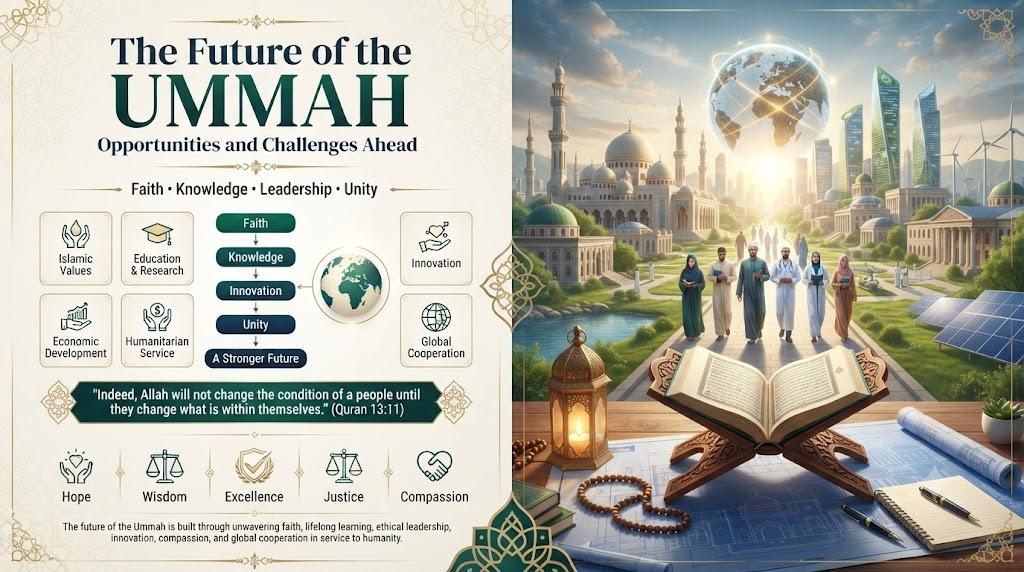
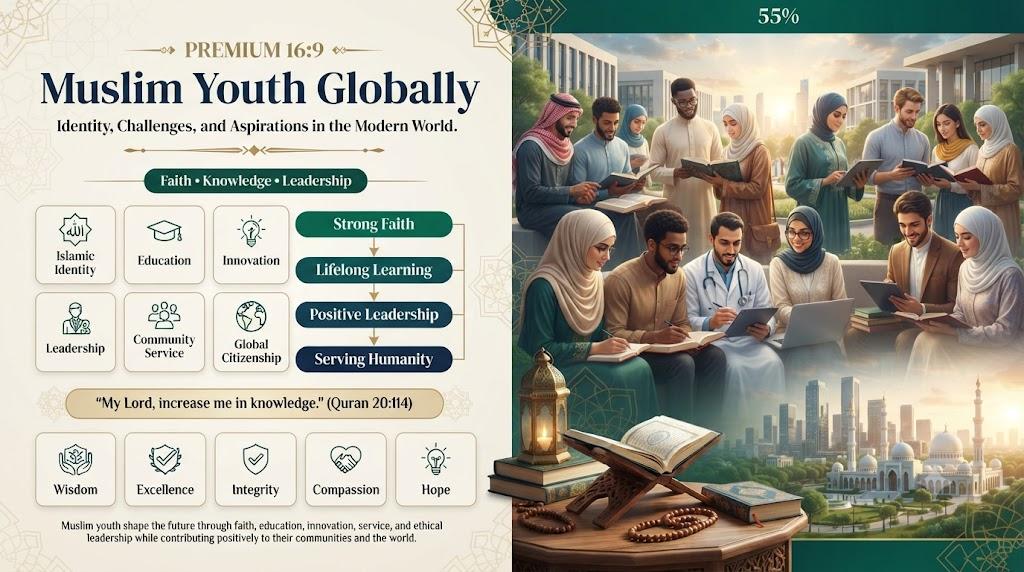
Contemporary implications involve reclaiming this heritage as foundation for renewed Muslim contribution to global knowledge economy. Scientific research, technological innovation, artistic production, and philosophical inquiry need revitalization drawing upon civilizational memory while engaging current frontiers. The same curiosity that drove Golden Age scholars can motivate today’s Muslims to address climate change, AI ethics, genetic engineering, and other challenges requiring ethical-intellectual leadership.
Teaching this history combats both Muslim inferiority complexes (absorbing narratives of perpetual decline) and non-Muslim supremacist ideologies (denying Islamic civilization’s value). Accurate historical awareness grounds healthy identity capable of productive engagement with contemporary pluralistic world. The legacy deserves remembrance not as nostalgia but as inspiration for future achievement.