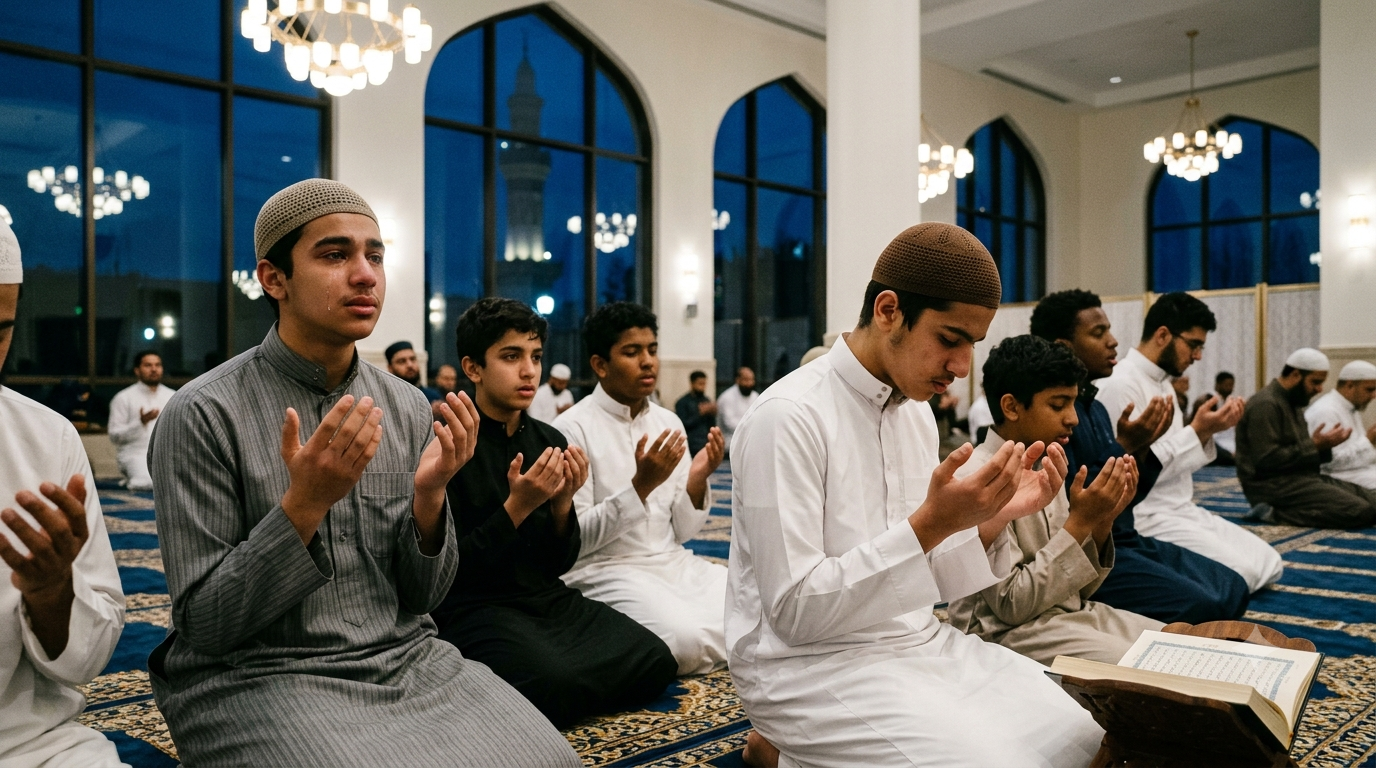
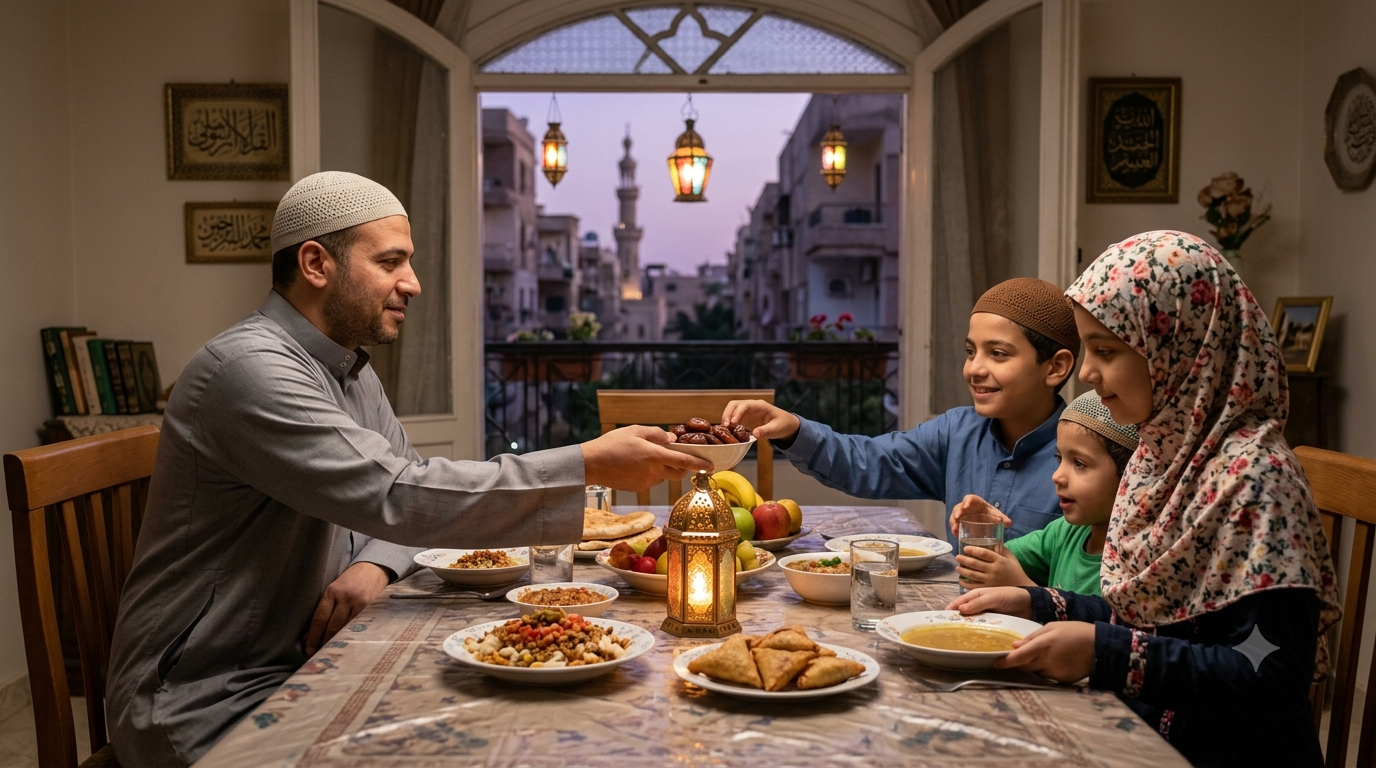
Ramadan uniquely positions families for spiritual bonding that other periods rarely facilitate. Shared fasting schedules, synchronized mealtimes, mosque attendance together, and collective focus on worship create natural opportunities for family connection infused with sacred purpose. Intentional cultivation of family dimension during Ramadan transforms individual spiritual pursuit into household-wide revival with lasting effects on domestic spiritual culture. The suhoor table sets daily tone for family Ramadan experience. Waking together for pre-dawn meal, however simple, establishes shared commitment before day begins. Children who participate in suhoor (even partially, even occasionally) learn that Islam structures daily rhythm around worship. Conversation at suhoor tends toward more serious topics than typical breakfast—appropriate for discussing Islamic themes, sharing knowledge, making intentions for day ahead. The physical act of eating together before fasting begins mirrors iftar’s communion while carrying unique pre-dawn intimacy. Involving children in Ramadan requires age-appropriate approaches. Young children (below puberty) are not obligated to fast but many families encourage “;practice fasting”;—partial days or occasional full days building toward eventual complete fasting. Celebrating children’s fasting achievements (first full fast, first week completed, etc.) reinforces positive association with religious practice. Explaining Ramadan’s meaning in language children understand develops Islamic literacy alongside spiritual formation. Teenagers face distinct challenges and opportunities—peer pressure regarding fasting, desire to fit in versus standing out, questions about religion’s relevance. Ramadan provides natural context for deeper conversations about faith, identity, and values. Respecting teenage autonomy while maintaining expectations requires parental wisdom. Modeling enthusiasm (rather than complaining about hunger or fatigue) influences children’s attitudes significantly—Islam transmitted more through caught than taught. Gender dynamics within families surface during Ramadan. Mothers often bear disproportionate burden for suhoor and iftar preparation—potentially reducing their own worship time while enabling others’. Conscious redistribution of household labor during Ramadan ensures women have equal access to spiritual opportunities. Fathers’ increased presence during Ramadan (coming home early for iftar, attending taraweeh with family) provides modeling and bonding simultaneously. Siblings relating to each other during Ramadan may find reduced conflict (shared hunger somehow softening rivalry) or increased tension (same factor lowering patience)—awareness helps manage whichever pattern emerges. Extended family connections strengthen during Ramadan. Inviting relatives for iftar fulfills sunnah of feeding fasting person while maintaining family ties. Visiting elderly relatives who cannot come to iftar demonstrates care beyond convenience. Reconciling estranged family members during blessed month carries special blessing—Ramadan as context for forgiveness and fresh starts. Grandparents transmitting Ramadan traditions to grandchildren links generations through shared practice. Cultural variations in family Ramadan observance enrich global Muslim experience. Foods served vary enormously—yet every iftar table represents same fundamental reality: family gathered in blessing. Some families read Quran together; others discuss Islamic topics informally; still others focus on enjoying each other’s company with implicit spiritual content. None of these approaches is necessarily superior; what matters is intentional family connection within framework of shared faith commitment. Technology impact on family Ramadan deserves consideration. Phones at iftar table fragment attention that should unify. Individual screen time during Ramadan evenings replaces potential family interaction. Yet technology can also enhance family Ramadan—shared Quran apps, Islamic video content watched together, video calls with distant relatives for “;virtual iftar.”; Conscious management determines whether technology serves or undermines family spiritual goals. Conflict resolution during Ramadan carries multiplied blessing. The Prophet taught that Ramadan is month whose beginning is mercy, middle is forgiveness,
end is emancipation from Hellfire. Applying this to family conflicts means: extending mercy generously at month’s start, forgiving grievances during middle period, and releasing resentments completely by month’s end. If Ramadan cannot heal family rifts, when will? The spiritual atmosphere, reminder of mortality (fasting confronts physical vulnerability), and divine mercy abundant during this month—all support reconciliation efforts. Household worship practices establish family spiritual culture. Brief family halaqa (study circle) after iftar or before suhoor—reading short Quran passage together, discussing meaning, making collective dua—takes minimal time while creating powerful routine. Children leading portions of worship (even brief) builds confidence and investment. Parents admitting ignorance (“;I don’t know that answer—let’s look it up together”;) models honest learning posture. Consistency matters more than length or sophistication—five minutes daily beats occasional long sessions. Balancing mosque attendance with family presence requires discernment. Men attending taraweeh at mosque fulfill sunnah while women often have option of home or mosque attendance. Families attending together when possible (some mosques accommodate this) create powerful shared memory. When separation occurs (men at mosque, women/children at home), ensuring home worship is meaningful rather than perfunctory maintains equity. Communication about expectations prevents resentment. Single-parent households, those without Muslim family nearby, and individuals living alone face distinct challenges during Ramadan. Creating “;chosen family”; connections—with friends, mosque community, roommates—partially substitutes for missing blood-family bonds. Hosting or being hosted for iftar expands family boundaries meaningfully. Online communities provide connection (though cannot fully replace physical presence). Recognizing that Ramadan can intensify loneliness for some prompts outreach to those potentially isolated. Post-Ramadan family continuity often determines lasting impact. If Ramadan represents isolated spiritual intensity disconnected from rest of year’s family patterns, effects fade quickly. If Ramadan establishes or reinforces ongoing practices (family Quran reading, regular dua together, improved communication patterns, continued hospitality), transformation proves more durable. Discussing as family: “;What from Ramadan do we want to keep?”; before month ends facilitates intentional continuity. The vision extends beyond surviving Ramadan to thriving as Muslim family throughout year—using blessed month as launchpad for permanent elevation of household spiritual life. Every iftar shared, every suhoor together, every taraweeh prayed in proximity, every Quran verse discussed, every forgiveness granted, every laugh exchanged during this holy month invests in family bond that—insha’Allah—extends into eternity where family reunions occur in paradise for those who merited it together.