The science of hadith (hadith studies) represents one of humanity’s most sophisticated methodologies for verifying transmitted knowledge. Long before modern historical criticism developed, Islamic scholars created rigorous systems for evaluating prophetic traditions based on chain of narration (isnad), textual analysis (matn), and biographical assessment of transmitters. This scientific approach to preserving the Prophet’s teachings demonstrates Islam’s commitment to authentic revelation.
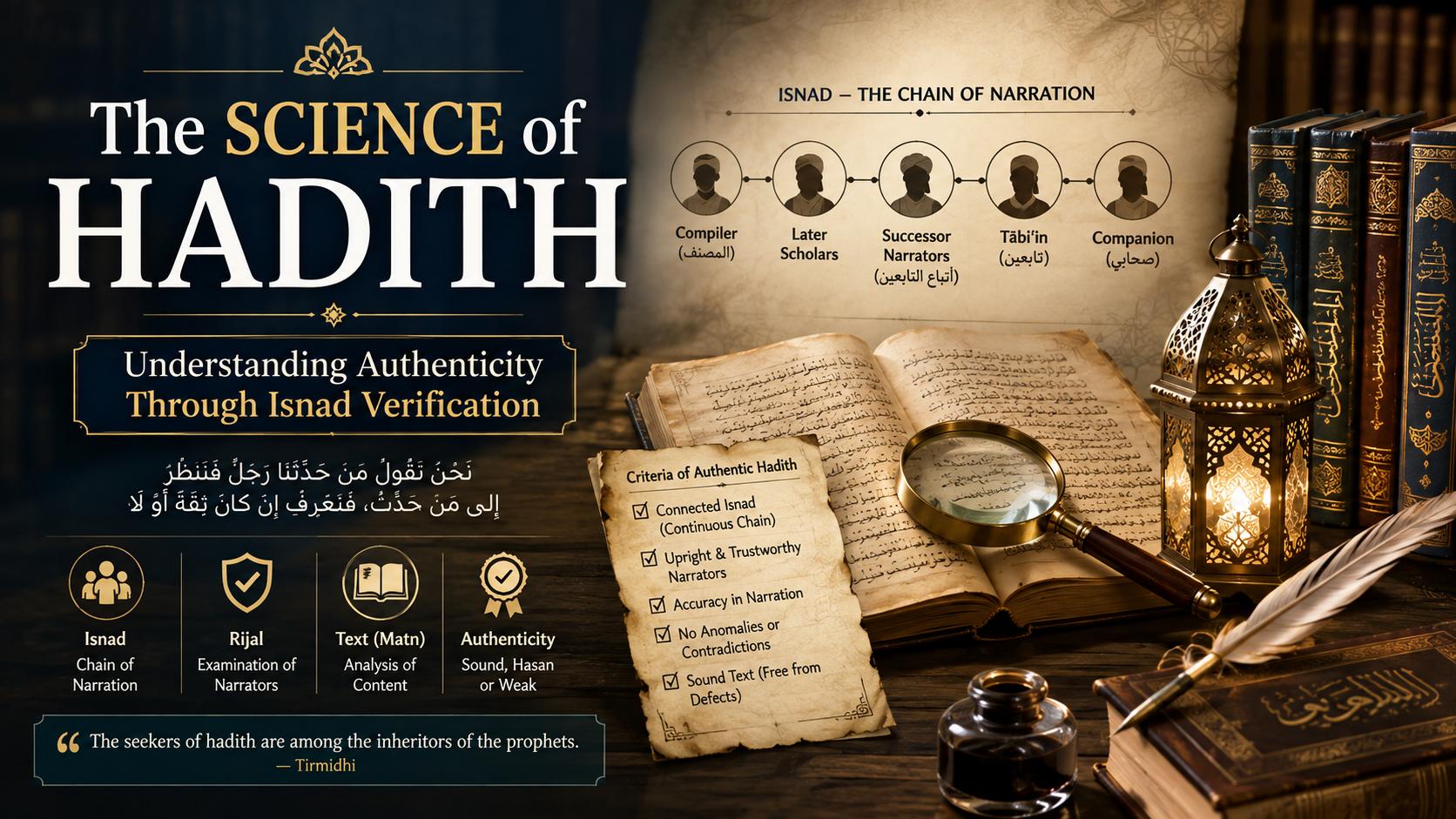
The isnad system forms the backbone of hadith authentication. Each tradition must trace back to the Prophet Muhammad (peace be upon him) through a continuous chain of reliable narrators. Scholars meticulously documented each transmitter’s character, memory capacity, geographical movements, and teacher-student relationships. A narrator who displayed dishonesty in mundane affairs was automatically disqualified from transmitting religious material—a standard far exceeding ordinary historical documentation.
Imam Malik ibn Anas famously stated that isnad verification itself distinguishes authentic Islamic scholarship from other religious traditions. Before Islam’s emphasis on chain documentation, religious communities generally attributed teachings to founders without specifying transmission paths. The Muslim innovation of requiring complete chains created accountability impossible to fabricate systematically.
Biographical evaluation (ilm ar-rijal) produced extensive literature assessing thousands of narrators. Works like Ibn Hajar’s “Tahdhib al-Tahdhib” and Ibn Abd al-Barr’s “al-Isti’ab” contain detailed assessments including birth/death dates, geographic reach, scholarly output, and reliability ratings. This database allowed later scholars to evaluate any hadith’s strength by examining each link in its chain.
Hadith classifications reflect varying levels of authenticity. Sahih (authentic) requires upright narrators with excellent memory and continuous chain without hidden defects. Hasan (good) relaxes some conditions while maintaining general reliability. Da’if (weak) indicates insufficient evidence for legal rulings but may retain value for encouragement or warning. Maudu’ (fabricated) represents deliberate forgery warranting identification and rejection.
Textual analysis complements chain evaluation. Scholars examined whether hadith content contradicted established Quranic principles or more authentic reports. They checked for anachronisms, linguistic anomalies, or theological problems indicating fabrication. This matn criticism prevented clever forgers from simply inventing plausible chains while inserting problematic content.
The six canonical collections (kutub sittah) represent centuries of scholarly synthesis. Sahih al-Bukhari and Sahih Muslim enjoy highest consensus acceptance, with Bukhari containing approximately 7,275 selected from 600,000 examined during sixteen years of travel. Imam Bukhari’s criteria were so stringent that he would pray istikhara before recording any hadith, ensuring divine guidance in selection process.
Contemporary relevance of hadith science extends beyond academic interest. Muslims regularly encounter competing claims about what the Prophet said or did. Understanding authentication principles enables intelligent evaluation rather than blind acceptance or cynical rejection. Basic familiarity with sahih versus da’if categories helps believers prioritize authentic guidance while avoiding weak fabrications.
Modern challenges include Orientalist critiques questioning hadith preservation and internal debates among Muslims about specific traditions. These discussions benefit from grounding in classical methodology rather than ad hoc approaches. The sophisticated framework developed by early scholars provides tools for addressing contemporary questions responsibly.
Preserving hadith required sacrifice from countless scholars who traveled desert distances, memorized thousands of texts, and dedicated lifetimes to verification work. Their efforts ensured that the Prophet’s example remains accessible fourteen centuries after his passing. Every Muslim who follows a sunnah practice benefits from this extraordinary scholarly heritage.
Engaging with hadith science need not mean becoming a specialist. Basic literacy in authentication concepts enhances appreciation for preserved traditions while protecting against manipulation. The Prophet’s guidance deserves careful transmission—and received exactly such care through generations of committed scholars.