
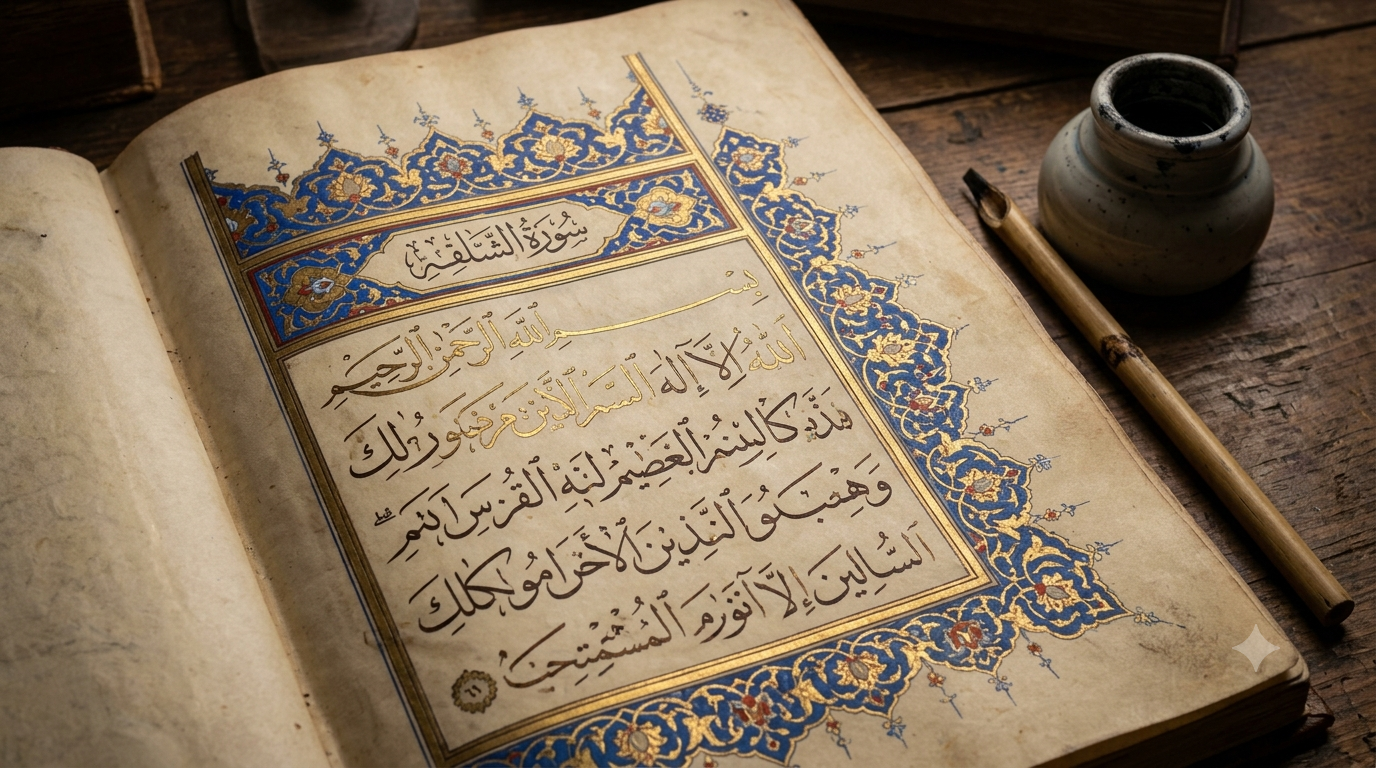
Islamic calligraphy (khatt) represents unique art form elevating writing to highest aesthetic expression while serving religious function. Unlike calligraphic traditions treating text as medium for artistic exploration, Islamic calligraphy primarily renders sacred Quranic text—making the act of beautifying divine words simultaneously artistic devotion and spiritual discipline. This dual nature gives Islamic calligraphy distinctive character among world art forms.
Theological foundations establish calligraphy’s special status. As visual representation of divine revelation (Quran), calligraphy carries sanctity exceeding ordinary art. The Prophet indicated that those beautifully write Bismillah will enter paradise with angels; companions carefully preserved Quranic verses in written form. This reverence for written word elevated script from mere communication tool to sacred art worthy of finest craftsmanship.
Script development reflects adaptation to aesthetic and practical needs. Early Hijazi script (used for earliest Quran manuscripts) evolved into more formal styles: Kufic with its angular, monumental quality; Naskh with its readable clarity becoming standard for Quran printing; Thuluth with its elegant proportions used in architectural inscription; Diwani with its flowing complexity used for official documents; and numerous regional variants (Maghribi, Persian, Chinese Arabic script). Each style serves different contexts while maintaining connection to sacred origin.
Tools and materials matter significantly in calligraphic practice. Traditional pen (qalam) cut from dried reed produces characteristic line variation depending on angle, pressure, and speed. Ink formulations affect flow and permanence—soot-based black ink for durability, colored inks for decoration. Paper (or traditionally parchment) surface preparation influences ink absorption. Modern calligraphers sometimes use traditional tools for authenticity or adapt brushes and pens for contemporary effects.
Mastery requires years of disciplined training under expert guidance (ustadh). Students begin with basic letter forms, progressing through combinations, words, and eventually complex compositions. Physical posture,
breathing technique, and mental focus all affect output quality. The meditative aspect of repetitive practice parallels spiritual disciplines—calligraphy becomes devotional act refining both hand and heart.
Major historical calligraphers set standards still emulated today. Ibn Muqla (died 940 CE) established proportional system governing letter relationships. Ibn al-Bawwab (died 1022 CE) perfected Naskh script to such degree that copies he produced of Quran were considered miracles of beauty. Mir Ali Tabrizi (died 1547 CE) developed Nasta’liq script combining elegance with readability, particularly suited to Persian poetry. These masters’ works remain study references.
Contemporary applications extend beyond traditional contexts. Graphic design incorporates calligraphic elements into logos, branding, and digital media. Street art movement includes calligraffiti—spray-painted calligraphy on urban walls. Fashion uses calligraphic motifs on textiles and accessories. Typography design creates new fonts based on classical models. These adaptations keep tradition vital while reaching new audiences.
Regional styles reflect cultural diversity within Islamic world. Ottoman Turkish calligraphy emphasizes bold Thuluth and elaborate compositions. Persian calligraphy favors fluid Nasta’liq with poetic associations. Chinese Islamic calligraphy (Sini script) combines Arabic with brush techniques producing distinct appearance. Maghribi styles in North Africa retain Andalusian influences. This diversity demonstrates calligraphy’s adaptability across cultures.
Digital technology transforms calligraphic practice and preservation. Vector graphics enable precise reproduction of designs for scaling without quality loss. 3D modeling creates sculptural calligraphic installations. Online learning platforms make instruction accessible globally. Digital archives preserve fragile manuscripts virtually. However, purists argue that screen display cannot replace ink-on-paper’s tactile spiritual presence.
Learning calligraphy offers Muslims meaningful artistic pursuit combining skill development with faith expression. Even basic ability to write beautiful Bismillah or personal names in Arabic script connects practitioner with centuries-old tradition. Classes exist in many Muslim communities; online tutorials supplement local instruction; books provide self-study resources. Beginning requires only reed pen, ink, paper, and patience.
Calligraphy’s ultimate purpose remains glorification of divine word. Whether rendered on mosque wall, manuscript page, ceramic tile, or digital screen, beautiful Quranic text invites contemplation of meaning while demonstrating reverence through aesthetic effort. The calligrapher’s intention (niyyah)—to honor Allah’s words through skilled labor—transforms technical craft into accepted worship form when done sincerely.


