
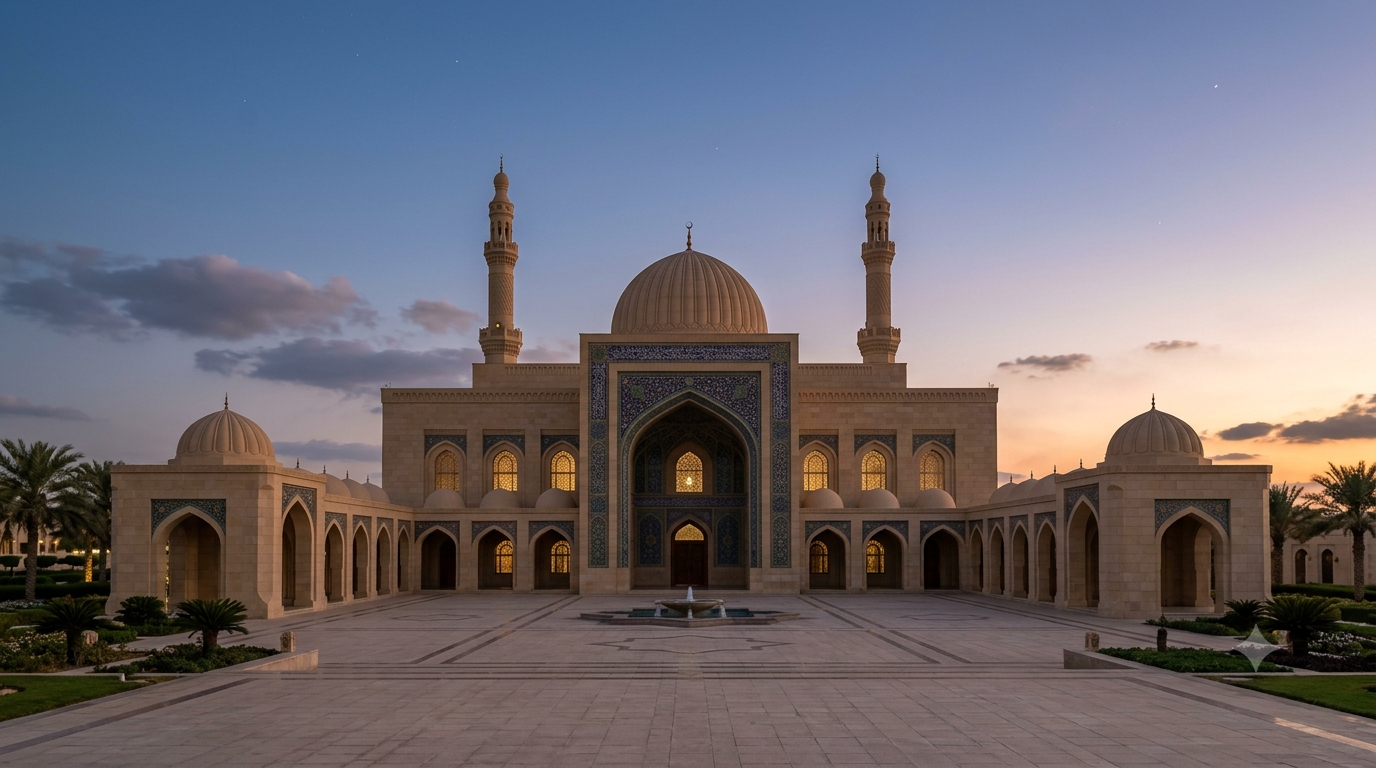
Mosque architecture represents sacred space par excellence in Islamic tradition—physical environment specifically designed to facilitate worship, community gathering, and spiritual experience. Beyond mere functional building, mosque architecture embodies theological principles, cultural expressions, and aesthetic aspirations of communities that construct them. Understanding mosque architecture’s elements, evolution, and spatial dynamics enriches appreciation for these central institutions of Muslim life.
Fundamental requirements shape every mosque regardless of style or scale. Direction toward qibla (Kaaba in Mecca) determines orientation and layout—mihrab (prayer niche) marks qibla direction on qibla wall. Space for congregational prayer must accommodate worshippers in rows behind imam. Facility for ablution (wudu) enables ritual purification before prayer. Minaret (originally for call to prayer, now largely symbolic/functional for amplification) identifies building as mosque. These essentials appear across all periods and regions with varying elaboration.
Prophetic mosque model establishes prototype. Muhammad’s mosque in Madinah was simple rectangular structure with shaded area, date palm trunk columns, thatched roof, and courtyard (sahn). It served multiple functions: prayer space, community center, court, school, and reception area for delegations. Its humility and multi-functionality influenced subsequent mosque design—even grand imperial mosques maintain essential openness and community-service orientation.
Early mosque architecture (7th-10th centuries) adapted existing forms. Great Mosque of Damascus (Umayyad, early 8th century) converted Christian basilica, preserving structural elements while Islamicizing decoration. Dome of Rock (Jerusalem, 691 CE) created octagonal shrine on Temple Mount—neither mosque nor church but uniquely Islamic sacred architecture. Great Mosque of Kairouan (Tunisia, 670-836 CE) established North African hypostyle hall model later widely copied. These early experiments established vocabulary for subsequent development.
Classical Ottoman mosque architecture achieved perhaps most refined expression. Sinan’s masterpiece Süleymaniye Mosque (Istanbul, 1557) perfectly balances massive central dome, semi-domes, minarets, and courtyard in harmonious composition. Interior space feels simultaneously vast and intimate—supporting both communal worship and individual devotion. Blue Mosque (Sultan Ahmed, 1616) adds six minarets and extensive tile decoration achieving jewel-like effect. Ottoman mosques influence spread through Balkans, Middle East, and Arabian Peninsula.
Persian mosque architecture emphasizes iwan (vaulted hall) four-directional layout. Friday Mosque of Isfahan (11th-18th centuries) exemplifies this approach with four iwans facing each other across central courtyard, each iwan backed by domed chamber. Extensive tilework covers surfaces with intricate floral and geometric patterns in blue palette. Vaulting displays sophisticated brickwork geometry. Persian mosque design influenced Central Asian and Mughal architecture significantly.
Mughal mosque architecture blends Persian elements with Indian traditions. Taj Mahal complex’s mosque (Agra, 1653) sits beside mausoleum, featuring white marble construction, three domes, and pishtaq (projecting portal) entrance. Badshahi Mosque (Lahore, 1673) ranks among world’s largest mosques with courtyard accommodating 100,000 worshippers. Red sandstone construction with white marble inlay creates distinctive visual identity. Mughal mosques served imperial function alongside religious purpose.
Contemporary mosque architecture engages with modernism and regional identity. Shah Faisal Mosque (Islamabad, 1986) abandons dome/minaret model for tent-like Bedouin-inspired structure referencing Arab origins. Masjid Negara (Kuala Lumpur, 1965) features modernist folded-plate roof suggesting open umbrella. Sheikh Zayed Grand Mosque (Abu Dhabi, 2007) combines multiple Islamic architectural traditions in monumental synthesis. Debates continue about appropriate balance between innovation and tradition, between international style and local character.
Spatial experience of mosque visit involves progression from secular to sacred space. Entering courtyard transitions from street bustle to ordered tranquility. Performing wudu prepares physically and ritually. Removing shoes signals respect and equality before Allah. Moving toward prayer row positions oneself in collective body facing single direction. Prayer itself synchronizes movement, voice, and intention with community. Post-prayer quiet allows individual supplication. This choreographed sequence creates transformative ritual experience.
Acoustic considerations affect worship experience significantly. Carpet absorbs sound preventing echo disruption. Domes create natural amplification enabling imam’s voice to reach congregation without electronic assistance (in well-designed spaces). Hard surfaces elsewhere can cause problematic reverberation. Material choices balance acoustic needs with aesthetic preferences and maintenance requirements.
Light plays crucial symbolic and practical role. Natural light through windows, domes, and screens (mashrabiya) creates dynamic environment changing throughout day—symbolizing divine presence manifest differently at each moment. Artificial lighting extends usability for night prayers (isha, tarawih) while creating different atmosphere. Some mosques minimize artificial light to encourage natural rhythm awareness; others illuminate extensively for safety and convenience.
Community role extends beyond prayer functions. Mosques host educational programs (halaqah, classes), social services (marriage contracts, dispute resolution, charity distribution), political gatherings (Friday khutbah addresses current issues), and recreational activities (especially during Ramadan). Architecture supporting these varied functions differs from purely prayer-focused design—requiring flexible spaces, meeting rooms, libraries, kitchens, and administrative areas.
Visiting mosques across diverse cultures reveals how universal requirements adapt to local conditions. Chinese mosques may feature pagoda-style minarets; West African mosques use mud-brick construction with wooden pillar support; Indonesian mosques adopt Javanese roof forms; American mosques navigate zoning codes and parking requirements while maintaining Islamic character. This diversity within unity reflects Islam’s global nature adapting to local contexts while preserving essential functions.
Mosque architecture ultimately serves human need for sacred space—environment facilitating connection with transcendent reality amid mundane concerns. Whether humble neighborhood musalla or magnificent cathedral-mosque, the building’s purpose remains identical: providing place where humans can stand before their Creator collectively and individually, finding through architecture’s gifts of beauty and order foretaste of divine beauty and perfect order awaiting believers in hereafter.


