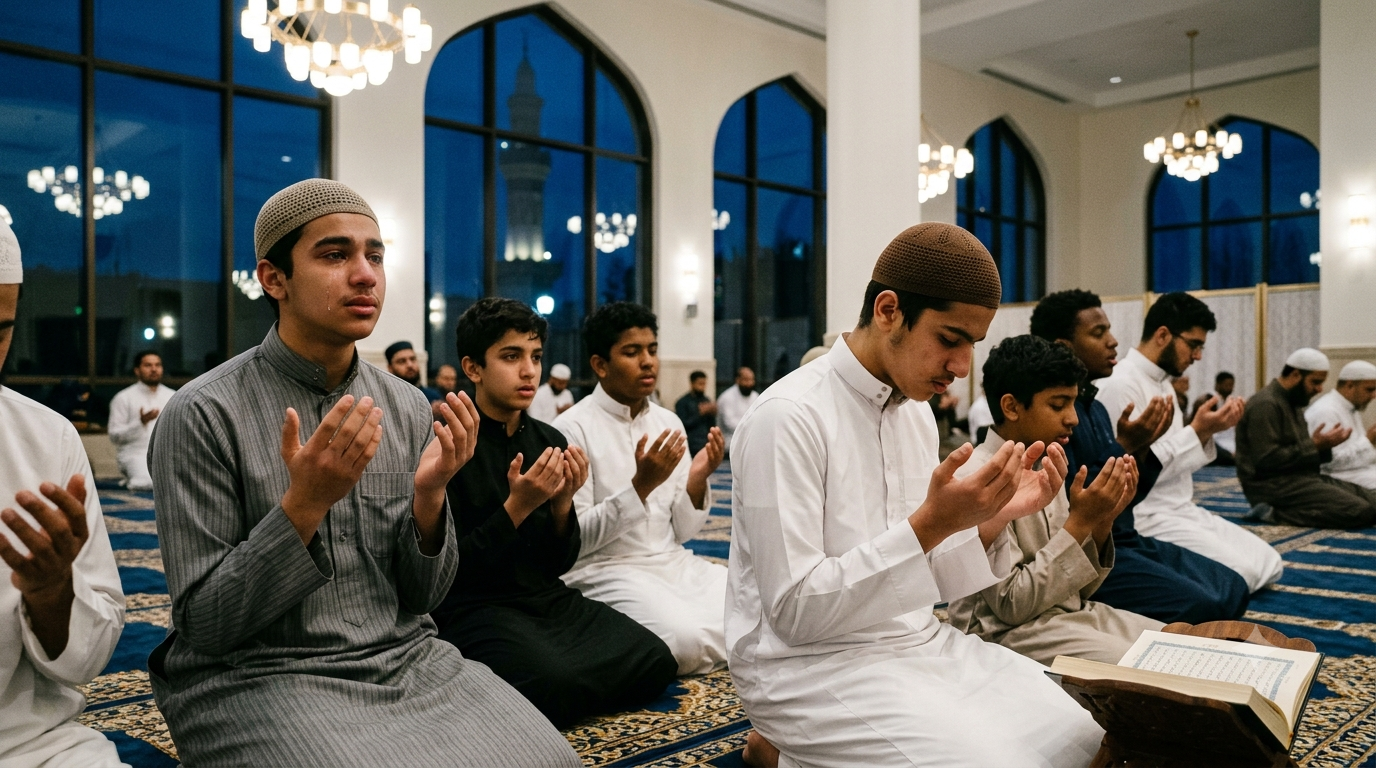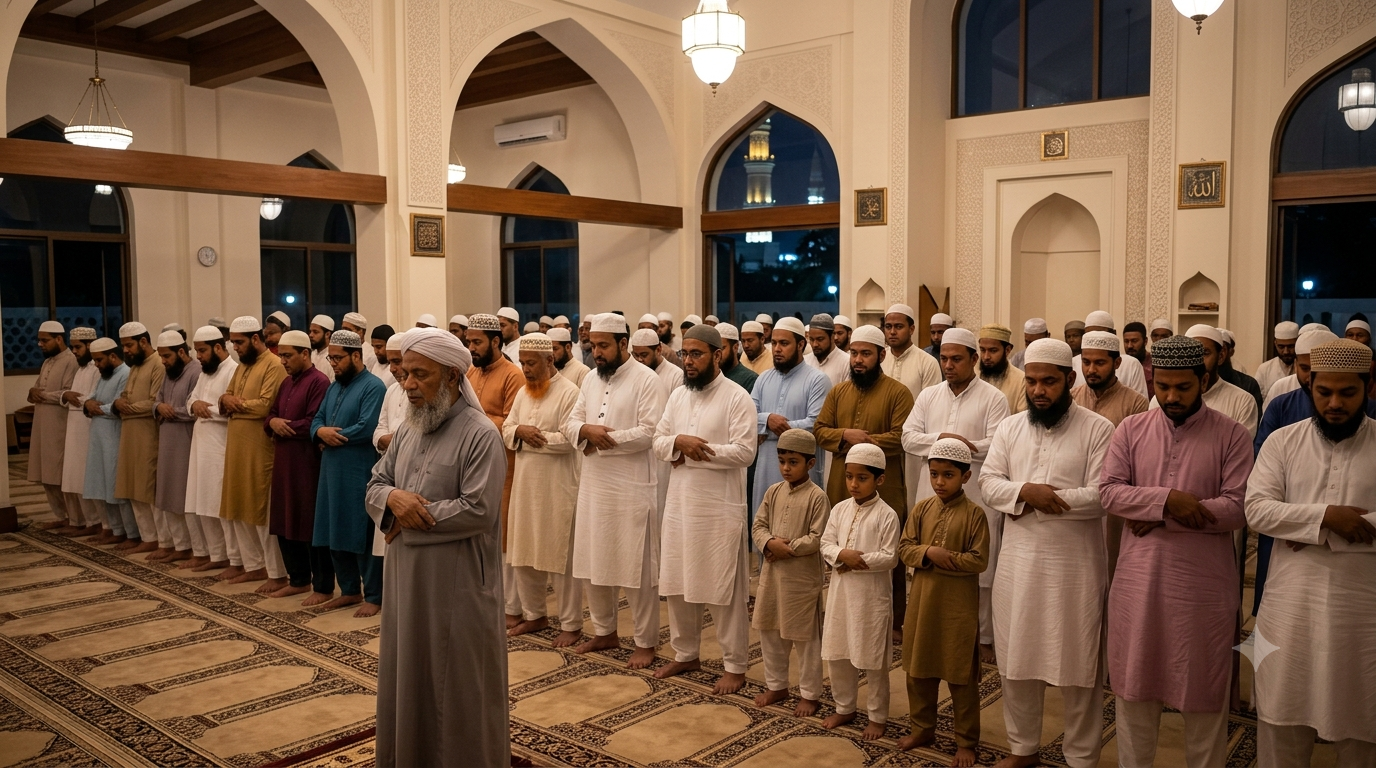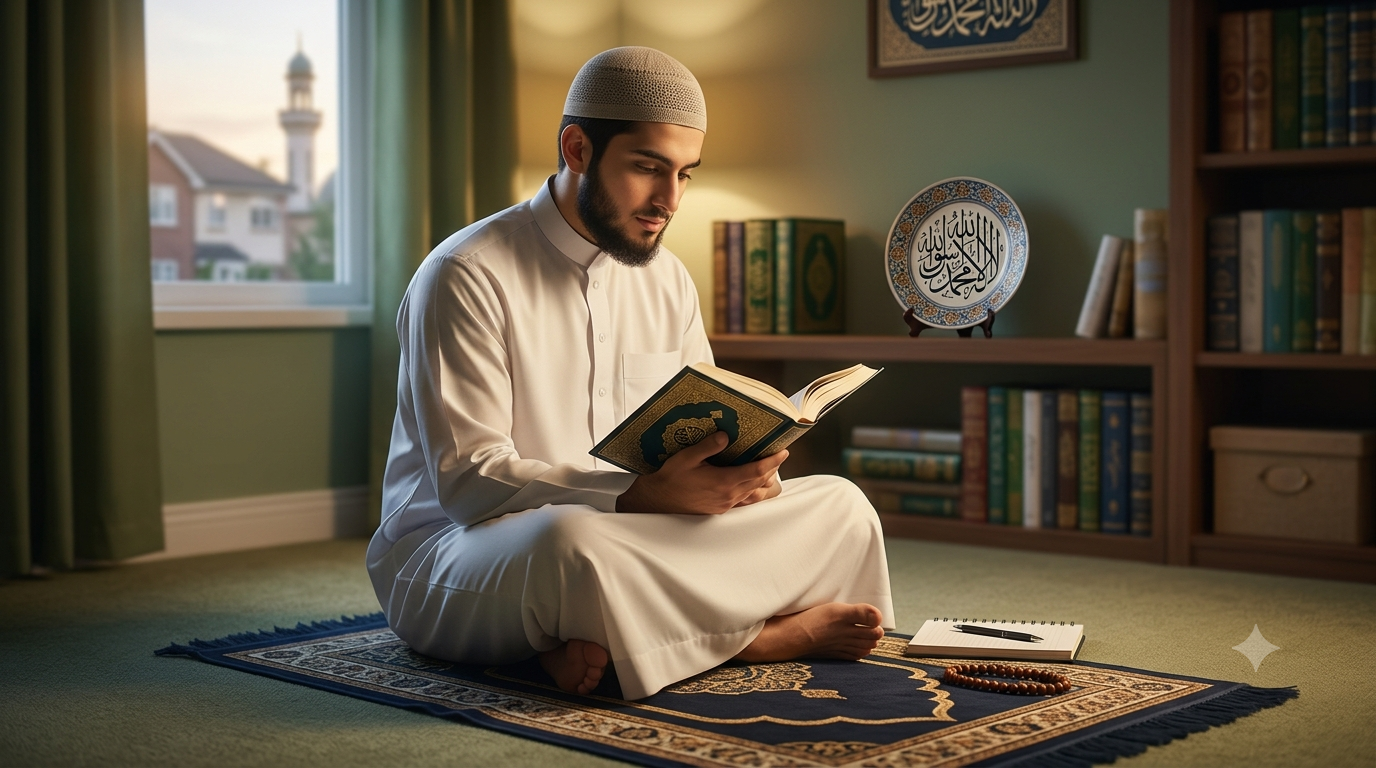
The rhythm of Ramadan revolves around two daily meals framing the fasting period: suhoor (pre-dawn meal) and iftar (breaking fast at sunset). Far more than mere nutritional bookends to abstention, these meals carry prophetic endorsement, barakah (blessing), communal significance, and spiritual dimensions transforming eating into worship. Approaching suhoor and iftar intentionally maximizes both physical sustenance and religious benefit during blessed month. Suhoor holds distinctive status in prophetic teaching. “;Eat suhoor, for in suhoor there is blessing”; (Bukhari/Muslim)—explicit encouragement establishing this meal as recommended practice (sunnah muakkada) rather than optional convenience. The blessing manifests multiple ways: physical (enabling day-long fasting that might otherwise prove impossible), spiritual (rising for suhoor often enables fajr prayer on time and in congregation), and metaphysical (barakah inherent in following prophetic practice regardless of visible mechanism). Despite its virtue, many Muslims neglect suhoor—sleeping through, considering it too burdensome, or underestimating its importance. Reclaiming suhoor as non-negotiable Ramadan practice yields significant benefits. Suhoor timing involves tradeoffs. Eating immediately before fajr minimizes fasting duration but risks oversleeping prayer or feeling sluggish from very recent food consumption. Eating earlier (midnight or before) allows digestion but extends fasting period and may lead to increased hunger/thirst later. Individual physiology, schedule, and experience determine optimal timing; experimentation early in Ramadan identifies what works best. What matters most: actually eating something, however modest, rather than skipping entirely. Suhoor composition significantly affects fasting experience. Complex carbohydrates (oats, whole grain breads, brown rice, beans, lentils) release energy slowly, sustaining blood sugar through morning hours when
hypoglycemia might otherwise trigger irritability or weakness. Protein sources (eggs, yogurt, cheese, nuts) promote satiety and preserve muscle mass during extended fasting period. Healthy fats (avocado, olive oil, nuts) support brain function and provide calorie density without large volume. Fiber (vegetables, whole grains) aids digestion and promotes satiety. Hydration is crucial—drinking adequate water at suhoor partially compensates for daytime abstention. What to avoid: excessive sugar (causes spike and crash), very salty foods (increases thirst), caffeine for sensitive individuals (withdrawal symptoms intensify during fasting), and heavy greasy meals (induces lethargy). Moderate portions beat overeating; discomfort from stuffed stomach undermines worship quality. Cultural suhoor traditions vary richly. Some communities favor hearty cooked meals similar to dinner. Others prefer light fare—yogurt, dates, nuts, simple breads. Specific dishes carry regional identity: certain grains, traditional preparations, inherited recipes. These traditions connect contemporary Ramadan to generational continuity and cultural heritage. While nutrition science should inform choices, dismissing cultural suhoor foods entirely severs meaningful connections. Balance between health optimization and cultural preservation serves both body and soul. Iftar marks daily transition from fasting state to fed state—from worship through abstention to worship through gratitude. The Prophet’s practice: breaking fast with fresh dates (odd number: three, five, or seven) and water; if no dates available, with water; then proceeding to maghrib prayer before eating full meal. This sequence prioritizes spiritual over physical—worship before satisfaction of appetite. Dates provide quick natural sugar restoring glucose levels after hours of fasting; their nutritional profile (fiber, potassium, magnesium, antioxidants) makes them medically appropriate for breaking fast. Following this prophetic model connects daily practice to Sunnah while serving physiological needs. Psychological dimensions of iftar deserve attention. Hunger accumulated over day may drive rapid eating, overconsumption, and poor food choices once permission to eat arrives. Mindful eating—beginning slowly, chewing thoroughly, pausing to assess satiety—prevents the common pattern of consuming more calories during Ramadan eating windows than normal days would include. Gratitude reflection before first bite transforms mechanical consumption into conscious blessing reception. Awareness that many lack food we take for granted maintains empathy beyond personal fasting experience. Communal iftar multiplies blessing. “;Whoever gives iftar to one who is fasting will earn reward equal to his, without the faster’s reward being diminished in any way”; (Tirmidhi/Ibn Majah). Hosting others—family members, friends, neighbors, community members—fulfills this prophetic promise. Mosque iftar programs serve broader community, particularly those without family nearby or resources for abundant meals. Even contributing dish to shared iftar (when hosting full meal impractical) participates in collective blessing. The social dimension of iftar strengthens community bonds, creates opportunities for reconciliation, and models generosity for children witnessing parental hospitality. Iftar composition ideally balances nutrition, tradition, and moderation. Breaking with dates/water begins refeeding safely. Soup (traditional in many cultures) provides easy initial nutrition and hydration. Main course should include protein for tissue repair, complex carbohydrates for glycogen restoration, vegetables for micronutrients. Traditional Ramadan foods (often fried/sweet) deserve place but in moderation—cultural celebration need not contradict health consciousness. Hydration continues through iftar period; water remains optimal beverage though traditional drinks (jallab, amar al-deen, laban ayran) add cultural richness. Dessert in moderation satisfies sweet cravings developed during fasting without undoing day’s caloric deficit. Post-iftar window before isha/taraweeh offers opportunity often underutilized. Rather than immediately collapsing into rest or diversion, this period suits: brief family connection, light physical activity (helps digestion), Quran reading (especially effective when mind is alert from recent eating), or simply resting in preparation for night worship.
Phone-free iftar (putting devices away during meal) preserves interpersonal connection and mindful eating that screens disrupt. Establishing post-iftar routine captures this valuable time intentionally. Special populations require adapted approaches. Diabetics fasting during Ramadan need medical supervision of suhoor/iftar composition, timing, and medication adjustment—consultation with healthcare provider before Ramadan is essential. Pregnant and nursing women exempt when fasting harms mother or baby; those who fast with permission should prioritize nutrient-dense foods. Elderly individuals may have reduced appetite or digestive capacity requiring easily digestible nutrition. Athletes training during Ramadan must strategically time nutrients around activity windows. Children who fast partial days need age-appropriate portions ensuring adequate nutrition for growth. Individual circumstances modify general principles appropriately. The spiritual dimension permeates both meals. Intention (niyyah) transforms suhoor from mere breakfast into preparation for worship—eating to enable fasting for Allah’s sake. Gratitude at iftar acknowledges Allah’s provision ending abstention period—recognizing that food ultimately flows from His bounty through intermediate means. Sharing food with others reflects divine attribute of providing (ar-Razzaq) manifested through human agency. Conscious eating—mindful of blessing, moderate in amount, grateful in attitude—converts mundane nutrition into continuous remembrance. Both suhoor and iftar, approached properly, become extensions of Ramadan’s worship rather than interruptions or challenges to it. Each day’s cycle of suhoor-fasting-iftar creates rhythm structuring blessed month around alternating dependence on Allah (during fast) and gratitude for His provision (at meals). Living this rhythm consciously for thirty days cultivates permanent orientation toward divine generosity manifest in all sustenance—food and beyond.
10 Insightful Articles
ON THE MUSLIM UMMAH
Global Community | Unity in Diversity | Islamic Doctrine
Prepared for Muslim Portal (muslimportal.net)
Generated: August 3, 2026
Table of Contents
Article 1: The Concept of Ummah in Islam: Understanding the Global Muslim Community
The term “;Ummah”; stands as one of the most profound and significant concepts in Islamic theology and social philosophy. Derived from the Arabic root “;amma,”; meaning “;to aim at”; or “;to seek,”; Ummah transcends the conventional understanding of community or nation-state. It represents a spiritual brotherhood that binds approximately two billion Muslims across every continent, culture, and ethnicity into a single body of believers united by their faith in Allah and devotion to the teachings of Prophet Muhammad (peace be upon him).
The Quranic foundation of Ummah establishes this concept as central to Islamic identity. Allah declares in Surah Al-Imran (3:110): “;You are the best community [Ummah] raised up for mankind, enjoining what is right and forbidding what is wrong, and believing in Allah.”; This verse not only defines the Muslim community’s purpose but also establishes its responsibility toward humanity at large. The Ummah is not merely a passive association of believers but an active force charged with promoting righteousness and justice in the world.
What distinguishes the Islamic concept of Ummah from other forms of community is its fundamentally spiritual yet practical nature. Unlike national boundaries determined by geography, ethnicity, or language, the Ummah is defined by shared belief and practice. A Muslim from Indonesia shares the same fundamental bond with a Muslim from Nigeria or Norway as they would with a Muslim from Mecca itself. This transcendent unity was demonstrated beautifully during the Hajj pilgrimage, where millions of Muslims from diverse backgrounds gather in identical simple garments, standing equal before their Creator.
The Prophet Muhammad (peace be upon him) exemplified the ideal of Ummah through his actions and teachings. He established the Constitution of Medina (Sahifat al-Madinah), which created a pluralistic society where Muslims, Jews, and pagans coexisted under mutual protection and cooperation. This document, considered one of history’s first written constitutions, established principles of religious freedom, collective security, and social responsibility that remain relevant today.
In contemporary discourse, understanding Ummah has become increasingly important as Muslims navigate the complexities of modern globalization while maintaining their religious identity. The concept provides a framework for addressing issues such as international Muslim cooperation, humanitarian response to crises affecting Muslim populations, and the preservation of Islamic values in secular societies. It reminds individual Muslims that they belong to something greater than themselves—a global family that spans centuries and civilizations.
The responsibilities of Ummah membership extend beyond ritual worship to encompass social, economic, and political dimensions. Muslims are commanded to care for their fellow believers, support just causes, and
work collectively for the betterment of humanity. This collective consciousness manifests in institutions such as Zakat (obligatory charity), which functions as a wealth redistribution system within the Ummah, and Waqf (endowment) foundations that establish hospitals, schools, and social services for community benefit.
As we examine the state of the Muslim world today, the concept of Ummah offers both inspiration and challenge. While political divisions, sectarian conflicts, and national interests often fragment the Muslim community, the underlying bonds of faith, shared values, and common aspirations continue to unite believers across boundaries. Understanding and revitalizing this concept may hold the key to addressing many challenges facing contemporary Muslim societies while contributing positively to global civilization.
Article 2: Unity in Diversity: The Strength of the Muslim Ummah
One of the most remarkable aspects of the Muslim Ummah is its extraordinary diversity. From the snow-covered mosques of Scandinavia to the bustling Islamic centers of Southeast Asia, from the ancient learning traditions of West Africa to the vibrant Muslim communities of the Americas, Islam encompasses an astonishing variety of cultures, languages, ethnicities, and traditions. Rather than being a weakness, this diversity represents one of the greatest strengths of the Ummah—a living testament to the universal message of Islam.
The Quran explicitly acknowledges and celebrates human diversity. In Surah Al-Hujurat (49:13), Allah proclaims: “;O mankind, indeed We have created you from male and female and made you peoples and tribes that you may know one another. Indeed, the most noble of you in the sight of Allah is the most righteous of you.”; This verse establishes diversity as part of divine wisdom, encouraging Muslims to learn from one another rather than allowing differences to become sources of division.
The historical spread of Islam across vast geographical and cultural territories naturally produced variations in local practice, artistic expression, and scholarly interpretation. Indonesian Islam, shaped by Sufi mysticism and local customs, differs in cultural expression from the legalistic traditions of the Arabian Peninsula or the philosophical approaches developed in Persian lands. Yet these variations exist within the framework of shared core beliefs—the Shahada (declaration of faith), the five daily prayers, fasting during Ramadan, Zakat, and Hajj—which provide unifying elements across all Muslim societies.
The four major schools of Islamic jurisprudence (Hanafi, Maliki, Shafi’i, and Hanbali) demonstrate how legitimate scholarly differences can coexist within a unified tradition. Each school emerged from different geographical and cultural contexts, reflecting various approaches to deriving legal rulings from primary sources. Rather than causing fragmentation, these schools have enriched Islamic jurisprudence by offering multiple perspectives on complex questions while maintaining respect for one another’s methodologies.
Contemporary challenges to unity within the Ummah often stem from politicization of differences that were historically managed through respectful disagreement. Sectarian tensions between Sunni and Shia communities, ideological conflicts between different interpretive movements, and nationalist rivalries between Muslim-majority states have sometimes overshadowed the fundamental bonds that unite all Muslims. Addressing these challenges requires returning to the Prophetic model of managing diversity through dialogue, mutual respect, and focus on common ground.
The principle of “;unity in diversity”; does not require uniformity nor does it demand agreement on every issue. Instead, it calls for recognition of shared fundamentals while respecting legitimate differences in secondary matters. The early Muslim community under Prophet Muhammad (peace be upon him) included people of varying
levels of faith, different tribal backgrounds, and even former enemies—all united by their commitment to Islam and the community’s welfare. This model suggests that contemporary Muslims can maintain unity despite differences in culture, methodology, or interpretation.
Practical steps toward strengthening Ummah unity include increased inter-cultural exchange programs among Muslim youth, collaborative projects addressing shared challenges such as Islamophobia and poverty, and platforms for constructive dialogue between different Muslim groups. Technology offers unprecedented opportunities for connection—social media, online educational resources, and virtual conferences can bring together Muslims who might never meet in person, fostering understanding and cooperation across geographical distances.
The strength derived from Ummah diversity becomes particularly evident when facing common challenges. Whether responding to natural disasters, advocating for Palestinian rights, addressing climate change, or combating extremism, the Muslim community’s varied resources, perspectives, and capabilities can be mobilized more effectively when diversity is recognized as an asset rather than a threat. A united yet diverse Ummah represents not only a spiritual ideal but also a practical advantage in navigating an increasingly complex global landscape.
Article 3: The Rights and Responsibilities of Ummah Members
Membership in the Muslim Ummah carries both profound privileges and significant responsibilities. Unlike secular notions of citizenship based primarily on legal status, belonging to the Ummah entails spiritual, social, and ethical obligations that shape every aspect of a believer’s life. Understanding these rights and responsibilities is essential for anyone seeking to comprehend the Islamic vision of community and individual purpose within the collective body of believers.
The foundational right of every Ummah member is dignity and respect. The Prophet Muhammad (peace be upon him) declared in his farewell pilgrimage: “;Your lives and properties are sacred to one another until you meet your Lord, as sacred as this day, this month, and this city.”; This statement established inviolable rights to life, honor, and property that every Muslim must respect regarding fellow believers. These rights are not earned through status, wealth, or achievement but accrue simply through membership in the community of faith.
Social rights within the Ummah extend to include protection from harm, access to basic necessities, and participation in communal affairs. The institution of Zakat represents a legally mandated mechanism for wealth redistribution, ensuring that the community’s needy members receive support from those with surplus resources. Beyond this obligatory charity, Muslims are encouraged to give voluntary Sadaqa, creating a culture of generosity that addresses needs falling outside formal systems. The early Muslim community in Medina demonstrated these principles by establishing the brotherhood (Mu’akhat) between Ansar (local residents) and Muhajirin (migrants from Mecca), where families shared homes, businesses, and inheritance.
Educational rights constitute another crucial dimension of Ummah membership. The pursuit of knowledge is considered both an individual duty and a collective obligation in Islam. Historically, Muslim communities established educational institutions ranging from local maktab (Quranic schools) to renowned universities like Al-Azhar, Al-Qarawiyyin, and the House of Wisdom in Baghdad. These institutions served not only Muslims but contributed to global knowledge preservation and advancement. Every member of the Ummah has the right to access education appropriate to their abilities and circumstances, and the community bears responsibility for providing such opportunities.
Alongside rights come corresponding responsibilities that define active Ummah membership. Chief among these is the obligation to “;enjoin what is good and forbid what is evil”; (al-amr bil-ma’ruf wa nahy anil munkar). This principle calls upon every Muslim to promote virtue and oppose wrongdoing according to their capacity and position. While scholars debate the specifics of implementation, the general principle establishes moral engagement as a community duty rather than merely individual piety.
Economic responsibilities include honest business dealings, fulfillment of contracts, and contribution to community welfare through Zakat and other charitable giving. The prohibition of riba (usury), gharar (excessive uncertainty), and maysir (gambling) in Islamic finance reflects the community-oriented approach to economic activity that prioritizes social benefit over pure profit maximization. Muslims are expected to conduct their economic affairs in ways that strengthen rather than exploit the Ummah.
The responsibility of maintaining family ties (silat ar-rahim) extends the network of obligation beyond immediate relatives to encompass the broader kinship network and, by extension, the entire Ummah. Regular contact, mutual support, and resolution of conflicts within families strengthens the social fabric that supports the larger community. Neglect of family relationships is considered a serious failing that weakens the Ummah’s foundation.
In contemporary contexts, Ummah responsibilities have expanded to include engagement with global issues such as environmental stewardship, human rights advocacy, and interfaith dialogue. Muslims are called upon to represent their faith positively through ethical conduct, professional excellence, and civic participation. The concept of being “;witnesses unto mankind”; (Surah Al-Baqarah 2:143) positions the Ummah as a model community whose behavior should exemplify Islamic values for all observers.
Balancing rights and responsibilities requires wisdom, moderation, and constant self-assessment. Neither extreme individualism that neglects communal obligations nor collectivism that suppresses legitimate personal interests aligns with Islamic teaching. The middle path (wasatiyyah) advocated in the Quran seeks harmony between individual flourishing and community welfare, recognizing that healthy individuals make strong communities and supportive communities enable individual success.
Article 4: Historical Milestones That Shaped the Muslim Ummah
The story of the Muslim Ummah spans nearly fourteen centuries of triumph, trial, transformation, and continuity. Understanding key historical milestones provides essential context for comprehending the current state of the Muslim world and envisioning its future trajectory. From humble beginnings in the Arabian Peninsula to becoming a global civilization encompassing diverse peoples and cultures, the Ummah’s journey offers lessons in faith, resilience, adaptation, and renewal.
The Hijra (migration) of 622 CE marks the conventional beginning of the Islamic calendar and represents the founding moment of the Ummah as an organized community. Facing persecution in Mecca, Prophet Muhammad (peace be upon him) and his followers migrated to Yathrib (later renamed Medina), where they established the first Muslim polity. The Constitution of Medina created a framework for cooperative existence among different religious and tribal groups, establishing principles of pluralism, collective defense, and religious freedom that were revolutionary for seventh-century Arabia. This period witnessed the establishment of core institutions including the mosque as a center of worship and governance, the Adhan (call to prayer) as a communal marker, and systems for social welfare.
The rapid expansion following the Prophet’s death in 632 CE brought both opportunities and challenges for the young Ummah. Within decades, Muslim rule extended from Spain to India, incorporating diverse peoples into the growing Islamic civilization. While military conquest provided the initial framework, the enduring appeal of Islamic civilization lay in its administrative competence, scientific advancement, and relative tolerance compared to contemporaneous alternatives. The Umm absorbed influences from Persian, Byzantine, Indian, and other traditions, synthesizing them into a distinctive Islamic culture that respected local customs within the bounds of divine law.
The Abbasid period (750-1258 CE) represents perhaps the golden age of Islamic civilization in terms of intellectual and cultural achievement. The founding of Baghdad as a capital city symbolized the new dynasty’s cosmopolitan ambitions. The Bayt al-Hikma (House of Wisdom) became a center for translation, research, and scholarship where Muslim, Christian, Jewish, and pagan scholars collaborated in advancing knowledge. During this era, Muslims made groundbreaking contributions to mathematics, astronomy, medicine, chemistry, optics, philosophy, and numerous other fields. The works of scholars like Al-Khwarizmi (algorithm/algebra), Ibn Sina (Avicenna), Al-Razi (Rhazes), and Al-Farabi influenced not only the Muslim world but eventually European Renaissance thought.
The Mongol invasion of the thirteenth century delivered a devastating blow to the heartland of the Muslim world. The sack of Baghdad in 1258 and destruction of the Abbasid caliphate seemed to signal the end of Islamic civilization’s leading role in world affairs. However, the Ummah proved remarkably resilient. New centers of
power emerged in Cairo (Mamluks), Istanbul (Ottomans), Delhi (various dynasties), and elsewhere. The Mongol conquerors themselves eventually converted to Islam, demonstrating the faith’s continued appeal even among those who had sought its destruction.
The Ottoman period (1299-1922) represented the last great Islamic empire and caliphate. At its height under Suleiman the Magnificent (1520-1566), Ottoman territory stretched across three continents, controlling significant portions of Southeast Europe, Western Asia, and North Africa. The Ottomans positioned themselves as defenders of Islam and protectors of Muslim holy places, providing a degree of unity to the otherwise fragmented Muslim world. Their millet system allowed religious communities considerable autonomy in personal law matters, representing an early form of religious pluralism in governance.
The colonial era (approximately 1750-1950) brought unprecedented challenges to the Muslim Ummah. European powers conquered almost the entire Muslim world, imposing foreign systems of law, education, and administration. Traditional Islamic institutions lost their official status, though they often continued functioning informally. This period sparked reform movements seeking to reconcile Islamic identity with modern realities. Figures like Jamal al-Din al-Afghani, Muhammad Abduh, and Muhammad Iqbal articulated visions of Islamic revival that addressed contemporary challenges while remaining rooted in authentic sources.
The twentieth century witnessed both the formal end of the caliphate (1924) and the emergence of independent Muslim-majority states. Decolonization created new nation-states whose borders often reflected colonial convenience rather than organic community formation. The establishment of organizations like the Organization of Islamic Cooperation (OIC) represented attempts to maintain some form of pan-Islamic coordination in a world of sovereign states. Meanwhile, Islamic revivalist movements gained strength, advocating return to Quran and Sunnah as solutions to perceived failures of both secular nationalism and traditional religious establishments.
Understanding this historical trajectory helps contextualize contemporary debates about Ummah identity, unity, and direction. The community that began as a small band of believers in seventh-century Arabia has grown into a global presence encompassing nearly a quarter of humanity. Despite periods of division, decline, and external challenge, the Ummah has demonstrated remarkable capacity for survival, adaptation, and renewal throughout its long history.
Article 5: The Role of Youth in Revitalizing the Ummah
Young people represent the future of any community, and this holds especially true for the Muslim Ummah. With approximately sixty percent of the Muslim population under the age of thirty, youth constitute not merely tomorrow’s leadership but today’s potential agents of transformative change. Harnessing this demographic dividend while addressing the unique challenges facing young Muslims requires intentional investment, meaningful engagement, and creation of spaces where youth can contribute their energy, creativity, and fresh perspectives to Ummah development.
Islamic history demonstrates consistent recognition of youth importance. Many of the Prophet Muhammad’s (peace be upon him) closest companions were young when they embraced Islam. Ali ibn Abi Talib was among the first believers despite his childhood; Asma bint Abu Bakr played crucial roles in early Muslim community building while still a young woman; and Usama ibn Zaid was appointed to lead a major military expedition at approximately seventeen years of age. These examples illustrate that Islamic tradition values capability over age when it comes to serving the community and faith.
Contemporary Muslim youth face a complex landscape of opportunities and challenges unprecedented in scope and intensity. Globalization exposes young Muslims to diverse ideas, lifestyles, and value systems, some compatible with Islamic teachings and others potentially conflicting. Social media creates connectivity but also spreads misinformation and harmful content. Economic pressures including unemployment, housing costs, and educational debt delay traditional markers of adulthood such as marriage and independent household formation. Identity questions intensify as young Muslims navigate between parental expectations, peer influences, religious commitments, and societal pressures.
Education represents the most critical arena for youth development and Ummah revitalization. Quality Islamic education must go beyond rote memorization to develop critical thinking, ethical reasoning, and practical application of Islamic principles to contemporary issues. Simultaneously, secular education in fields like science, technology, medicine, engineering, and humanities equips young Muslims with tools needed for professional success and positive societal contribution. The integration of Islamic worldview with modern knowledge produces graduates capable of excelling in their fields while maintaining strong religious identities.
Leadership development initiatives specifically targeting Muslim youth can help cultivate the next generation of Ummah leaders. Mentorship programs connecting experienced community members with aspiring young leaders facilitate knowledge transfer and character development. Training in organizational management, communication skills, conflict resolution, and strategic planning prepares youth for effective service in Islamic organizations, civil society institutions, and public roles. Exposure to successful Muslim role models in various fields expands imagination regarding possible contributions to faith and community.
Youth-led initiatives already demonstrate the potential for young Muslims to drive positive change. Environmental activism drawing on Islamic principles of stewardship (khalifa), humanitarian relief efforts coordinated through student organizations, online dawah platforms utilizing digital media expertise, and social enterprises addressing community needs represent examples of youth agency in action. Supporting such initiatives through funding, mentorship, and institutional backing amplifies their impact and encourages further innovation.
Addressing mental health concerns among Muslim youth has become increasingly important. Studies indicate elevated rates of anxiety, depression, and identity confusion among young Muslims in many contexts. Stigma surrounding psychological issues, lack of culturally competent services, and pressure to conform to community expectations can prevent seeking necessary help. Islamic communities developing mental health awareness, training counselors familiar with Muslim experiences, and creating safe spaces for discussing struggles contribute to healthier youth development and stronger Ummah fabric.
The relationship between generations significantly impacts youth engagement with the Ummah. Excessive criticism from elders toward younger Muslims’ practices and preferences can alienate youth from community participation. Conversely, dismissal of traditional wisdom and experience by youth in favor of supposedly superior modern approaches risks losing valuable heritage. Constructive intergenerational dialogue characterized by mutual respect, listening, and willingness to learn from each other builds bridges that strengthen the entire community.
Technology presents particular opportunities for youth contribution to the Ummah. Digital natives possess intuitive understanding of tools that can enhance Islamic education, facilitate communication across geographical distances, create engaging religious content, and organize community activities. Developing Islamic apps, producing quality video content, moderating online discussions with wisdom, and protecting vulnerable users from harmful material represent areas where youth skills directly serve Ummah needs. Investment in technology training within Islamic frameworks multiplies youth impact potential.
Ultimately, revitalizing the Ummah through youth engagement requires viewing young people not as problems to be managed but as partners to be empowered. When communities invest in their youth—providing education, opportunities, trust, and genuine voice in decisions—they plant seeds for future flourishing. The energy, creativity, and idealism of youth, properly channeled through Islamic guidance and practical opportunity, can address challenges that have stymied older generations and open new possibilities for Ummah excellence in the modern world.
Article 6: Economic Cooperation Within the Ummah: Islamic Principles
Economic relations within the Muslim Ummah operate according to principles derived from Islamic law and ethics, distinguishing them from purely market-driven or state-controlled systems. These principles emphasize justice, prohibition of exploitation, risk-sharing, and social welfare alongside profit-seeking and efficiency. Understanding Islamic economics illuminates possibilities for enhanced cooperation among Muslim communities while addressing poverty, inequality, and development challenges facing much of the Ummah.
The foundational principles of Islamic economics begin with recognition that all wealth ultimately belongs to Allah, with humans serving as trustees (khulafa) responsible for its proper use and distribution. This theological premise carries significant implications for economic behavior. Wealth is not an end in itself but a means for fulfilling individual and collective needs, supporting righteous causes, and preparing for the afterlife where accountability for resource use will occur. Material prosperity without spiritual purpose fails to satisfy Islamic criteria for economic success.
Prohibition of riba (interest/usury) represents perhaps the most well-known feature of Islamic finance, distinguishing it from conventional interest-based systems. Riba is understood as unjustified increase in loan transactions, exploitative whether the rate seems moderate or extortionate. The rationale extends beyond mere technicality to concern about economic injustice, concentration of wealth, and detachment of financial activity from real productive enterprise. Islamic alternatives include profit-and-loss sharing arrangements (mudarabah and musharakah), trade-based financing (murabaha), and leasing structures (ijara) that align financial returns with actual economic value creation.
Zakat constitutes the third pillar of Islam and functions as a mandatory wealth redistribution mechanism within the Ummah. Calculated at approximately 2.5% annually on accumulated assets exceeding a minimum threshold (nisab), Zakat transfers resources from those with surplus to specified categories including the poor, needy, debt-ridden, travelers in difficulty, and those employed in Zakat collection. Beyond its poverty alleviation function, Zakat purifies wealth, prevents hoarding, and maintains circulation of resources within the community. Properly collected and distributed, Zakat could address substantial portions of poverty within the Muslim world.
The institution of Waqf (Islamic endowment) represents another powerful tool for Ummah economic cooperation and social welfare. Waqf involves dedicating property (buildings, land, cash, or other assets) for charitable purposes in perpetuity, with the principal preserved while generated benefits serve designated beneficiaries. Historically, Waqf foundations funded hospitals, schools, mosques, orphanages, water systems, and infrastructure throughout the Muslim world. Revitalizing Waqf traditions offers potential for sustainable community development independent of volatile government budgets or donor funding cycles.
Trade and commerce hold honored positions in Islamic tradition. The Prophet Muhammad (peace be upon him) himself engaged in trade, and many early Muslims were merchants. Islamic commercial ethics prohibit fraud, deception, hoarding for price manipulation, and sale of prohibited items. Contracts must be fulfilled, measurements accurate, and terms transparent. These ethical requirements create trust essential for efficient market functioning while preventing abuses that harm buyers, sellers, or broader society. Muslim traders historically enjoyed reputations for honesty that facilitated cross-cultural commerce along trade routes spanning from China to Europe.
Contemporary Islamic finance has developed sophisticated instruments and institutions implementing classical principles in modern contexts. Islamic banks operating in Muslim-majority countries and increasingly in Western financial centers offer Sharia-compliant alternatives for savings, investments, and financing. Sukuk (Islamic bonds) enable large-scale project funding through asset-backed structures. Takaful (Islamic insurance) provides risk-sharing mechanisms avoiding prohibited gambling elements. The growth of this industry demonstrates viability of Islamic economic principles at scale while also revealing areas needing further innovation and standardization.
Enhanced economic cooperation among Muslim countries and communities could yield substantial benefits currently unrealized. Despite shared religious identity, intra-Muslim trade remains surprisingly low compared to potential. Barriers including tariff policies, regulatory differences, infrastructure gaps, and political tensions limit economic integration that could boost prosperity across the Ummah. Organizations like the Organization of Islamic Cooperation (OIC) have attempted to promote economic coordination, but results have fallen short of aspirations. Civil society initiatives, private sector partnerships, and technological solutions may complement governmental efforts in building stronger economic ties.
The concept of falah (success and well-being in this life and the next) provides the ultimate criterion for evaluating economic outcomes in Islamic perspective. Pure GDP growth that increases inequality, degrades environment, erodes social cohesion, or distracts from spiritual purposes falls short of holistic success. True economic progress lifts living standards broadly, creates dignified employment opportunities, preserves natural resources for future generations, and enables worship and righteous deeds. By this comprehensive measure, much work remains to achieve genuinely Islamic economic development within the Ummah.
Individual Muslims contribute to Ummah economic strength through ethical business conduct, conscious consumption choices, generous charitable giving beyond minimum Zakat requirements, and professional excellence that brings credit to the faith. The integration of Islamic values with daily economic decisions, multiplied across millions of believers, creates aggregate impact that shapes community prosperity. Economic cooperation within the Ummah thus operates simultaneously at macro policy levels and micro individual choices, requiring attention to both scales for optimal results.
Article 7: Addressing Challenges Facing the Modern Muslim Ummah
The contemporary Muslim Ummah confronts a complex array of internal and external challenges that test its coherence, effectiveness, and relevance. From geopolitical conflicts and sectarian divisions to ideological extremism and secularization pressures, these difficulties demand thoughtful analysis, honest self-reflection, and concerted responses grounded in authentic Islamic principles. Neither denying problems nor despairing over them serves the community well; realistic assessment coupled with constructive action offers the path forward.
Internal fragmentation represents perhaps the most damaging challenge facing the Ummah today. Sunni-Shia tensions, exacerbated by regional power competitions in the Middle East, have produced devastating conflicts in Syria, Yemen, Iraq, and elsewhere. Doctrinal disagreements that historically coexisted through tolerance or manageable friction have been weaponized for political purposes, claiming thousands of lives and destroying communities. Beyond the Sunni-Shia divide, numerous smaller sectarian and ideological splits fragment Muslim communities, weakening collective capacity to address shared concerns.
Addressing sectarian conflict requires multi-level approaches. Scholarly dialogue focusing on theological common ground rather than divisive points can rebuild bridges damaged by polemics. Political leaders must resist exploiting religious differences for narrow interests, instead promoting inclusive national identities accommodating diverse Muslim interpretations. Grassroots initiatives bringing ordinary Sunnis and Shias together in joint service projects, educational settings, and social contexts humanize the “;other”; and counter demonization propagated by extremists. Historical precedents of prolonged peaceful coexistence prove that current frictions need not be permanent.
Extremist ideologies claiming Islamic justification for violence pose grave threats to both Muslim and non-Muslim populations while distorting the faith’s image globally. Groups like ISIS, Al-Qaeda, Boko Haram, and their imitators have killed far more Muslims than non-Muslims, targeting anyone opposing their totalitarian visions. Countering violent extremism requires comprehensive strategies combining security measures with ideological refutation, economic development reducing recruitment pools, political inclusion addressing legitimate grievances, and religious education inoculating youth against manipulative narratives.
Theological responses to extremist ideology draw on rich Islamic traditions prohibiting indiscriminate killing, mandating proportionality in conflict, requiring proper authority for military action, and protecting non-combatants. Classical jurists developed detailed rules of engagement (fiqh al-jihad) that modern extremists routinely violate while claiming to defend Islam. Amplifying authoritative scholarly refutations of extremist misinterpretations helps counter false claims to religious legitimacy. Former militants who renounce violence offer particularly credible testimony against recruitment narratives.
Islamophobia and anti-Muslim discrimination in Western countries present external challenges affecting Muslim minorities and, indirectly, the Ummah as a whole. Hate crimes, employment discrimination, surveillance targeting, restrictive immigration policies, and hostile political rhetoric create environments where Muslims feel unwelcome or unsafe. Responses include legal action against discrimination, public education campaigns presenting accurate Islam information, coalition-building with other minority groups facing prejudice, and exemplary individual conduct demonstrating positive Muslim contributions to society.
Economic underdevelopment plagues many Muslim-majority countries despite abundant natural resources in some cases. Corruption, poor governance, inadequate education systems, infrastructure deficits, and dependence on extractive industries limit economic diversification and job creation. High youth unemployment rates fuel frustration and vulnerability to radicalization. Development strategies emphasizing human capital investment, institutional quality improvement, economic diversification, and regional integration offer pathways toward sustainable prosperity aligned with Islamic values of justice and human dignity.
The crisis of religious authority poses subtle but profound challenges for the Ummah. Traditional scholarly institutions have lost influence in many Muslim societies, leaving vacuums filled by self-proclaimed authorities, social media influencers, or political movements lacking rigorous qualifications. Rebuilding credible religious authority requires investing in quality Islamic education, establishing transparent credentialing processes, leveraging technology for scholarly outreach, and cultivating scholars capable of engaging contemporary issues with depth and relevance.
Gender justice debates within Muslim communities generate intense discussion and occasional conflict. Interpretations of Islamic texts regarding women’s rights, roles, and opportunities vary widely, from conservative positions restricting women’s public participation to progressive readings supporting full equality in most spheres. Finding approaches faithful to Islamic sources while responding to contemporary understandings of justice and human rights requires ongoing scholarly effort, respectful dialogue, and attention to diverse contexts and perspectives.
Environmental degradation threatens all humanity but affects Muslim countries disproportionately in regions vulnerable to climate change. Water scarcity, desertification, rising temperatures, and extreme weather events disrupt agriculture, displace populations, and exacerbate existing tensions. Islamic environmental ethics emphasizing stewardship (khalifa), balance (mizan), and prevention of harm (darar) provide frameworks for Muslim environmental activism and sustainable development approaches. The Ummah can contribute significantly to global climate efforts while protecting vulnerable Muslim communities from worst impacts.
Despite these formidable challenges, grounds for optimism exist. The Ummah’s sheer size, approximately two billion people, represents substantial human capital. Historical resilience through previous crises demonstrates capacity for recovery and renewal. Growing Islamic finance industry, technological adoption,
educational achievements, and civil society dynamism indicate resources for addressing current problems. Young, globally connected Muslim populations bring energy and creativity to community development efforts. With honest assessment, wise leadership, and sustained effort, the Ummah can navigate contemporary challenges while maintaining fidelity to Islamic principles and contributing positively to human civilization.
Article 8: The Importance of Knowledge and Education in Building a Strong Ummah
Knowledge holds a privileged position in Islamic tradition, with the first revelation to Prophet Muhammad (peace be upon him) commanding “;Read!”; and numerous hadiths extolling learning as an act of worship, a path to Paradise, and an obligation upon every believer. This reverence for education powered Islamic civilization’s golden age of scholarship and should inform contemporary efforts to build a strong, dynamic Ummah capable of contributing meaningfully to human progress while maintaining religious integrity and cultural authenticity.
The Quran repeatedly emphasizes reflection, study, and the pursuit of understanding. Verses urging contemplation of creation, questioning of inherited beliefs, and seeking of knowledge appear throughout the text. The famous hadith “;Seek knowledge even if you must go to China”; (understood as a distant, difficult journey) captures the spirit of earnest inquiry valued in Islamic tradition. Another prophetic statement identifies scholars as heirs of prophets, indicating the exalted status accorded to those who dedicate themselves to learning and teaching.
Early Muslim civilization demonstrated remarkable commitment to education that produced extraordinary advances across numerous fields. Within centuries of Islam’s emergence, Muslims had translated and expanded upon Greek, Persian, Indian, and other intellectual traditions. Institutions of higher learning like Al-Qarawiyyin University (founded 859 CE by Fatima al-Fihri, making it the oldest continuously operating university in the world), Al-Azhar (established 970 CE), and the Nizamiyya colleges became centers of scholarship attracting students from distant lands. Libraries holding hundreds of thousands of manuscripts preserved knowledge that might otherwise have been lost to history.
The breadth of Islamic scholarly tradition encompasses far more than narrowly religious sciences. While Quranic exegesis (tafsir), prophetic traditions (hadith), jurisprudence (fiqh), and theology (aqida) formed the core curriculum, Muslim scholars made seminal contributions to mathematics (developing algebra, algorithm, and advancing trigonometry), medicine (Ibn Sina’s Canon of Medicine remained a European textbook for centuries), astronomy (observatories mapping celestial movements with impressive accuracy), chemistry (Jabir ibn Hayyan’s experimental methods), optics (Ibn al-Haytham’s theories of vision), philosophy (Al-Farabi, Ibn Rushd, Al-Ghazali), and numerous other disciplines. This comprehensive approach to knowledge reflected the Islamic understanding that all truth ultimately originates from Allah regardless of the field investigating it.
Contemporary Muslim communities face significant educational challenges requiring urgent attention. Literacy rates in several Muslim-majority countries lag behind global averages, limiting access to further learning and economic opportunity. Where literacy exists, quality often suffers from overcrowded classrooms, poorly trained teachers, outdated curricula, and inadequate materials. Higher education systems struggle with relevance
to labor market needs, research productivity, and international competitiveness. Gender disparities in educational access persist in some contexts despite clear Islamic encouragement for both male and female learning.
Revitalizing Islamic education requires balancing several objectives simultaneously. Religious literacy ensures understanding of faith foundations, practices, and ethical frameworks guiding life decisions. Secular knowledge in STEM fields, humanities, and professional disciplines enables economic participation and societal contribution. Critical thinking skills allow evaluation of claims, navigation of information abundance, and independent judgment. Character development cultivates virtues like honesty, perseverance, humility, and service orientation that transform knowledge into beneficial action. Effective educational systems integrate these dimensions rather than treating them as separate domains.
The integration of Islamic worldview with modern knowledge presents both challenges and opportunities. Attempts to isolate Islamic education from contemporary scholarship produce graduates ill-equipped for professional success and intellectual engagement with broader society. Conversely, wholesale adoption of secular educational philosophies risks undermining religious identity and values. Finding approaches that maintain Islamic authenticity while achieving academic excellence requires ongoing experimentation, scholarly attention, and institutional innovation. Models like Malaysia’s dual-track system, Turkey’s Imam Hatip schools, and various Islamic universities in Muslim-minority contexts offer insights worth studying and adapting.
Women’s education deserves particular emphasis given its multiplier effects on family health, child development, economic productivity, and community wellbeing. Islamic history features numerous accomplished female scholars including hadith narrators, jurists, poets, and patrons of learning. Removing barriers to girls’ education—whether cultural prejudices, economic constraints, safety concerns, or discriminatory policies—represents both a religious obligation and a pragmatic priority for Ummah development. Educated women strengthen families, communities, and ultimately the entire Muslim body.
Technology offers transformative possibilities for expanding educational access and quality within the Ummah. Online platforms can deliver instruction to remote areas lacking qualified teachers or institutions. Digital libraries provide access to Islamic texts and scholarly resources previously available only in major collections. Virtual classrooms connect students and teachers across geographical distances for interactive learning experiences. Mobile applications support memorization, language acquisition, and skill development. Leveraging these technologies while maintaining human elements essential to effective education represents a frontier for Islamic educational innovation.
Lifelong learning emerges as increasingly important in rapidly changing knowledge landscapes. Initial education no longer suffices for entire careers; continuous updating of skills and knowledge becomes necessary for professional relevance and personal growth. Islamic tradition’s encouragement of seeking knowledge “;from cradle to grave”; aligns well with contemporary understanding of lifelong learning. Communities supporting
ongoing education through adult classes, professional development programs, lecture series, and informal learning networks build adaptive capacity for changing conditions.
The ultimate purpose of knowledge in Islamic framework extends beyond personal advancement or career success to service of Allah and benefit to creation. Education that produces arrogant specialists lacking ethical grounding or social concern fails Islamic criteria despite technical proficiency. Scholars who combine deep learning with righteous character, humility before Allah, and compassion for people embody the ideal toward which Islamic education aspires. Cultivating such integrated personalities through quality education represents perhaps the highest contribution to building a strong, beneficial Ummah.
Article 9: Inter-Ummah Relations: Bridging Cultural Divides Among Muslims
The Muslim Ummah encompasses extraordinary cultural diversity reflecting the faith’s spread across continents, climates, and civilizations over fourteen centuries. From Arab Bedouins in the Arabian Peninsula to Malay fishermen in Indonesian archipelagos, from Turkic nomads in Central Asian steppes to African farmers in Sahelian villages, Muslims exhibit wide variation in language, custom, cuisine, dress, art, and social organization. Managing this diversity constructively—honoring legitimate differences while maintaining unity on essentials—represents an ongoing challenge and opportunity for the Ummah.
Cultural diversity within Islam stems from multiple sources. Geographic variation produces different adaptations to local environments, economic activities, and resource availability. Pre-existing cultural patterns persist in converted populations, blending with Islamic requirements in distinctive syntheses. Historical experiences including colonialism, independence movements, and nation-state formation shape contemporary identities differently across regions. Access to resources, education, and global connections varies considerably, creating different reference points and priorities among Muslim communities worldwide.
The tension between universal Islamic principles and particular cultural expressions generates recurring debates within the Ummah. Questions about appropriate dress, gender interactions, celebration of festivals, architectural styles, artistic expressions, and countless other matters often involve both religious and cultural dimensions that can be difficult to disentangle. What some consider essential Islamic practice, others view as cultural preference mistakenly granted religious status. Navigating these distinctions requires knowledge, wisdom, and avoidance of hasty judgments.
Historical precedent offers models for managing Ummah diversity. The classical juristic principle of urf (local custom) recognizes that specific applications of general Islamic rules may legitimately vary according to time, place, and circumstance. The four major Sunni schools of law (madhabs) emerged from different geographical contexts and maintained respect for one another’s methodologies despite occasional disagreements on specific rulings. Travel reports from medieval Muslim travelers like Ibn Battuta reveal curiosity about and appreciation for varied practices encountered across the Muslim world rather than insistence on uniformity.
Contemporary challenges to harmonious inter-cultural relations within the Ummah include several problematic tendencies. Cultural superiority complexes lead some Muslims to view their own traditions as normative while dismissing others as corrupted, backward, or insufficiently Islamic. Material inequalities between oil-rich Gulf states and poorer Muslim populations create resentments and dependencies complicating relationships. Political conflicts involving Muslim-majority states spill into communal tensions between diaspora
communities originating from opposing sides. Media representations privileging certain Muslim voices and experiences over others distort perceptions of what constitutes “;authentic”; Islam.
Building bridges across cultural divides within the Ummah requires intentional efforts at multiple levels. Personal relationships formed through travel, study abroad, marriage, or friendship counter stereotypes and humanize abstract “;others.”; Educational curricula presenting diverse Muslim histories and cultures rather than single-narrative approaches prepare youth for engagement with Ummah breadth. Media platforms showcasing varied Muslim experiences expand imagination regarding Islamic identity possibilities. Organizational leadership reflecting Ummah diversity signals inclusivity and brings multiple perspectives to decision-making.
Language both connects and divides the Ummah. Arabic holds special status as the language of Quran and prayer, providing liturgical unity across linguistic boundaries. However, only a minority of Muslims speak Arabic as their native language, and even fewer possess sufficient fluency for complex discourse. Translation of Islamic knowledge into local languages enables wider access but raises questions about interpretation authority and potential distortion. Multilingual Muslims who can bridge linguistic communities perform valuable service for Ummah communication and understanding.
The role of Arab cultural dominance in Ummah relations merits careful consideration. As the region of Islam’s origin and location of holiest sites, Arabia naturally holds central place in Muslim affections. However, conflation of Arab culture with Islam proper has sometimes marginalized non-Arab Muslim contributions and alienated converts or native-born Muslims in non-Arab contexts. Recognizing that Islam transcends any particular ethnic expression while honoring Arabia’s special status requires nuance that simplistic formulations fail to capture.
Convert experiences highlight particular dynamics in Ummah cultural relations. New Muslims often face pressure to adopt not merely Islamic beliefs and practices but also specific cultural trappings associated with dominant Muslim ethnicities. Converts from Western backgrounds may struggle between maintaining cultural authenticity and gaining acceptance in immigrant Muslim communities. African American, Latino, European, and other convert communities develop distinctive Islamic expressions reflecting their heritage while adhering to Islamic requirements. The Ummah benefits from embracing this diversity rather than pressuring conformity to externally imposed norms.
Youth culture increasingly transcends traditional cultural boundaries within the global Ummah. Young Muslims connected through social media, international education, and global popular culture often share more in common with peers in other countries than with older generations in their own communities. This generational shift creates both opportunities for Ummah-wide solidarity and tensions with traditional cultural authorities. Navigating these dynamics wisely allows harnessing youth global consciousness for Ummah benefit while preserving valuable cultural heritages.
The goal of improved inter-Ummah relations is not homogenization eliminating all cultural distinctiveness. Such artificial uniformity would impoverish the Ummah’s collective heritage and ignore legitimate factors producing diversity. Instead, aim should be unity on fundamentals (usul) with flexibility on details (furu’), mutual respect across differences, cooperation on shared concerns, and appreciation for the variety displaying Allah’s creative artistry through human cultures. A Ummah that maintains both coherence and diversity models healthy community for a fragmented world desperately needing such examples.
Article 10: The Prophet’s Model of Ummah: Lessons for Today
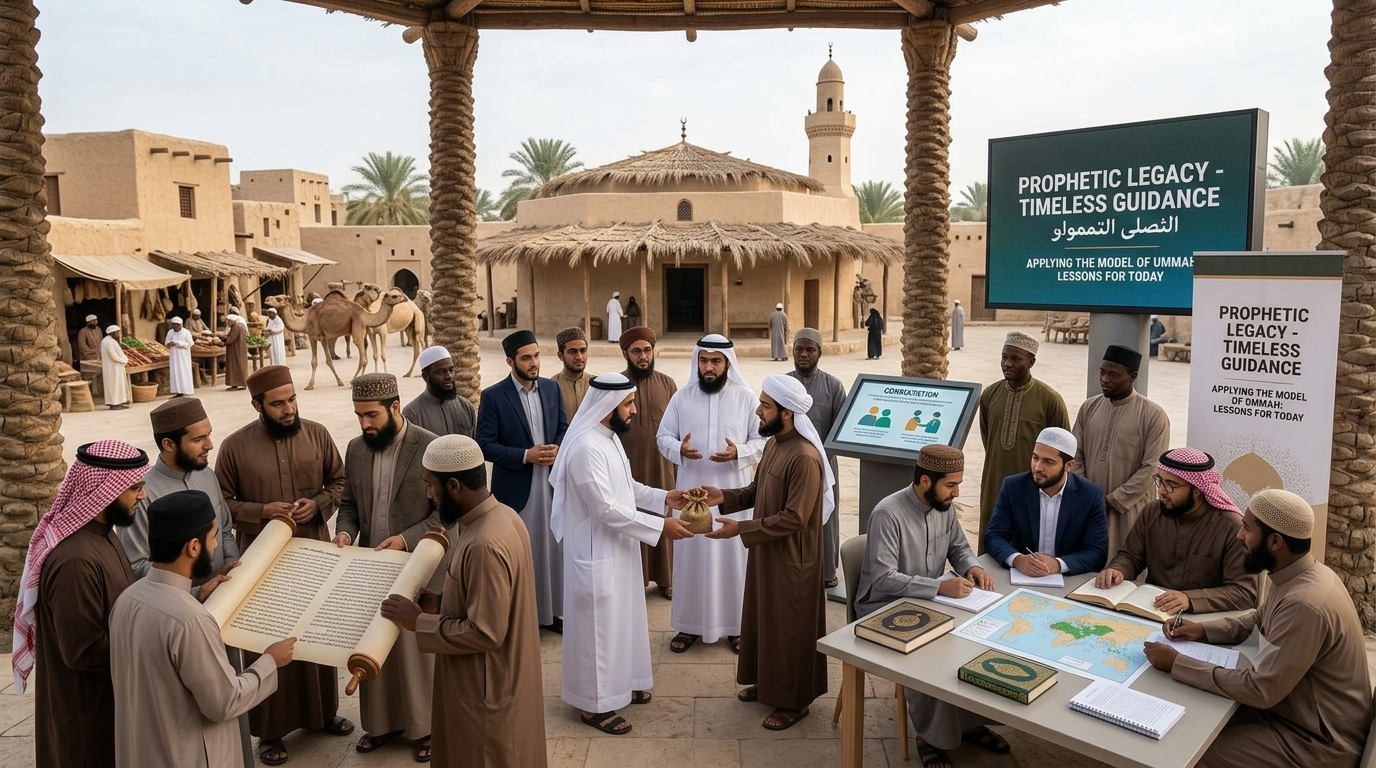
The life of Prophet Muhammad (peace be upon him) provides the definitive model for Ummah construction, governance, and development. His example in establishing and nurturing the first Muslim community in Medina offers timeless principles applicable to contemporary challenges facing the global Muslim body. Studying his methods, priorities, and interpersonal dynamics yields insights essential for anyone seeking to understand or improve Ummah conditions in any era or location.
The migration (Hijra) to Medina marked the transition from a persecuted minority to a community with sovereignty and responsibility. Upon arrival, the Prophet (peace be upon him) immediately undertook institution-building activities that would structure the new society. Building the mosque served both religious and communal functions as a center for prayer, consultation, education, and administration. Establishing brotherhood (Mu’akhat) between Ansar (Medinan helpers) and Muhajirin (Meccan migrants) created social bonds transcending tribal affiliations, with Ansar literally sharing property and inheritance with their adopted brothers. The documented constitution (Sahifat al-Madinah) formalized rights and responsibilities of all community members regardless of religion or tribe.
Leadership style demonstrated by the Prophet (peace be upon him) combined accessibility with authority, consultation with decisiveness, and gentleness with firmness on principles. He lived simply among his people, recognizable by his demeanor rather than extravagant surroundings. His door remained open to anyone seeking audience, from senior companions to unknown visitors. Major decisions involved consultation (shura) with community members, though final authority rested with him as divinely guided leader. This balanced approach avoided both authoritarian domination and paralyzed indecision.
Conflict resolution methods employed by the Prophet (peace be upon him) offer templates for addressing disputes within the Ummah. When tensions arose between different groups in Medina—whether the Hypocrites (munafiqun), Jewish tribes, or factions within the Muslim community—he addressed root causes rather than merely symptoms. Patience in investigation, fairness in judgment, mercy when possible, and firmness when necessary characterized his approach. The handling of the slander against Aisha (may Allah be pleased with her) illustrates commitment to due process and rejection of mob justice even in emotionally charged situations.
Economic policies in the Prophetic model emphasized equity, opportunity, and social welfare. The marketplace (suq) in Medina operated under regulations ensuring fair transactions, honest measurements, and prevention of exploitation. Zakat collection and distribution systemized wealth transfer from prosperous community members to those in need. Encouragement of work, trade, and productive activity combated dependency while safety nets protected the vulnerable. The Prophet’s own life exemplified contentment with simplicity despite access to wealth through his position.
Interfaith relations under Prophet Muhammad’s (peace be upon him) leadership established precedents for pluralistic coexistence. The Constitution of Medina guaranteed religious freedom for Jewish tribes alongside Muslims, with each community governing its own internal affairs according to its laws. Treaties with Christian groups similarly recognized their autonomy and rights. While conflicts eventually occurred with some Jewish tribes, these resulted from political treachery during wartime rather than religious persecution. The Prophet’s letters to rulers of surrounding kingdoms invited them to Islam while respecting their current status until freely chosen change.
Treatment of women in the Prophetic community represented revolutionary improvement over prevailing seventh-century Arabian customs. The Prophet (peace be upon him) consistently consulted his wives on important matters, defended their rights against abuse, and affirmed their spiritual equality with men. Female companions participated fully in community life, including battlefield support, scholarly transmission, economic activity, and political consultation. Khadijah, Aisha, Fatimah, and other women around the Prophet exemplified capabilities that contradicted later restrictive interpretations of women’s roles.
Succession transition following the Prophet’s death (peace be upon him) tested the Ummah’s institutional resilience. The relatively smooth selection of Abu Bakr as Caliph prevented immediate fragmentation despite the shock of losing the founding leader. Established principles of consultation, community consensus (ijma), and qualification-based selection provided frameworks for orderly transition. Though later succession disputes would eventually produce the major Sunni-Shia divide, the initial handling demonstrated possibilities for stable governance changes in Islamic polities.
Priorities evident in Prophetic community-building suggest emphases for contemporary Ummah development. Spiritual foundation took precedence over material accumulation—prayer, Quran recitation, and character development received constant attention alongside practical affairs. Education occupied central place, with companions memorizing revelations, learning rulings, and acquiring skills needed for community functioning. Social welfare through Zakat, Sadaqa, and mutual aid ensured no community member faced destitution alone. Defense capability protected the community from external threats while avoiding aggression. Diplomatic engagement with neighboring entities secured peace and facilitated communication.
Applying Prophetic models to twenty-first century contexts requires adaptation rather than mechanical replication. Specific policies suitable for seventh-century Medina may need modification for complex modern societies, nation-states, and global interconnectedness. However, underlying principles—justice, consultation, compassion, unity, balance between worldly and spiritual concerns—retain validity across time and place. The challenge lies in deriving appropriate applications that honor Prophetic intent while addressing contemporary realities.
Perhaps the most important lesson from the Prophet’s Ummah model concerns the centrality of character (akhlaq) in community success. Technical competence, institutional sophistication, and resource abundance cannot compensate for ethical failure at leadership and grassroots levels. The Prophet (peace be upon him) was sent specifically to “;perfect noble character,”; and his community’s strength flowed from the moral qualities he instilled in his followers. Contemporary Ummah revival depends equally on character development alongside institutional and material progress.
The Prophetic model ultimately points beyond earthly success to accountability before Allah. Worldly achievements matter primarily as means for fulfilling divine purpose and preparing for the afterlife. An Ummah that loses sight of this transcendent orientation—even while accomplishing impressive material feats—fails its fundamental mission. Keeping the afterlife in view while actively engaging this-worldly challenges captures the balanced approach modeled by the Prophet (peace be upon him) and needed by Muslims today.
YOUTH & EDUCATION
Empowering the Next Generation Through Knowledge & Faith