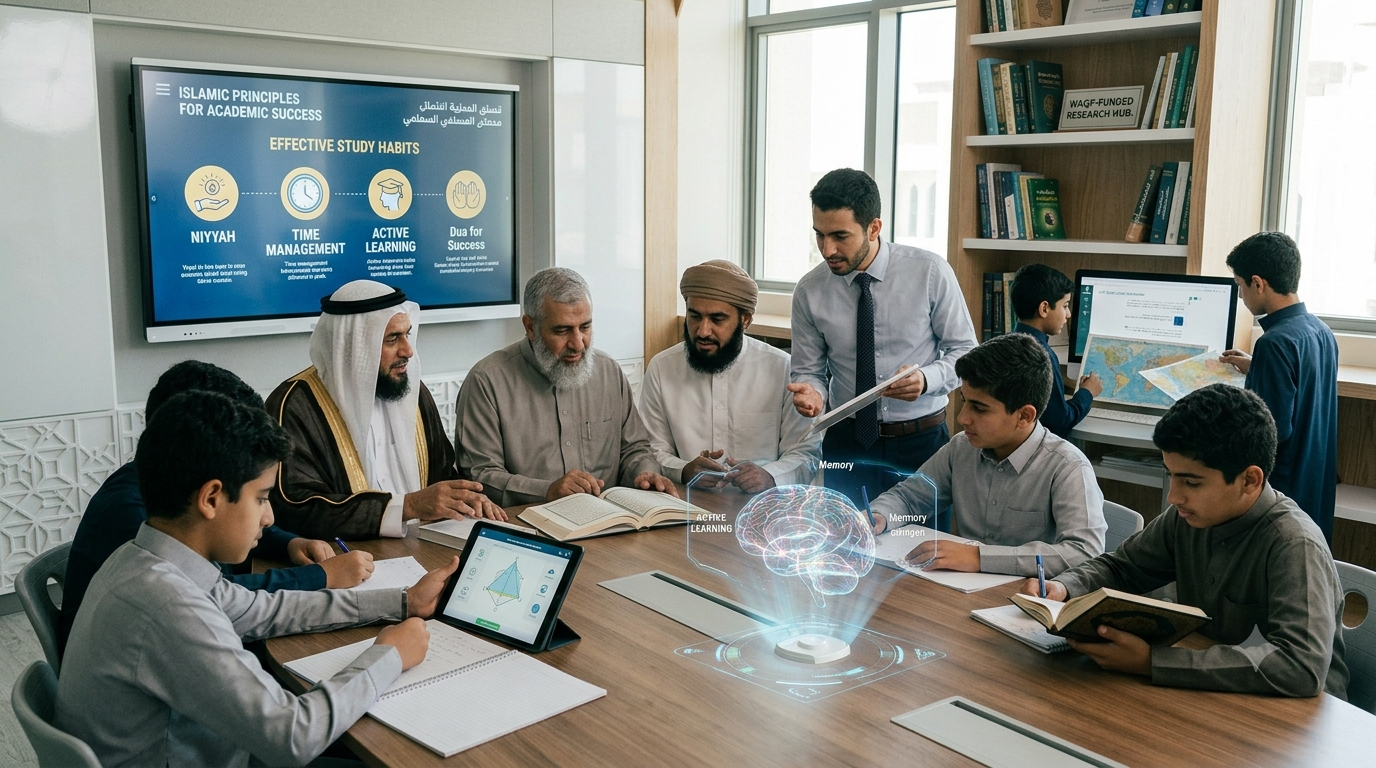
Academic success depends significantly on study habits—consistent practices enabling efficient, effective learning. While intelligence matters, disciplined study routines often determine achievement levels more than raw ability. Islamic principles provide framework for developing study habits that honor spiritual commitments while maximizing academic performance. Integrating faith with practical study strategies creates sustainable approach to excellence.
Intention (niyyah) transforms mundane study into worship. Beginning study session with sincere intention—to gain knowledge benefiting oneself and others, to develop capacities for future service, to please Allah through using one’s mind properly—elevates routine activity spiritually. This intentionality also focuses attention, reducing procrastination driven by lack of purpose. Regular renewal of intention keeps motivation strong.
Time management draws on Islamic concepts of stewardship. Time is trust (amanah) from Allah for which we’re accountable. Wasting time through excessive entertainment, disorganized approach, or procrastination violates this trust. Practical techniques include: creating weekly schedules blocking study time, using productivity methods (Pomodoro technique, time batching), eliminating distractions during focused sessions, and protecting sleep time essential for cognitive function.
Barakah (divine blessing) in time is real phenomenon. Starting tasks early (after Fajr prayer traditionally considered blessed time), maintaining wudu during study, making dua for ease and retention, and avoiding sinful distractions all potentially enhance productivity beyond what effort alone explains. While barakah can’t substitute for actual work, it multiplies sincere effort’s effectiveness mysteriously.
Study environment affects concentration and retention. Clean, organized space free of clutter promotes focus. Adequate lighting prevents eye strain and fatigue. Comfortable seating supports longer sessions. Minimizing interruptions (phone notifications, noise, visitor access) preserves attention flow. Some find background nasheeds or instrumental music helpful; others prefer silence—knowing personal preferences helps optimize environment.
Active learning outperforms passive review. Instead of re-reading notes passively, effective techniques include: self-testing (retrieval practice), teaching concepts to others (Feynman technique), creating visual
representations (mind maps, diagrams), generating questions and answering them, and connecting new information to prior knowledge. These methods require more effort initially but produce durable learning.
Spaced repetition leverages cognitive science for long-term retention. Reviewing material at increasing intervals (1 day, 3 days, 1 week, 2 weeks, 1 month, etc.) moves information from short-term to long-term memory efficiently. Apps like Anki automate scheduling; manual systems work too. This technique particularly helps for Arabic vocabulary, Quran memorization, and fact-intensive subjects.
Group study offers benefits when done properly. Explaining concepts to peers reinforces understanding; discussion reveals gaps in knowledge; motivation increases through social commitment; diverse perspectives enrich comprehension. However, group study can deteriorate into socializing—requiring clear purpose, prepared participants, and structured agenda to remain productive.
Health optimization supports cognitive function. Sleep deprivation impairs memory consolidation, focus, and decision-making—prioritizing 7-8 hours nightly boosts academic performance. Exercise increases blood flow to brain, improving cognition. Nutrition affects energy levels and concentration; heavy meals before study cause drowsiness. Hydration maintains mental clarity. Physical basics enable mental peak performance.
Breaks prevent burnout while actually enhancing learning. Brief pauses (5-15 minutes) every hour or so restore attention capacity. Longer breaks between subjects prevent interference. Physical movement during breaks (stretching, walking) refreshes better than switching to phone scrolling. The brain consolidates during rest periods—not just during active study.
Dealing with procrastination requires understanding root causes. Fear of failure leads to avoidance; perfectionism paralyzes beginning; overwhelming tasks seem insurmountable; unclear direction confuses start. Solutions include: breaking large tasks into small steps, accepting imperfect first drafts, setting artificial deadlines, creating accountability partnerships, and addressing underlying anxieties. Compassionate self-understanding helps more than harsh self-criticism.
Balance prevents burnout. Intense study periods alternate with relaxation, social connection, physical activity, and spiritual practice. All-work-no-study approaches fail sustainably. The Sunnah includes recreation, family time, and rest alongside work—modeling balance we should emulate. Sustainable habits outperform short-term intensity crashes.
Dua for success complements practical effort. The Prophet taught specific supplications for matters of difficulty: “;O Allah, there is no ease except what You make easy, and You can make difficulty easy if You wish.”; Recalling this during challenging study sessions brings comfort and renewed determination. Trust in Allah’s help accompanies human striving in Islamic worldview.
Consistency trumps intensity. Daily moderate study outperforms occasional cramming sessions. Small regular investments compound over semester into substantial learning. Building habit loop (cue-routine-reward) makes automatic what initially requires willpower. Eventually, study becomes natural as breathing—requiring little conscious effort to maintain.