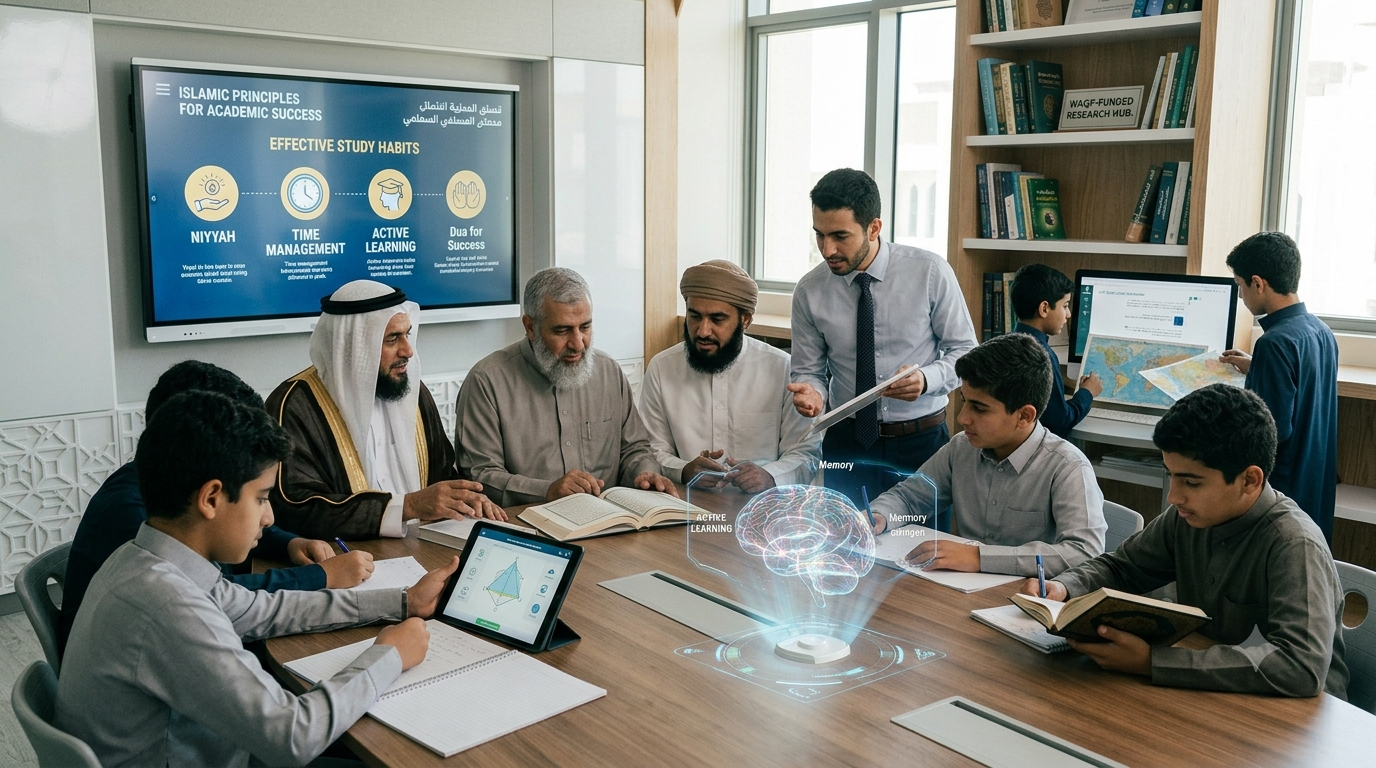
Choosing higher education path and career direction represents major decision point for Muslim youth. Family expectations, economic realities, personal interests, and religious considerations all factor into choices with lifelong implications. Providing Islamic framework for career guidance helps young Muslims align professional ambitions with spiritual purposes, finding meaningful work that serves both worldly needs and hereafter goals.
Islamic work ethic (ihsan al-amal) transforms career from mere livelihood to worship opportunity. The Prophet stated that Allah loves servant who works skillfully (itqan). Doing any job well—for its own sake and as service to Allah—carries spiritual reward previously reserved for explicitly religious occupations. This theology democratizes spirituality, making every legitimate profession potentially devotional when approached properly.
Career selection criteria in Islamic framework include: societal benefit (choosing fields helping others), personal aptitude (matching abilities and interests), economic sustainability (providing for dependents halally),
ethical alignment (avoiding haram industries), and community need (filling gaps where Muslim representation matters). These factors should be weighed together rather than any single criterion dominating.
STEM fields (science, technology, engineering, mathematics) offer strong alignment with Islamic values when pursued ethically. Medical research alleviates suffering; engineering improves living conditions; computational advances solve problems; environmental science protects creation. Historical Muslim leadership in these areas (during Golden Age) demonstrates compatibility between scientific excellence and Islamic commitment. Contemporary Muslims are reclaiming this heritage.
Humanities and social sciences also serve Islamic purposes when approached thoughtfully. Law promotes justice; journalism informs public discourse; education transmits knowledge; psychology heals minds; policy analysis improves governance; arts beautify existence. Concerns about anti-religious bias in some humanities programs warrant caution but not abandonment—these fields need ethical Muslim voices.
Religious professions (imam, scholar, teacher) carry special blessing but shouldn’t be romanticized. Demands are high; compensation often modest; community expectations heavy; burnout common. Those genuinely called to religious service should pursue it with eyes open; others can serve faith effectively through secular professions lived Islamically. All work can be sacred; religious vocation isn’t spiritually superior per se.
Entrepreneurship appeals to many Muslim youth desiring autonomy and impact. Islamic business principles (avoiding riba, ensuring transparency, fulfilling contracts, giving zakah) provide ethical framework distinguishing Muslim enterprises. Halal market growth creates economic opportunities for entrepreneurs serving Muslim consumers. Risk tolerance and resilience requirements suit certain personalities more than others.
Financial considerations realistically constrain choices. Student debt should be minimized (islamic financing options explored); return on investment considered for expensive programs; alternative pathways (apprenticeships, certifications, online learning) evaluated alongside traditional degrees. Rizq (provision) comes from Allah but requires human effort (tayyib)—practical planning expresses trust responsibly, not lack thereof.
Geographic mobility for education and career involves family considerations. Moving away from family support network carries costs (emotional, financial, spiritual) balanced against opportunities elsewhere. Staying local maintains connections but may limit options. Each family navigates this differently; no universal answer exists. Consulting those who’ve made similar decisions helps inform choice.
Gender dynamics affect career paths differently for Muslim men and women. Men typically bear primary financial responsibility, influencing risk tolerance and income priorities. Women often balance career with expected family roles (though this varies by individual/family). Both genders face stereotypes about appropriate professions—challenged increasingly by Muslim professionals breaking barriers. Fair conversation about these dynamics helps realistic planning.
Mentorship accelerates career development significantly. Finding Muslim professionals in target field provides invaluable guidance: industry insights, networking contacts, avoiding pitfalls, navigating identity challenges. Professional Muslim organizations (ISNA, MSAs, professional networks) facilitate mentor connections. Young Muslims should actively seek mentors rather than expecting them to appear spontaneously.
Lifelong learning characterizes modern careers regardless of initial degree. Rapid technological change requires continuous skill updating. Islamic commitment to seeking knowledge “;from cradle to grave”; aligns perfectly with this reality. Initial career choice isn’t permanent sentence but starting point for evolving professional journey. Flexibility and adaptability prove as important as initial selection.
Ultimate purpose transcends career success defined materially. Working to provide halal sustenance for family, support community causes, and fund charitable giving represents meaningful achievement. Status, wealth accumulation, and fame constitute hollow pursuits compared to leaving positive impact on people and pleasing Allah through conscientious work. Keeping perspective prevents career from consuming identity entirely.
Making dua for guidance (istikhara) complements practical research. After gathering information, consulting advisors, and reflecting honestly, praying for divine direction brings peace whatever outcome emerges. Allah knows what benefits us; our plans remain suggestions while His decree determines results. Trust accompanies effort in Islamic career development.