Decision-making paralysis affects many believers facing complex choices without clear answers. Career changes, marriage considerations, relocation decisions, ethical dilemmas—situations arise where multiple options seem permissible yet mutually exclusive. Islamic tradition offers istikhara prayer (seeking divine guidance) combined with Quranic counsel as methodology for navigating uncertainty while maintaining trust in divine wisdom.
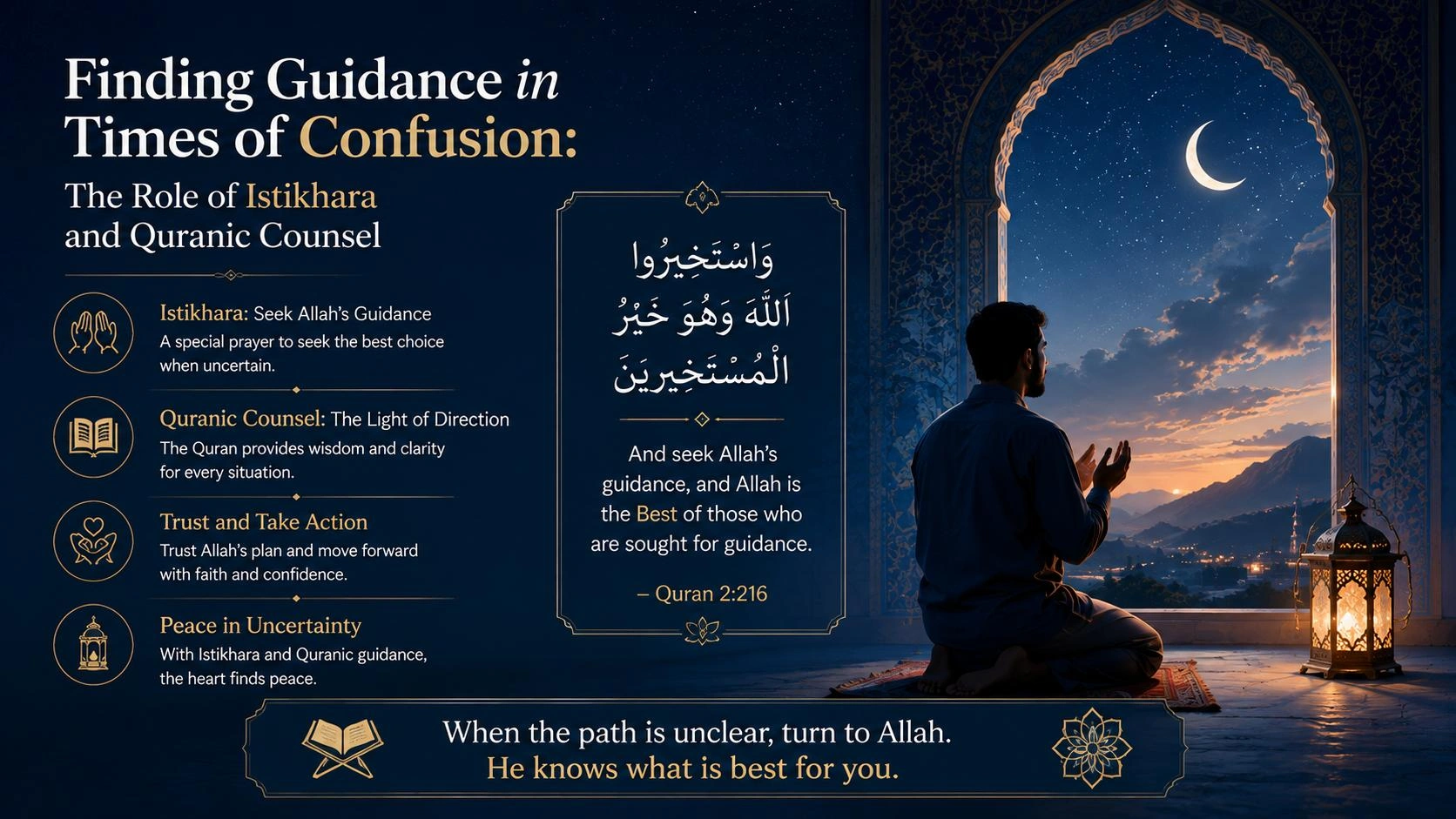
Istikhara, literally “seeking the good,” involves specific voluntary prayer asking Allah to facilitate beneficial choice and remove harmful options. The Prophet’s teaching preserved in authentic hadiths outlines simple procedure: perform wudu, pray two rak’ahs, then supplicate with prescribed wording requesting divine facilitation of good and removal of evil, followed by decisive action regardless of apparent feelings. Crucially, istikhara doesn’t require dreams or mystical experiences—though these sometimes occur—as the answer manifests through opened or closed doors following sincere prayer.
The supplication’s wording deserves careful attention: “O Allah, I seek Your counsel through Your knowledge, and seek ability through Your power, and ask for Your immense bounty, for You are able and I am not, You know and I do not know, and You are the Knower of the unseen.” This formulation acknowledges human limitation while invoking divine omniscience and omnipotence. We bring ignorance and weakness to One possessing perfect knowledge and complete capability.
Common misunderstandings about istikhara require clarification. First, it’s not restricted to “religious” decisions only—any significant choice qualifies. Second, it doesn’t replace necessary research and consultation; rather, it complements human effort with divine blessing. Third, the absence of dramatic signs doesn’t indicate failure—sometimes guidance comes through natural unfolding of events. Fourth, repeating istikhara indefinitely reflects lack of trust, not piety; after sincere performance, proceed confidently.
Quranic foundations for guidance-seeking appear in verses like “And consult them in the matter” (Ali Imran: 159), addressing the Prophet himself regarding community affairs. If the Prophet needed consultation despite his nearness to Allah, ordinary believers certainly do. Combining shura (consultation) with istikhara creates comprehensive decision-making framework integrating human wisdom and divine blessing.
The concept of tawfiq (divine success/enablement) relates closely. After performing due diligence—research, consultation, istikhara—we act, trusting that if this choice serves our ultimate good, Allah will enable its realization; if not, obstacles will redirect us. This framework relieves anxiety about “wrong” choices while maintaining proactive engagement with life decisions.
Patience plays essential role in guidance process. Sometimes answers come quickly; other times, delay serves developmental purposes. The period of waiting itself becomes opportunity for growth in trust and surrender. Companions like Umar ibn al-Khattab would sometimes delay decisions for days, continuously praying istikhara until clarity emerged.
Signs of answered istikhara vary widely. Some experience dreams (not necessarily about the matter itself, but producing peaceful feeling toward certain option). Others notice circumstances tilting in particular direction—one job offer falling through while another materializes. Still others simply feel settled heart enabling confident movement forward. The key is remaining attentive without forcing interpretations.
When confusion persists despite thorough process, default to whichever option contains more potential for religious benefit, less harm to others, and greater alignment with long-term goals. Allah’s mercy covers sincere efforts even when outcomes differ from expectations. What feels like “mistake” may prove valuable teacher or necessary detour.
Integrating istikhara into regular spiritual practice reduces decision-related stress significantly. Rather than agonizing over uncertain futures, believers entrust unknown to All-Knowing while responsibly engaging present. This balance between human agency and divine sovereignty marks mature Islamic orientation toward life’s complexities.
The ultimate guidance, of course, is the Quran itself—comprehensive counsel containing principles applicable to every situation type. Before specific istikhara for particular decisions, general immersion in Quranic wisdom develops instinctive sense of divine preference. Those familiar with Quranic values often find decisions becoming clearer without extensive deliberation, as formed conscience recognizes aligned paths intuitively.