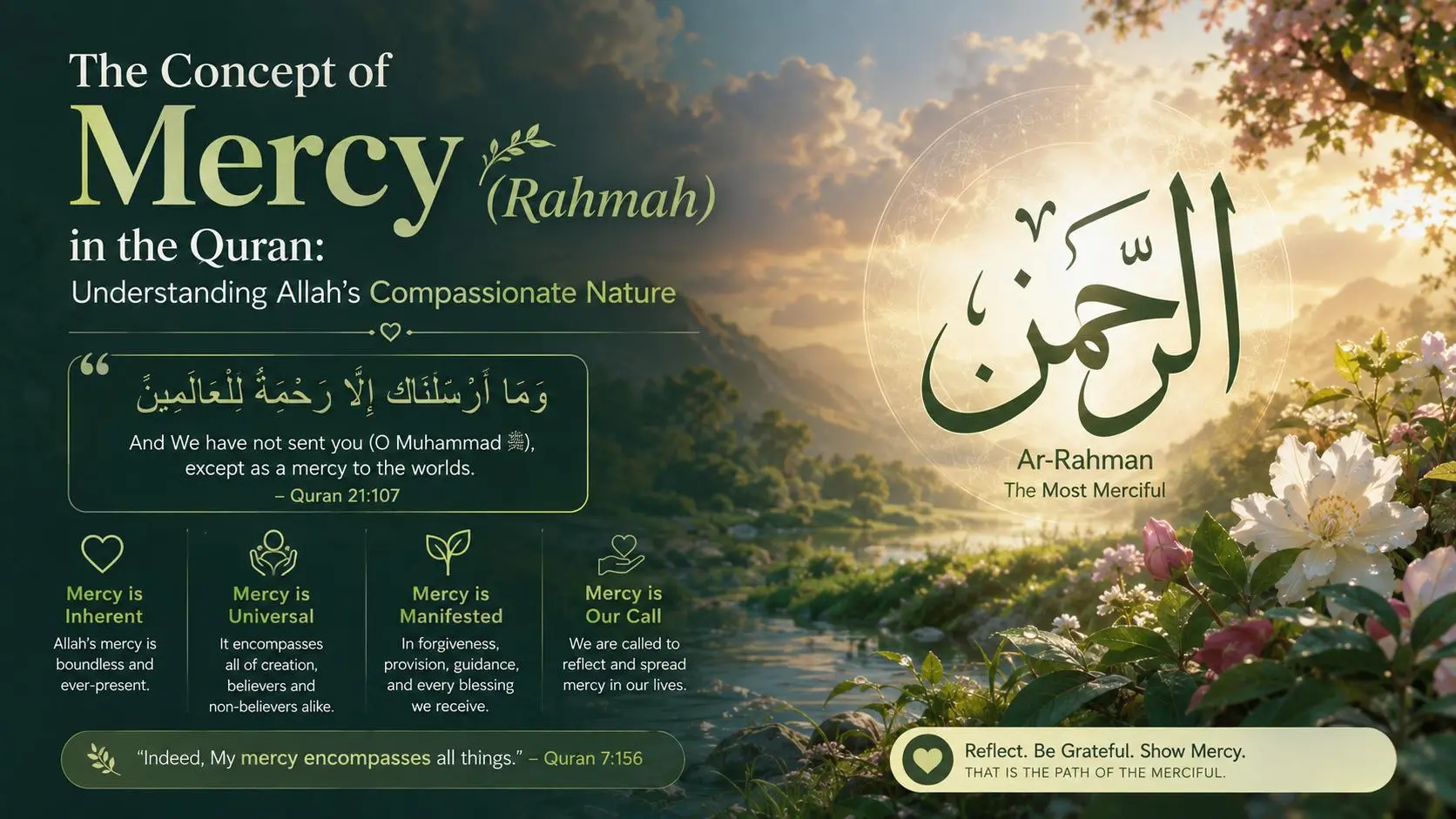
Mercy (rahmah) permeates the Quran as perhaps its most prominent divine attribute. Every chapter except one begins with “Bismillah ar-Rahman ar-Raheem” (In the name of Allah, the Most Gracious, the Most Merciful). The Prophet Muhammad described himself as “sent only as mercy to the worlds.” Understanding this concept transforms relationship with Allah from fear-based compliance to love-motivated devotion while maintaining proper reverence.
The two names ar-Rahman and ar-Raheem derive from the same root but convey different scopes of mercy. Ar-Rahman indicates mercy’s vastness—it encompasses everything in existence, believer and disbeliever, human and animal, the righteous and the sinner. Rain falls on unjust fields; sun shines on wicked cities. This universal benevolence sustains all creation moment by moment. Without ar-Rahman’s continuous outpouring, reality would cease existing.
Ar-Raheem adds specificity: mercy particularly directed toward believers who actively seek Allah through faith and obedience. This distinction matters greatly—it assures us that while everyone receives general blessings, special closeness and its accompanying mercies await those who turn toward Allah consciously. The relationship involves divine initiative (“He loves them and they love Him”) plus human response creating intensifying connection.
The Quran’s most mercy-saturated verse perhaps appears in Al-An’am: “And My mercy encompasses all things. So I will decree it [especially] for those who fear Me and give zakah and those who believe in Our signs” (156). Here universal scope meets particular focus—the same mercy sustaining galaxies reserves special expressions for the conscientious believer. This structure encourages hope without complacency.
Divine mercy exceeds human conception: “O My servants who have transgressed against themselves [by sinning], do not despair of the mercy of Allah. Indeed, Allah forgives all sins. Indeed, it is He who is the Forgiving, the Merciful” (Zumar: 53). This extraordinary promise opens doors slammed shut by guilt. No sin magnitude exceeds forgiveness capacity; no habitual pattern exhausts divine patience. The only unforgivable wrong is persisting in rejection until death—choosing separation over reconciliation.
The Prophet emphasized mercy’s centrality: “The ones who show mercy, Allah will show mercy to them. Be merciful to those on earth, and the One in the heavens will be merciful to you.” This hadith establishes earthly-heavenly correspondence: our treatment of creatures reflects and affects our reception of divine mercy. Kindness to animals, gentleness with children, forgiveness of enemies—these become spiritual technologies accessing divine grace.
Even divine punishment manifests underlying mercy. Difficulties cleanse sins, awaken complacent souls, and redirect mistaken paths. The famous narration about the man who killed ninety-nine people, then sought repentance and died moving toward a town of believers, illustrates mercy’s reach extending to the worst offenders who genuinely turn. Allah’s joy over repentance surpasses that of a traveler finding lost camel in desolate desert—image suggesting eager welcome rather than reluctant pardon.
Practical cultivation of mercy-consciousness includes regular recitation of mercy-named verses, reflection on blessings received, and extension of kindness to others. When we realize how much we depend on divine compassion, we extend similar attitude to fellow fragile humans. Communities characterized by mutual mercy create environments where divine presence feels tangible.
Balancing mercy with other divine attributes prevents misunderstanding. Allah is also just, majestic, and sovereign. Mercy doesn’t negate consequences for persistent wrongdoing; rather, it provides repeated opportunities for correction before accounting. The interplay of attributes creates complete picture of divine reality worthy of worship.
In harsh times when news cycles emphasize cruelty and division, centering consciousness on Allah’s mercy offers antidote to despair. If the Merciful sustains existence despite human folly, there remains hope for individual and collective renewal. His mercy precedes wrath, surrounds judgment, and welcomes home every returning servant.