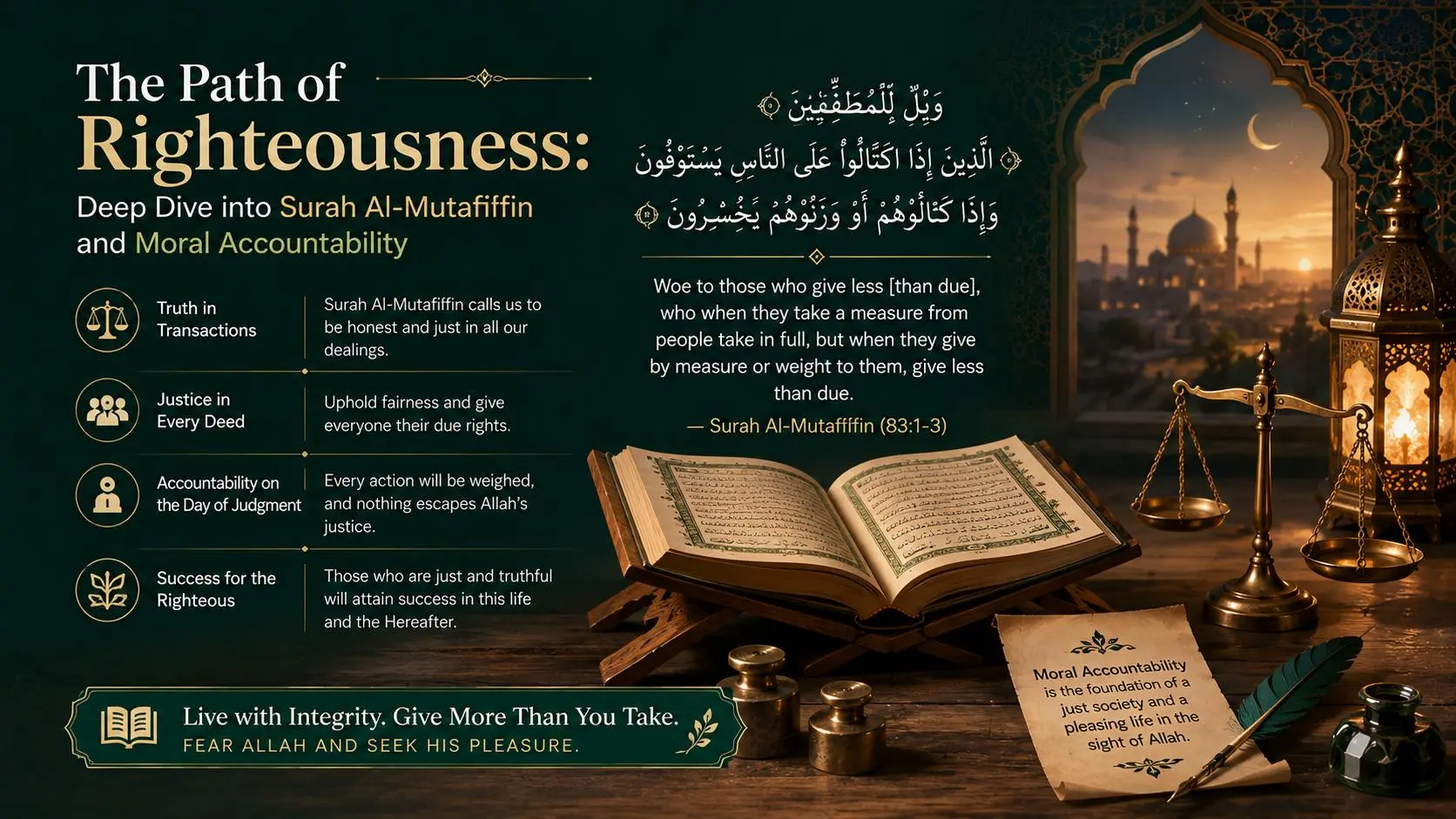
Surah Al-Mutaffifin opens with stark depiction of those who cheat in measurement and exchange: “Woe to the defrauders. Who, when they take a measure from people, take in full. But when they give by measure or weight to them, they cause loss.” This specific economic fraud expands into broader metaphor for all forms of shortchanging others—whether in business, relationships, duties to Allah, or self-treatment. The surah’s progression from particular sin to general accountability offers comprehensive moral vision.
The immediate context likely involved market cheating common in pre-Islamic Arabia, where merchants would use falsified weights when selling while demanding full measure when buying. But the Quran consistently takes concrete situations as springboards for wider application. Defrauding extends to any context where we give less than fair while expecting full return—employers underpaying employees, spouses contributing minimally while demanding maximum service, citizens evading taxes while expecting public services.
The contrast between defrauders and the righteous begins immediately. Those who fulfill obligations, record deeds carefully, believe in resurrection, and maintain moral integrity stand opposite the cheaters. Their book of deeds will be placed in right hands—an image of acceptance and approval. This binary framing leaves little middle ground; either we deal fairly or we don’t, with corresponding consequences.
The surah describes the righteous in detail: they sleep little at night, seeking forgiveness before dawn; their wealth includes designated portions for beggars and deprived; they uphold testimonies honestly; guard their private parts except from spouses or those rightfully possessed; keep trusts and covenants; stand firm in witness. This portrait sketches comprehensive Islamic ethics covering worship, finance, sexuality, honesty, and civic duty.
Particularly striking is the connection between night prayer (tahajjud) and daytime morality. Spiritual discipline at night translates into ethical behavior during active hours. The sequence suggests that character formation occurs in private devotion before manifesting publicly. Those who cheat others probably also neglect their relationship with Allah; integrity flows from inside outward.
The fate of wrongdoers receives graphic description: “Nay! Indeed, the record of the wicked is in Sijjeen. And what can make you know what Sijjeen is? A registered writing.” This ominous register contrasts with Illiyun where righteous records reside. The mystery surrounding these terms emphasizes their gravity—we know enough to fear them without needing complete comprehension.
The surah culminates in scene of resurrection when faces will be radiant (looking at their Lord) and others gloomy (anticipating devastating punishment). This eschatological vision grounds present ethics in future certainty. If we truly believe in this accounting, current cheating loses appeal; short-term gains vanish compared to eternal outcomes.
Contemporary applications abound. Business ethics in globalized economy, where supply chains obscure exploitation, demands Mutaffifin consciousness. Political leaders who promise more than they deliver violate the surah’s standard. Personal relationships involving emotional manipulation or unfair expectation management fall under its critique. The scope encompasses virtually all human interaction.
Self-examination using Mutaffifin criteria proves revealing. Where do we give less than due? In which contexts do we demand more than we offer? Honest assessment usually exposes areas requiring correction. The surah’s blessing lies partly in this diagnostic function—revealing moral blind spots before they become fatal.
Repentance remains always available. The same Quran condemning fraud also promises forgiveness for those who turn back. Recognition of wrongdoing initiates restoration process. Changing behavior, making restitution where possible, and seeking divine mercy completes return to righteousness path.
Living Mutaffifin’s teachings creates reputation for reliability that benefits individuals and communities. People trust those known for fair dealing; businesses thrive on customer confidence built through honest transactions. Beyond instrumental value, moral integrity pleases Allah—the ultimate aim of righteous living.