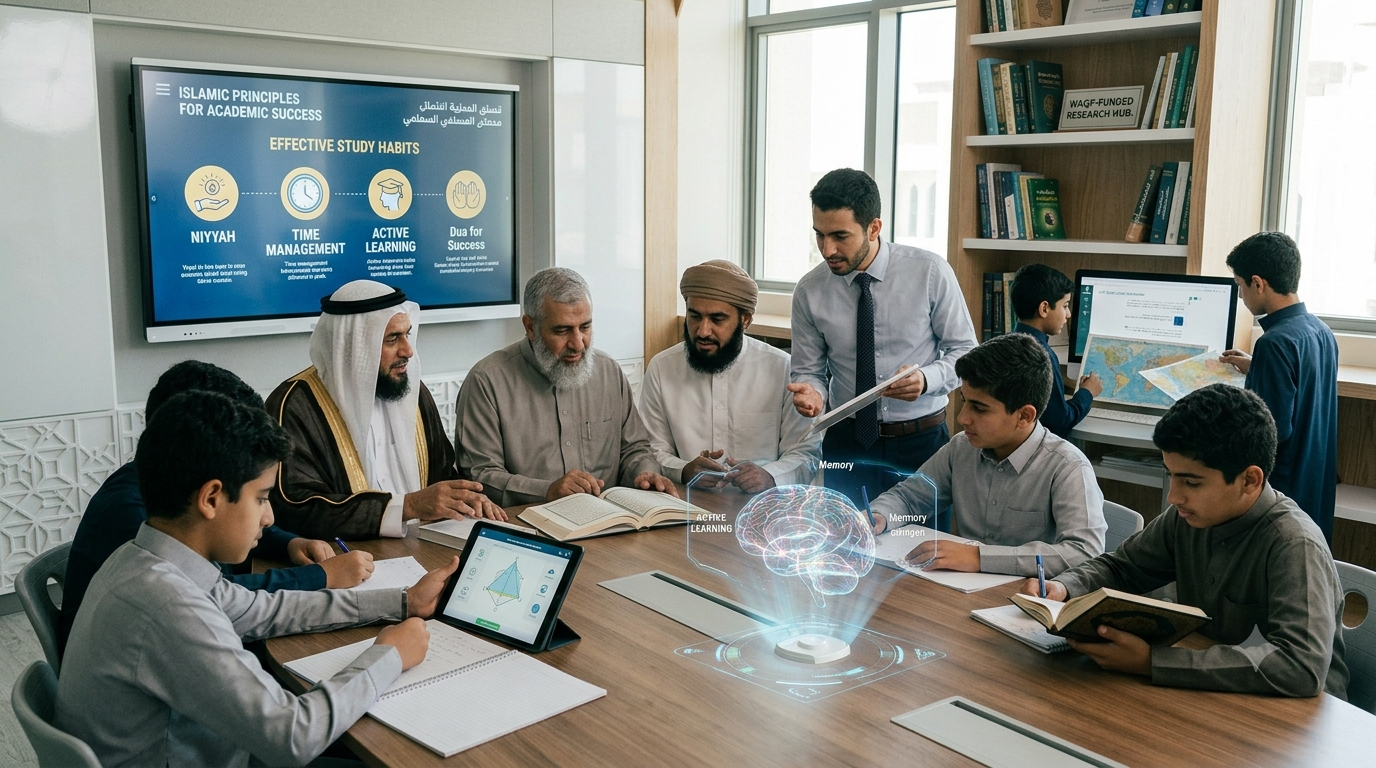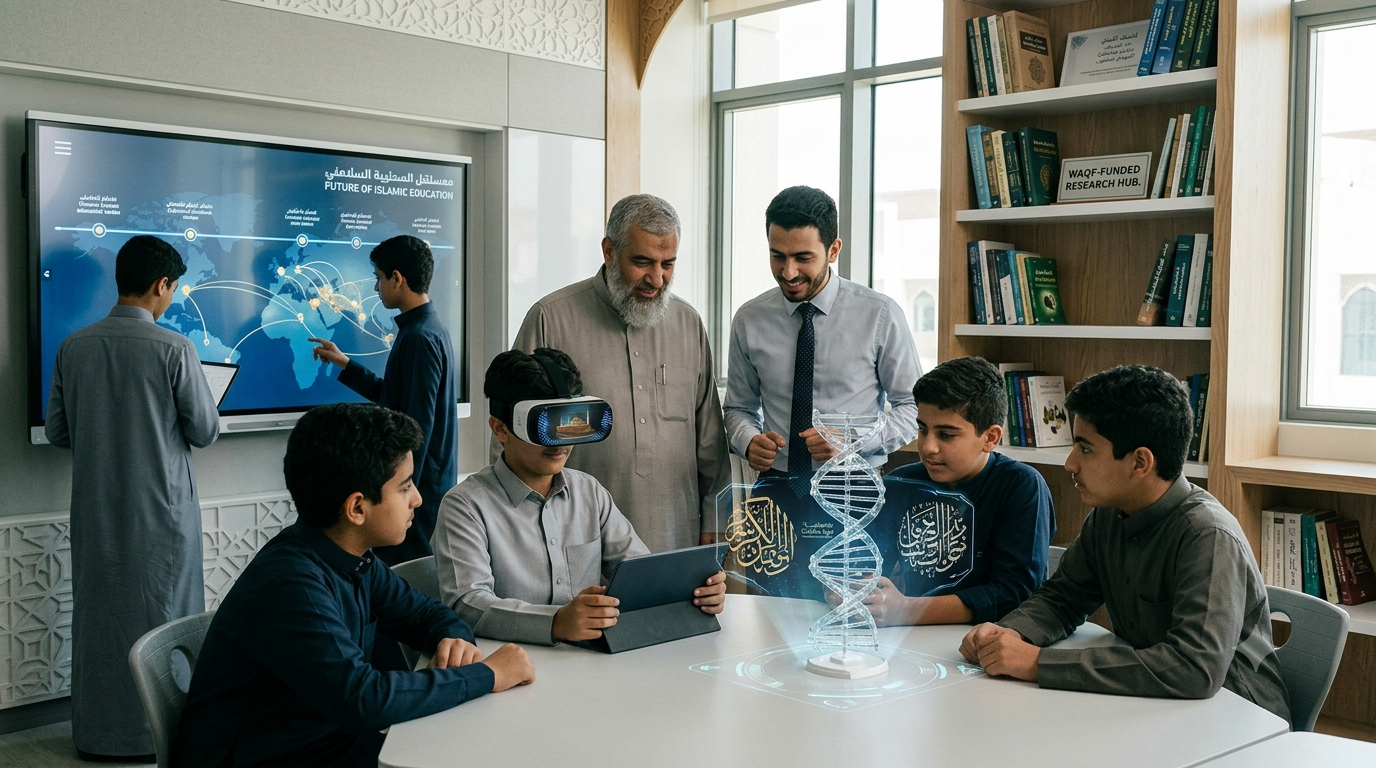
Islamic education stands at inflection point shaped by technological disruption, changing demographics, evolving community needs, and global connectivity. Traditional models face challenges while new possibilities emerge. Envisioning future of Islamic education helps stakeholders—educators, parents, policymakers, students—prepare for coming changes and shape developments positively rather than merely reacting to them.
Technological integration will accelerate further. Artificial intelligence may personalize learning pathways adapting to individual student pace, style, and interests. Virtual and augmented reality could create immersive historical environments (walking through Prophetic Medina) or anatomical visualizations for medical ethics education. Blockchain might verify scholarly credentials and academic records securely. These technologies, properly directed, could enhance Islamic education dramatically—but require thoughtful implementation guided by Islamic values.
Curriculum evolution will address contemporary relevance while preserving core content. Traditional subjects (Quran, hadith, fiqh, aqidah, seerah, Arabic) remain essential but may be reorganized around themes rather than isolated disciplines. New subjects addressing bioethics, environmental ethics, digital ethics, interfaith relations, and mental health from Islamic perspective will likely gain prominence. Integration across subjects mirrors classical holistic approach while addressing modern questions.
Pedagogical innovation will draw from both Islamic tradition and contemporary research. Classical Arabic pedagogical methods (halaqah circle discussion, shaykh-murid relationship, travel for knowledge) contain wisdom worth preserving. Modern research on learning science (spaced retrieval, active learning, formative assessment) offers evidence-based techniques. Synthesis of traditional and innovative approaches may yield optimal pedagogy respecting heritage while incorporating advancement.
Institutional diversity will expand options. Full-time Islamic day schools will coexist with weekend programs, homeschooling cooperatives, online academies, after-school enrichment, summer intensives, and hybrid models. No single format will dominate—different approaches suit different contexts. Quality assurance across diverse providers will become important challenge requiring new accreditation frameworks.
Teacher preparation must evolve significantly. Future Islamic educators need both deep traditional knowledge and modern pedagogical skills, technological fluency, cultural competence for diverse student bodies, and ability to facilitate rather than merely transmit. Teacher training programs integrating these dimensions will produce educators capable of navigating complex educational landscape. Current teachers need professional development opportunities to upgrade skills continuously.
Assessment methods will diversify beyond standardized testing. Portfolio assessment demonstrating growth over time, project-based evaluation showing applied learning, performance tasks revealing practical competence, and self-reflection documenting character development will complement or partially replace traditional examinations. Measuring what truly matters (understanding, application, character) requires multiple assessment modes.
Global collaboration will increase through technology. Students in different countries collaborating on projects, scholars worldwide co-authoring research, educators sharing resources across borders, and curricula developed through international consultation will become commonplace. English-language Islamic education materials already circulate globally; this trend will accelerate. Local adaptation of global resources presents ongoing challenge and opportunity.
Financial models will innovate to improve accessibility. Waqf-based endowments funding education perpetually may revive with modern structuring. Income-sharing agreements (like Islamic finance structures) could finance education without interest-bearing debt. Micro-sponsorship platforms might connect donors with specific students. Reducing financial barriers to quality Islamic education serves communal obligation (farg kifayah).
Research capacity in Islamic education will strengthen. Evidence-based practice requires rigorous research on what works in Islamic pedagogy. Currently, Islamic education lags behind general education research in empirical study volume and quality. Building research culture within Islamic institutions, training researchers, and creating publication venues will advance field significantly.
Challenges requiring attention include: maintaining authenticity amid innovation (not losing Islamic identity in pursuit of relevance), bridging theory-practice gap (scholarly ideals meeting classroom realities), addressing equity concerns (quality Islamic education accessible beyond elites), preparing for unknown future developments (flexibility in planning), and sustaining spiritual aims amid practical pressures (keeping tarbiyah central).
Youth voice should shape future Islamic education more directly. Students experiencing current systems have insights adults may miss. Meaningful youth participation in curriculum design, institutional governance, and policy discussion ensures responsiveness to actual needs. Patronizing tokenism differs from genuine inclusion—distinction requiring careful attention.
The fundamental purpose remains unchanged despite all innovation: developing Muslims who know their faith, live by it ethically, contribute positively to humanity, and attain success in this life and next. Educational methods evolve; educational aims stay constant. Keeping purposes central while embracing beneficial innovations positions Islamic education for vibrant future serving Ummah effectively.
Those investing in Islamic education today—whether as educators, supporters, parents, or students—participate in shaping this future. May our efforts be blessed, our intentions pure, and our outcomes beneficial for learners, communities, and all creation.
GEOPOLITICS & GLOBAL AFFAIRS
Analyzing Global Dynamics Through an Islamic Lens