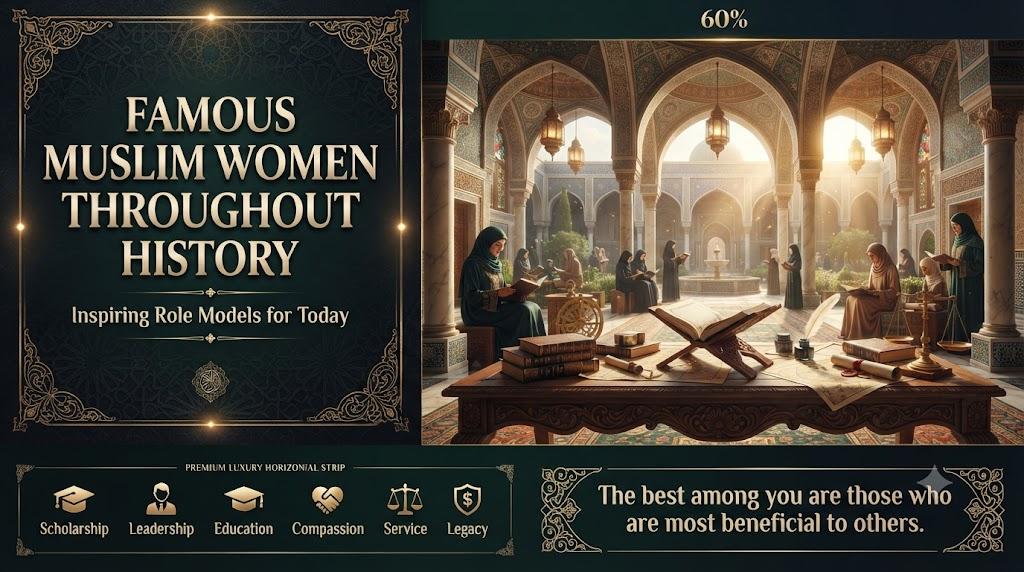
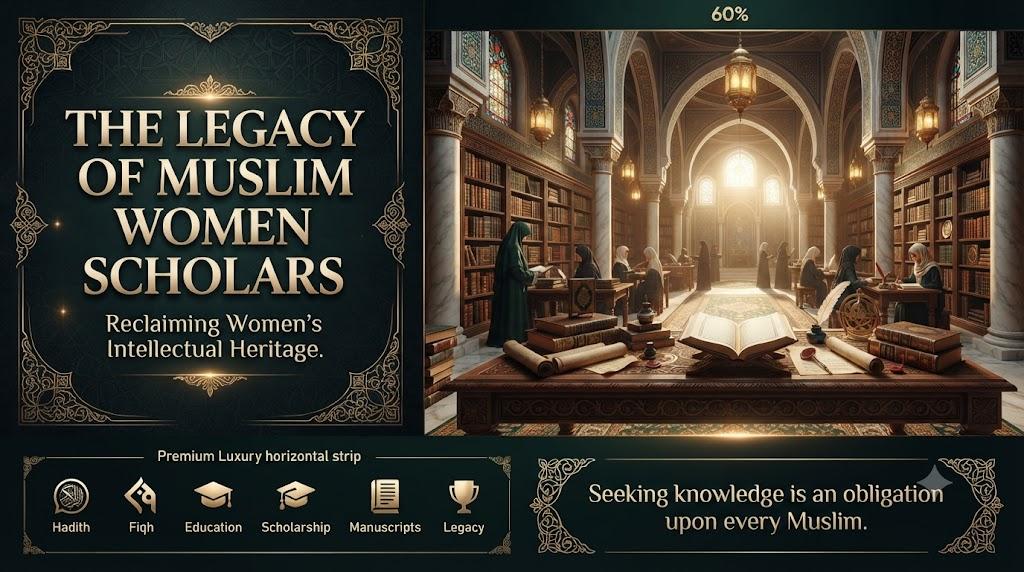
Islamic history boasts remarkable tradition of female scholarship often overlooked in both Orientalist narratives and popular Muslim consciousness. From the Prophet’s time through classical civilization’s peak, women studied, taught, authored works, and issued fatwas—contributing significantly to religious sciences and broader intellectual life. Recovering this heritage empowers contemporary Muslim women while challenging restrictive interpretations lacking historical basis.
Aisha bint Abu Bakr stands as preeminent example of female scholarly excellence. Married to the Prophet at young age, she absorbed his teachings directly over decade of companionship, becoming foremost narrator of hadiths (over 2,000 transmissions). Companions consulted her on Quranic interpretation, jurisprudence, inheritance law, and medicine. Her intellect earned description as “one-quarter of all religious knowledge” being accessible through her—acknowledgment of her central role in preserving prophetic legacy. She taught both men and women publicly throughout her life after Prophet’s death.
Hafsa bint Umar, another Prophet’s wife, memorized entire Quran during Prophet’s lifetime and was entrusted with its written compilation after his death. When the standard text was finalized under Caliph Uthman, her copy served as reference. Her scholarly role in preserving revelation demonstrates trust placed in women’s intellectual capabilities at Islam’s highest levels.
Early generation produced numerous learned women beyond prophet’s wives. Asma bint Abi Bakr (Aisha’s sister) was known for intelligence and knowledge; Fatimah bint Qays narrated hadiths and engaged in legal discussion; Umm Salama’s juridical opinions influenced companions. These women weren’t exceptions proving rule but participants in vibrant scholarly culture including both genders.
Classical period saw institutionalization of women’s religious education. Mosque-based study circles welcomed female students alongside males (sometimes separated by screen). Notable scholars like Sitt al-Wuzara (died 716 AH/1316 CE) achieved ijazah (teaching authorization) from major scholars and subsequently taught men. Ibn Hajar studied under forty women; al-Dhahabi similarly credited female teachers. These patterns contradict assumptions about women’s exclusion from Islamic learning.
Hadith transmission particularly featured women prominently. Specialized female narrators (muhaddithat) carried chains of narration connecting later generations to Prophet’s contemporaries. Karima bint Ahmad al-Marwazi (died 703 AH) was renowned authority on Sahih al-Bukhari, teaching in Mecca’s Haram for decades. Students traveled great distances to study with her—testimony to recognized expertise transcending gender boundaries.
Jurisprudence (fiqh) saw female contributions through fatwa issuance and legal consultation. While formal qadi (judge) positions rarely went to women, informal legal advice frequently came from female scholars. Umm al-Zaynab Fatimah al-Naisaburi (fifth century AH) gave fatwas consulted by leading jurists of her era. Legal theory development benefited from women’s perspectives on family law, personal status, and commercial transactions affecting women directly.
Sufi tradition offered particularly open path for women’s spiritual leadership. Rabia al-Adawiya (died 185 AH) pioneered divine love theology emphasizing worship without fear/hope calculation—her mystical poetry influenced centuries of spirituality. Maryam al-Basriyya (died 244 AH) led mixed-gender gatherings. Zaynab bint al-Kamal (eighth century AH) taught major male scholars. Sufism’s emphasis on inner state over external markers created space for women’s religious expression sometimes restricted in more formal contexts.
Literary contributions include poetry, prose, and calligraphy. Wallada bint al-Mustakfi (tenth century CE) hosted Cordoba literary salon rivaling any in Islamic world. Lalla Zaynab (nineteeth century Morocco) mastered traditional sciences plus literature. Calligraphic skill, highly valued art form, was practiced by women whose works survive in manuscripts and inscriptions.
Colonial impact disrupted women’s scholarly traditions along with broader Islamic educational systems. Missionary schooling introduced different pedagogical models; colonial administrations marginalized traditional institutions; emerging nation-states often failed to restore women’s religious education access. Recovery efforts must address this historical disruption, not assume continuous marginalization.
Contemporary revival of women’s Islamic scholarship gains momentum globally. Al-Azhar now awards degrees to women; international conferences feature female speakers; publishing platforms amplify women’s voices; online learning democratizes access to teachers previously inaccessible. Figures like Ingrid Mattson, Tariq Ramadan’s female students, and countless lesser-known scholars continue tradition of women’s religious leadership.
Challenges remain: some communities resist women’s public religious roles; seminary access still lags behind men’s; publication opportunities favor established (male) networks; balancing family responsibilities with scholarly pursuits disproportionately affects women. Addressing these barriers requires institutional change, family support, and societal attitude shifts—all underway but incomplete.
Recovering women’s scholarly heritage serves multiple purposes: providing role models for aspiring female scholars, demonstrating Islam’s historical support for women’s intellectual development, countering narratives claiming Islam inherently oppresses women, and enriching contemporary discourse with perspectives sometimes missing from all-male scholarly traditions. The legacy exists; claiming it transforms present possibilities.