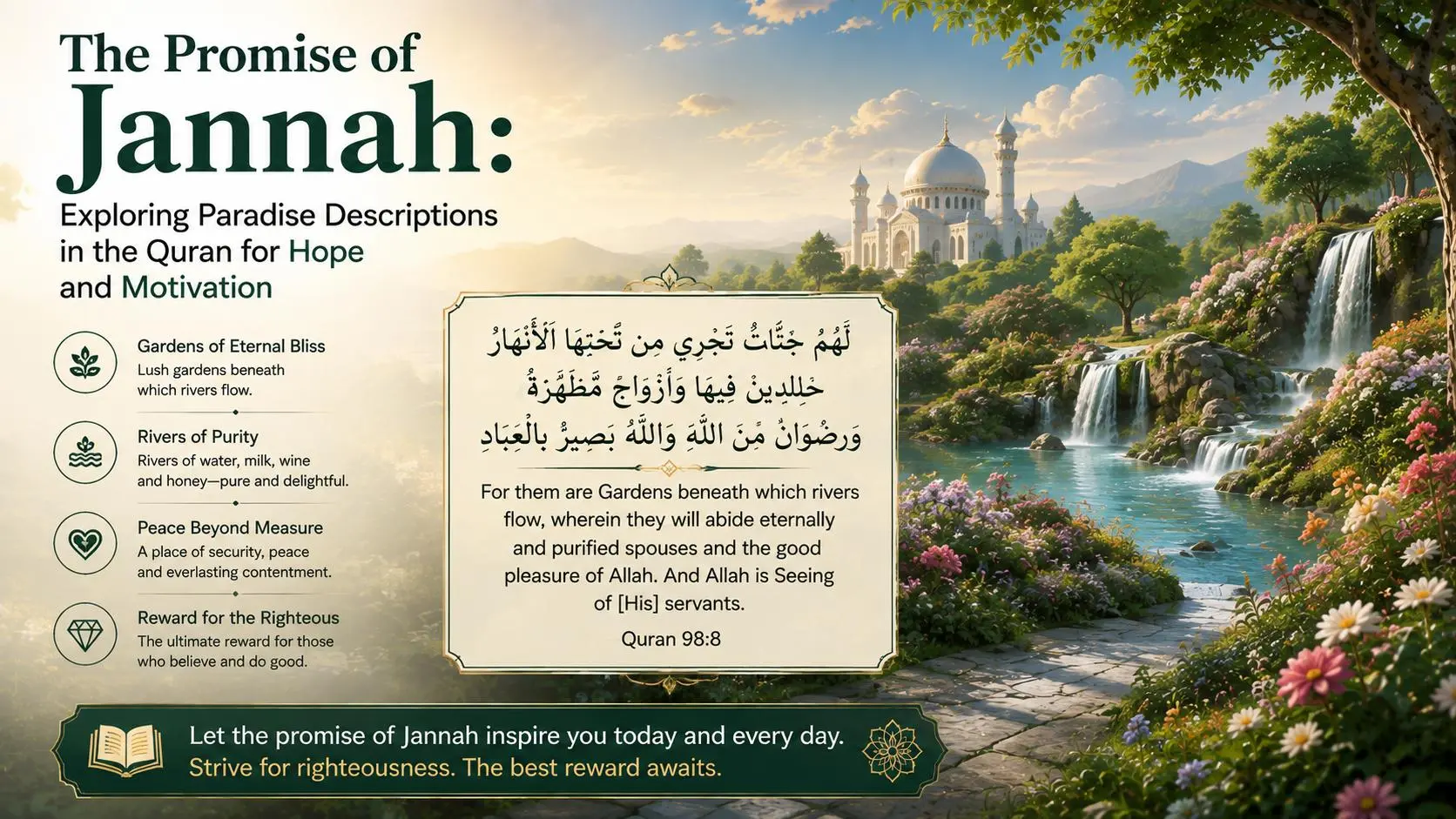
Quranic descriptions of Paradise (Jannah) serve multiple functions: motivation for righteous conduct, comfort during trials, and glimpse into divine generosity beyond human imagination. These portrayals, while employing familiar imagery, point to realities transcending earthly experience entirely. Understanding them properly balances anticipation of reward with pure worship motive—loving Allah for His sake while gratefully accepting promised blessings.
The Quran uses sensory language to describe Jannah: rivers beneath which gardens flow, fruits abundant and varied, purified spouses, silk garments, golden vessels, comfortable couches. Critics sometimes dismiss such descriptions as appealing only to base desires, but this misses the point. Earthly pleasures represent distorted shadows of perfected joys; the images communicate delight using vocabulary available to human understanding while actual experience infinitely exceeds these metaphors.
Multiple garden types appear: Firdaus (highest degree), Adn (eternal residence), Na’im (bliss), and others with varying characteristics. Hierarchical arrangement encourages aspiration beyond minimum requirements. The Prophet indicated that Firdaus is highest paradise, above which is Allah’s throne, from which rivers of Paradise flow. Competing for elevated ranks motivates extra voluntary worship beyond obligations.
Social dimensions of Jannah challenge individualistic spirituality. Believers will know each other, visit across levels, and those in higher degrees will intercede for family members in lower stations. The Hadith mentions that the last person entering Paradise will have ten times this world’s domain. Community persists eternally, purified of conflict and competition, enabling uninterrupted enjoyment of divine presence together.
Physical descriptions address bodies resurrected to eternal youth and perfection. Aging, illness, fatigue, and death cease. “We will have removed whatever was in their breasts of resentment, [so they will be] brothers on thrones facing each other” (Hijr: 47). Emotional healing accompanies physical restoration—trauma memories dissolve, relational wounds heal completely, hearts rest in peace finally unattainable.
The supreme pleasure of Jannah, however, exceeds all material and social blessings: seeing Allah (ru’yatullah). “Faces that Day will be radiant, looking at their Lord” (Qiyamah: 22-23). This beatific vision, denied to none who enter Paradise, represents fulfillment of created purpose—direct apprehension of Divine Beauty that motivated prophets’ sacrifices and martyrs’ deaths. All other joys pale beside this ultimate gift.
Paradise descriptions provide crucial comfort during earthly suffering. When injustice prevails, health fails, or loved ones die, remembering Jannah’s corrections restores perspective. Temporary losses gain meaning as price for eternal gains. Martyrs’ mothers in early Islamic period exemplified this orientation—celebrating sons’ deaths as wedding announcements to paradise.
Motivation through reward doesn’t contradict pure intention if properly ordered. Primary love targets Allah Himself; secondary appreciation accepts His generous gifts. The companions worshipped through difficult periods before any promise of personal benefit, establishing pattern of loving Giver above gifts. Paradise enhances devotion rather than replacing it.
Preparing for Jannah involves belief plus action. Faith in unseen rewards structures present choices around eternal consequences. Good deeds become investments yielding compounding returns. The Prophet analogized paradise path as narrow bridge beneath which fire burns—requiring careful navigation through life’s temptations and distractions.
Hope for Jannah should produce present transformation, not passive waiting. Anticipated joy inspires gratitude expressed through obedience. Expected reunion with righteous company encourages associating with believers now. Promised relief from sorrow motivates bearing current trials patiently. Future orientation improves present quality when properly integrated.
As the Quran promises: “So whoever does an atom’s weight of good will see it, and whoever does an atom’s weight of evil will see it” (Zalzalah: 7-8). Every small deed counts toward eternal destiny. This accounting fills mundane moments with significance—kind words, honest transactions, patient endurance all accumulate toward unimaginable destination. Jannah awaits those who journey faithfully through temporary world toward permanent home.