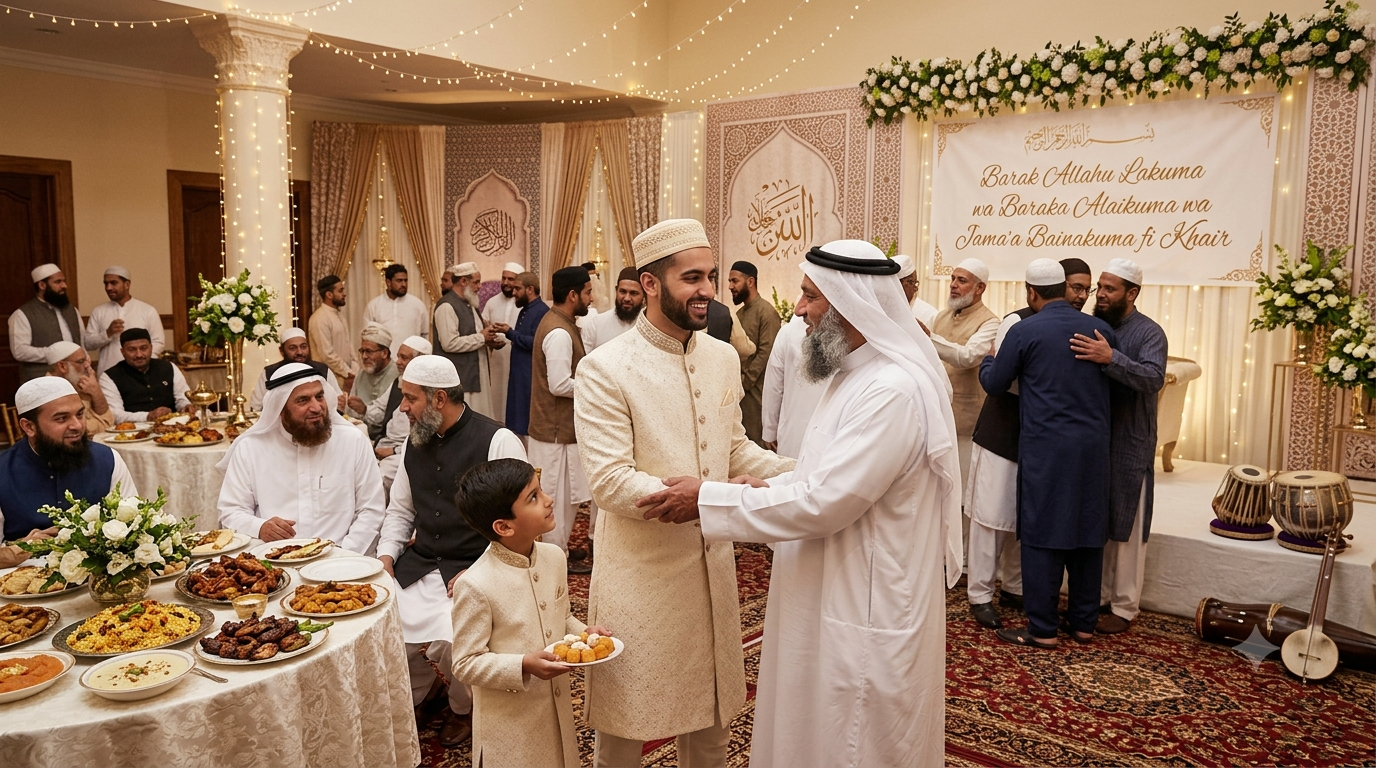
Marriage (nikah) in Islam represents sacred covenant between spouses, not merely social contract or romantic arrangement. Wedding traditions vary enormously across Muslim cultures while sharing core religious elements: contract (ijab/qubool), mahr (dowry), witnesses, and public celebration. Religious essentials constitute valid Islamic marriage regardless of cultural additions. Offer and acceptance must be exchanged clearly between bride and groom. Mahr (mandatory gift from groom to bride) must be specified and becomes bride’s exclusive property. Two Muslim witnesses must be present. Wali (guardian) gives away bride. Public announcement makes marriage known to community. Pre-wedding preparations involve both families—engagement period, henna application, musical celebrations. The nikah ceremony itself is typically brief—contract recitation, mahr specification, witness testimony, and sermon about marriage’s significance. This may occur separately from larger reception or immediately preceding it. The walima (feast) celebrates union publicly with food, music (nasheed often replacing mixed-gender dancing), and community participation. Mahr practices differ culturally but maintain religious function. Dress codes reflect modesty within celebration context. Food plays central role—elaborate multi-course meals feature regional specialties. Post-wedding customs extend celebration over multiple days. Contemporary challenges affect Islamic weddings—excessive spending violates israf prohibition; mixed-gender dancing concerns conservative families; inter-cultural marriages require negotiating different traditions sensitively. The ultimate purpose of Islamic marriage transcends social legitimation—it creates divinely sanctioned partnership for pursuing righteousness together, potentially producing and raising next generation of believers, and providing permitted sexual intimacy within moral bounds.