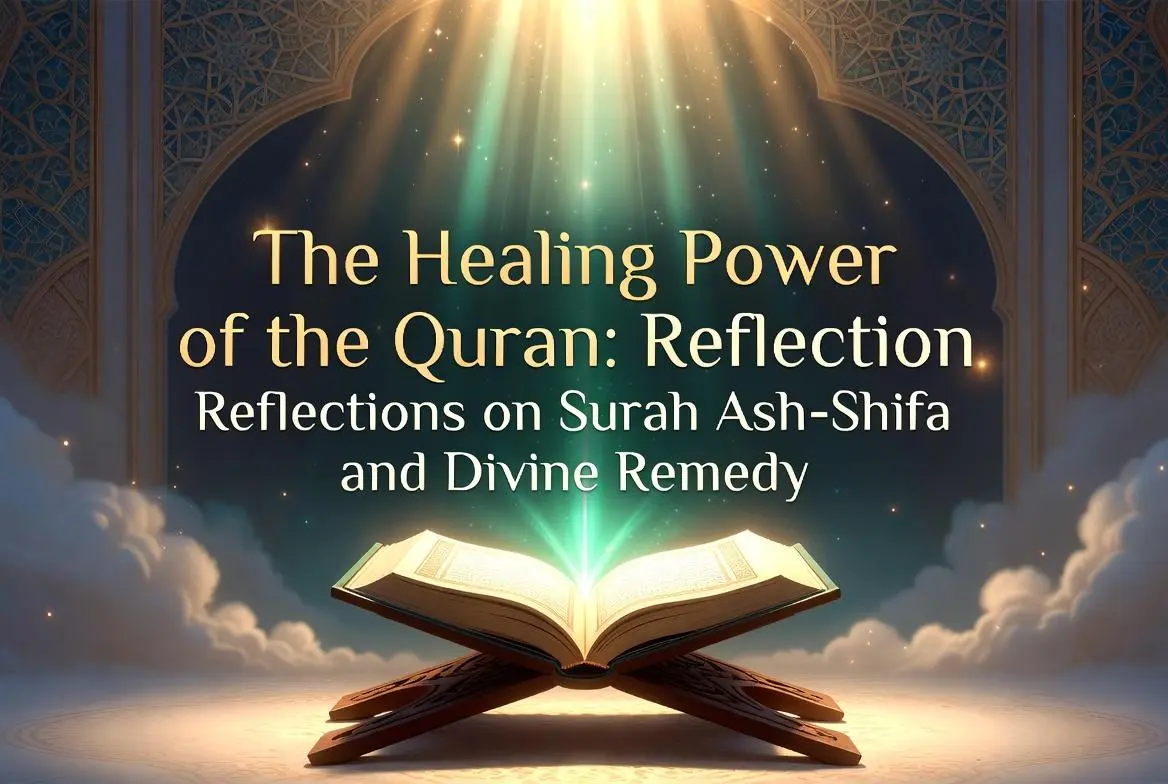
The Quran describes itself as “healing for what is in the breasts” (Surah Yunus: 57), a claim that encompasses spiritual, psychological, and even physical dimensions of wellbeing. Throughout Islamic history, believers have turned to sacred text as source of cure for ailments that exceed medical treatment—spiritual diseases like doubt, anxiety, despair, and moral confusion. Understanding the Quran’s therapeutic dimension enriches our engagement with revelation beyond intellectual study to experiential transformation.
Spiritual healing begins with the recognition that the human heart (qalb) is the seat of both spiritual health and disease. Just as physical organs can be sick or healthy, the spiritual heart experiences conditions requiring diagnosis and treatment. The Quran identifies several such ailments: hardness (qaswah), rust (rayn), covering (ghishawah), and disease (marad). Each metaphor describes different pathologies—insensitivity to truth, accumulation of sins obscuring perception, deliberate denial, and wavering between faith and doubt.
Surah Al-Fatiha itself functions as healing prayer. When we ask for guidance to “the straight path,” we acknowledge our tendency to stray and need for divine correction. The path described as blessed, upon whom is divine anger, and those who are astray—this categorization helps diagnose our current condition relative to ideal states. Regular recitation with attention thus becomes diagnostic and prescriptive simultaneously.
Specific verses have been traditionally associated with particular healings. Ayat al-Kursi (2:255) provides protection from negative spiritual influences and fear. The last two surahs (Al-Falaq and An-Nas) offer refuge from external harms and internal whisperings. Surah Ar-Rahman’s repeated question about divine favors treats ingratitude, redirecting attention from lack to abundance. Each prescription addresses specific spiritual symptoms.
The mode of engagement matters significantly. Passive hearing differs from active recitation, which differs further from deep contemplation (tadabbur). The Quran commands: “Do they not reflect upon the Quran, or are there locks upon [their] hearts?” (Muhammad: 24). Healing requires unlocking—opening the heart to receive what revelation offers. This demands slowing down, focusing attention, and allowing meanings to penetrate beyond surface cognition.
Modern research on mindfulness and meditation interestingly corroborates ancient Islamic practices. Repetitive recitation (dhikr) of Quranic phrases produces measurable effects on brain activity, stress hormones, and emotional regulation. While Muslims don’t need scientific validation for revealed practices, such findings help explain mechanisms and may assist in presenting Islamic spirituality to secular audiences.
Community dimensions of Quranic healing deserve attention too. Congregational recitation in tarawih prayers creates collective therapeutic experience. Study circles (halaqah) combine learning with social support. Even the physical posture of holding mushaf (Quran text) with reverence embodies respect that facilitates receptivity. Individual and communal practices reinforce each other.
Challenges to receiving Quranic healing include inconsistency in practice, superficial engagement without understanding, and skepticism about spiritual realities. Addressing these requires building sustainable habits, seeking knowledge of Arabic meanings (even if basic), and cultivating openness to non-material dimensions of experience. Patience proves essential—spiritual healing typically occurs gradually through persistent effort rather than instant transformation.
The Prophet himself experienced difficult periods when revelation ceased temporarily, causing him distress until reassurance came. This model normalizes spiritual struggle while affirming eventual relief. Those seeking healing through Quran should persist through dry periods, trusting that divine mercy operates according to wisdom beyond immediate perception.
Ultimately, the Quran heals by reconnecting fragmented human selves to their Source of wholeness. It diagnoses accurately because its Author knows creation completely. It cures effectively because its words carry transformative power. And it sustains health permanently because its guidance aligns us with reality as it truly is. Opening this treasure requires only intention, attention, and trust in the Healer’s skill.