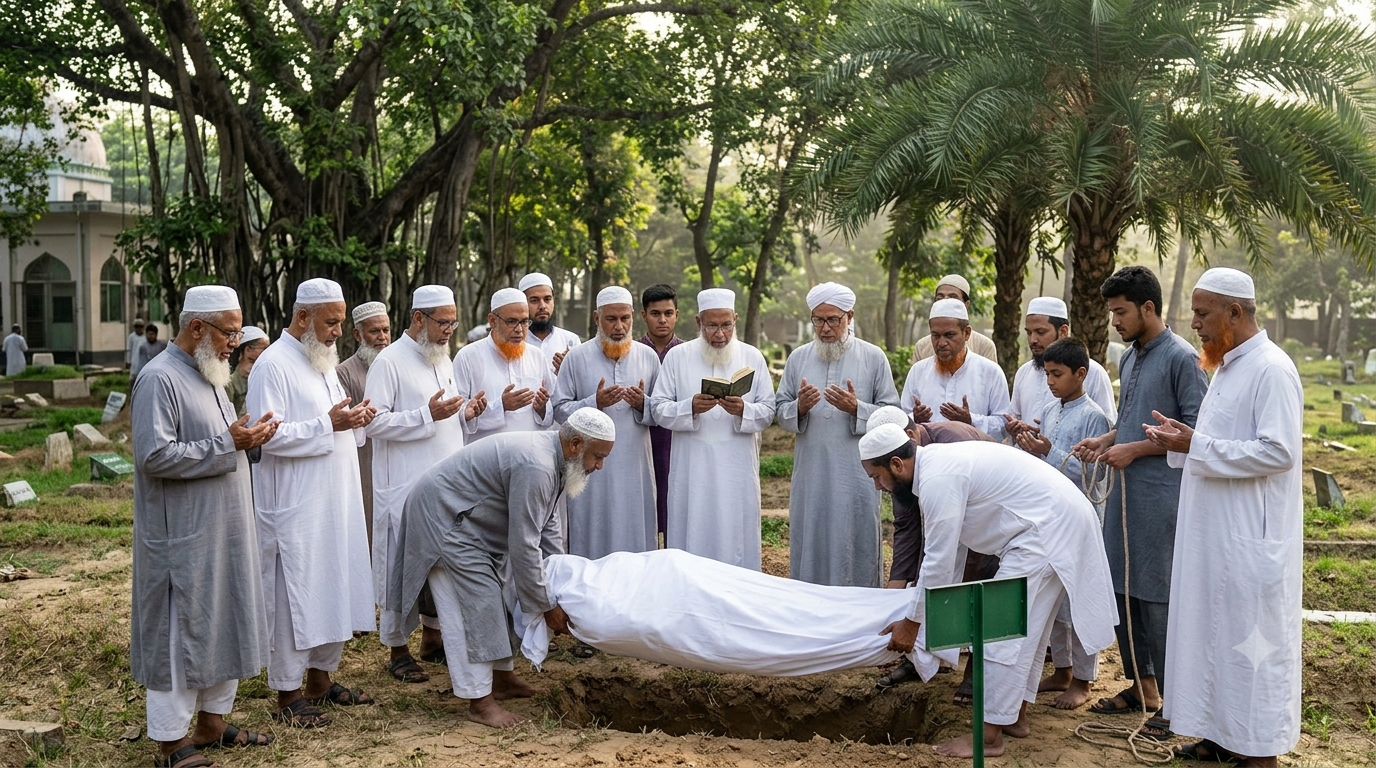
Death in Islam is understood as transition to eternal existence—not termination but passage from temporary world (dunya) to permanent abode (akhirah). Funeral rites (janazah) prepare deceased for this journey while comforting grieving survivors. Immediate actions upon death include closing deceased’s eyes, positioning body facing qibla, binding jaw shut, covering body with cloth, and preparing for washing (ghusl). Ghusl (ritual washing) purifies deceased’s body for prayer—washing with water and sidr, odd number of washings, starting with right side. Kafan (shroud) wraps deceased in simple white cloth(s)—typically three layers for men, five for women—symbolizing equality before Allah. Janazah (funeral prayer) is congregational obligation performed standing, usually at cemetery location, facing deceased rather than qibla. Burial follows prayer promptly; grave
is dug perpendicular to qibla direction, body lowered gently on its right side facing qibla. Each attendee should help fill grave—participating in burial is highly rewarded act. Mourning period has defined duration—three days of intense grief expected, widows observe idda (four months and ten days). Remembering deceased continues throughout life through dua, grave visits (ziyarat), charity in deceased’s name, and maintaining positive relationships with family. Inheritance distribution follows Quranic rules. Preparing for own death is encouraged—writing will, organizing affairs, seeking forgiveness. The Prophet’s own funeral demonstrated humility even in death—simple, swift, dignified, returning dust to dust while spirit returns to Most Merciful.