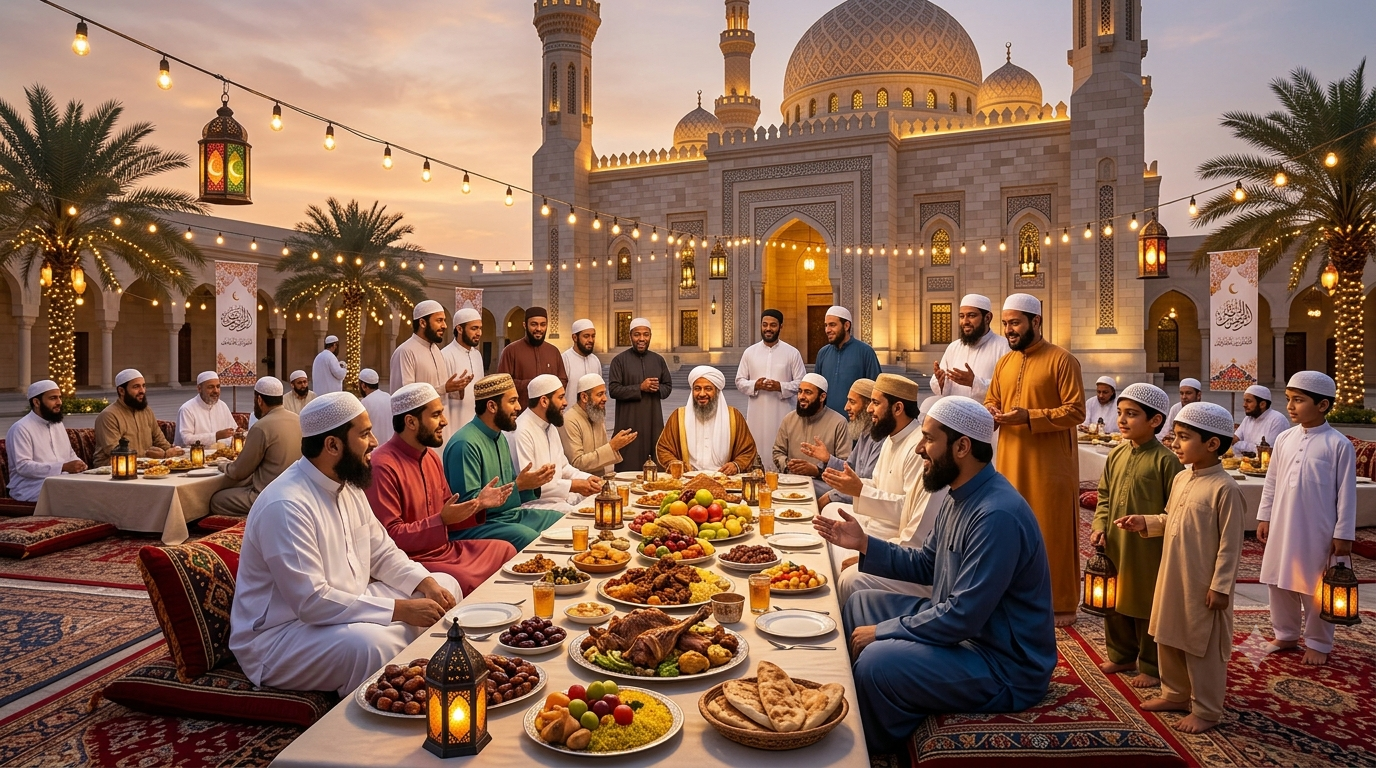
Food culture in Islam encompasses much more than dietary prohibitions—it includes communal eating traditions, hospitality norms, health consciousness, ethical consumption, and spiritual dimensions of nourishment. Halal (permissible) and haram (forbidden) categories establish foundational framework. Prohibited items include pork, blood, carrion, improperly slaughtered animals, and intoxicants. Permissible foods include seafood, properly slaughtered land animals, plant products, and dairy/eggs. Slaughter requirements (dhabihah) ensure humane treatment and spiritual orientation. Healthy eating aligns with Islamic stewardship of body—the Prophet taught: “;The son of Adam fills no vessel worse than his stomach.”; Moderation in quantity prevents obesity. Communal eating strengthens social bonds significantly—Iftar meals during Ramadan bring families together nightly. Hospitality through food manifests Islamic generosity—feeding hungry person is highly rewarded act. Ethical consumption extends halal/haram to production methods—fair trade, environmental sustainability, local sourcing, avoiding exploitation. Fasting practices discipline relationship with food—Ramadan’s fasting develops control over appetite, empathy for hungry, and gratitude for provision. Cultural diversity in Islamic food traditions reflects global reach. Mindful eating practices enhance spiritual dimension—reciting Bismillah before eating, eating slowly with gratitude, stopping before full satisfaction, saying Alhamdulillah after eating. Cooking itself can be devotional act when intention is properly directed. The ultimate perspective comes from recognizing Allah as Provider (ar-Razzaq)—all nourishment ultimately flows from His bounty.