
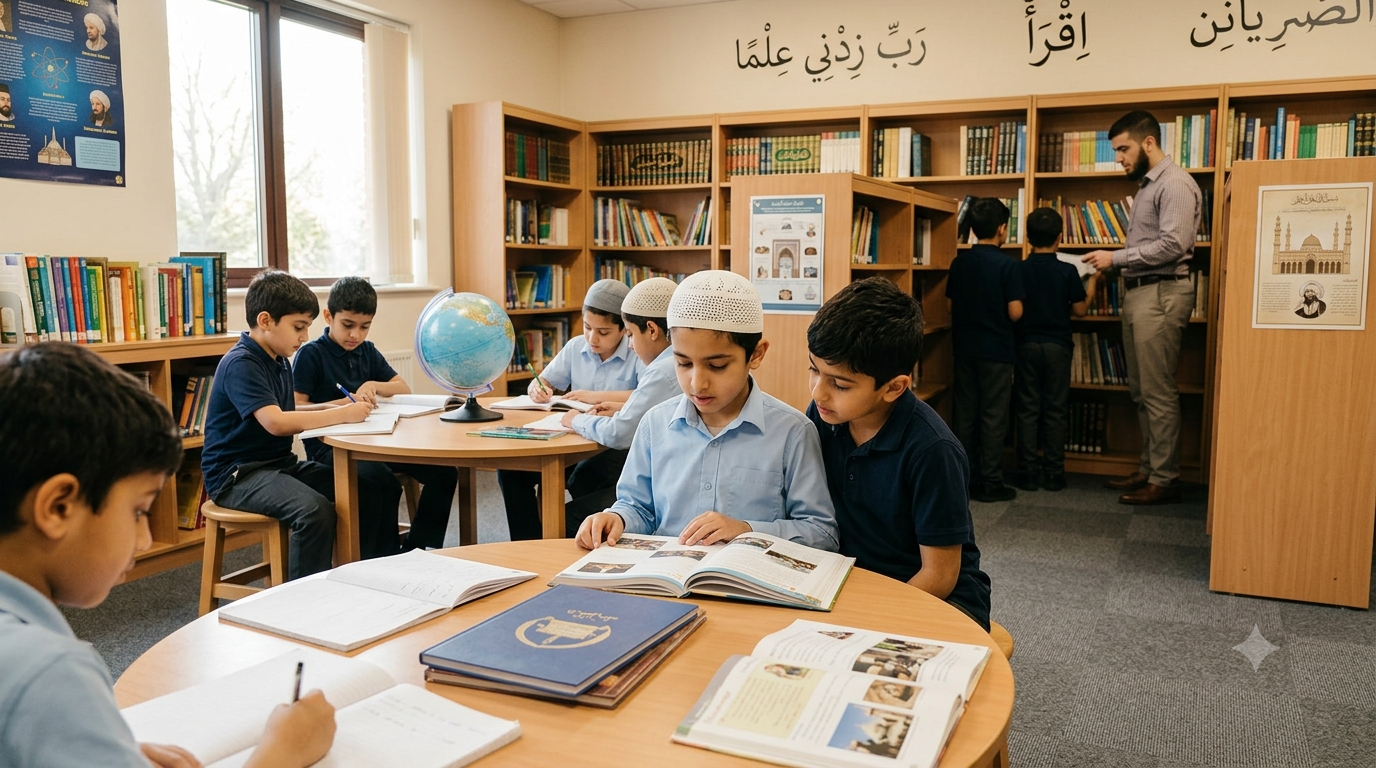
Islam places extraordinary emphasis on education, elevating knowledge-seeking to religious obligation status. The Quran’s first revelation commanding “;Read!”; established literacy and learning as foundational to Islamic civilization. Throughout history, Muslims have honored this mandate through institutional developments, scholarly traditions, and cultural values prioritizing intellectual pursuit. Understanding education’s centrality helps contemporary Muslims navigate learning choices with proper spiritual orientation.
The famous hadith “;Seeking knowledge is obligatory upon every Muslim”; (male and female) establishes educational duty without gender restriction or subject matter limitation. While some classical scholars interpreted this narrowly as religious knowledge only, majority opinion includes all beneficial learning—secular sciences alongside religious studies. This expansive view produced polymaths excelling across disciplines during Islam’s Golden Age.
Quranic verses repeatedly encourage reflection, observation, and reasoning. “;Are those who know equal to those who do not know?”; (Zumar: 9) explicitly values knowledge. Verses describing creation invite contemplation of natural phenomena—heavens, earth, mountains, rivers, plants—as signs (ayat) pointing toward divine wisdom. This epistemological framework makes scientific inquiry act of worship when properly oriented.
Prophetic model demonstrated lifelong learning despite being “;unlettered”; (ummi). He received revelation but also learned from experience, consulted knowledgeable companions, and encouraged questioning. His prayer “;Increase me in knowledge”; (Taha: 114) models humble request for continued growth regardless of existing attainment. Even prophets don’t possess complete knowledge; learning remains ongoing process.
Early Muslim community’s educational enthusiasm transformed Arabian society rapidly. Literacy rates rose as prisoners of war gained freedom by teaching Muslims to read. Mosque-based schools (kuttab) taught reading, writing, and basic calculation alongside Quran memorization. Within generations, a largely oral culture became textually grounded—enabling preservation and transmission of knowledge across centuries.
Classical Islamic civilization institutionalized education through multiple structures. Mosques served as primary learning spaces where scholars taught circles of students. Madrasas emerged as specialized institutions with curricula, libraries, and residential facilities. Libraries (bayt al-hikma in Baghdad being most famous) collected manuscripts from various civilizations. Endowment system (waqf) funded educational institutions perpetually—some operating for centuries.
Women’s education received explicit attention. Aisha’s scholarly prominence has been noted; she was merely most famous among many learned women. Mosques welcomed female students; women taught men in certain contexts; private tutoring educated girls in wealthy families. While access varied by period and region, Islamic framework never excluded women from learning—cultural restrictions sometimes did, contradicting religious principles.
Contemporary applications require balancing traditional Islamic education with modern necessities. Reading Quran with understanding (not just transliteration), learning Arabic for direct textual access, studying fiqh for practice guidance, and knowing Islamic history remain essential. Simultaneously, professional skills, scientific literacy, technological competence, and critical thinking enable effective participation in modern economy and society. Integration rather than competition between these domains serves holistic development.
Educational methods should reflect Islamic pedagogical principles: respect between teacher and student, practical application of theoretical knowledge, ethical formation alongside intellectual content, and recognition that all knowledge ultimately connects to divine source. Rote memorization has place (especially for Quran) but shouldn’t exclude understanding, questioning, and creative application.
Lifelong learning characterizes ideal Muslim approach. The Prophet specified seeking knowledge “;from cradle to grave”;—meaning education doesn’t end with formal schooling. Professional development, hobby exploration, language acquisition, and general curiosity maintenance continue growth throughout life stages. Elderly Muslims who keep learning model this commitment for younger generations.
Barriers to education—financial constraints, geographic isolation, gender discrimination, conflict disruption, and quality concerns—affect Muslim populations disproportionately in some regions. Addressing these barriers constitutes communal obligation (fard kifayah) requiring collective action. Scholarships, school construction, advocacy for equal access, and emergency education programming fulfill this duty.
The ultimate purpose of Islamic education isn’t mere information accumulation but transformation toward excellence (ihsan). Knowledge should improve character, enhance service capacity, deepen faith understanding, and increase beneficial contribution to creation. Education divorced from ethical formation risks producing knowledgeable evildoers—precisely what Islamic pedagogy seeks to prevent by integrating intellectual and moral development.