Islamic education aims primarily at character formation (tarbiyah) rather than mere information accumulation. While knowledge acquisition matters, the ultimate goal is developing Muslims of excellent character (akhlaq hasanah) who embody Quranic values in daily conduct. Understanding character-focused education helps educators, parents, and learners prioritize what truly matters in educational enterprise.
The Prophet’s mission statement explicitly included character perfection: “;I was only sent to perfect noble character traits.”; This hadith, authenticated by multiple chains, reframes Islamic education’s purpose. Revelation wasn’t given merely for theological correctness or ritual precision but for transforming human behavior toward divine ideals. Every educational endeavor should be evaluated against this standard: Does it improve character?
Quranic character education operates through multiple mechanisms. Stories of prophets and past communities provide moral exemplars and cautionary tales. Direct commands establish behavioral standards. Consequences described for various actions motivate compliance. Descriptions of paradise and hell frame eternal stakes for earthly choices. This multi-pronged approach addresses intellect, emotion, imagination, and will simultaneously.
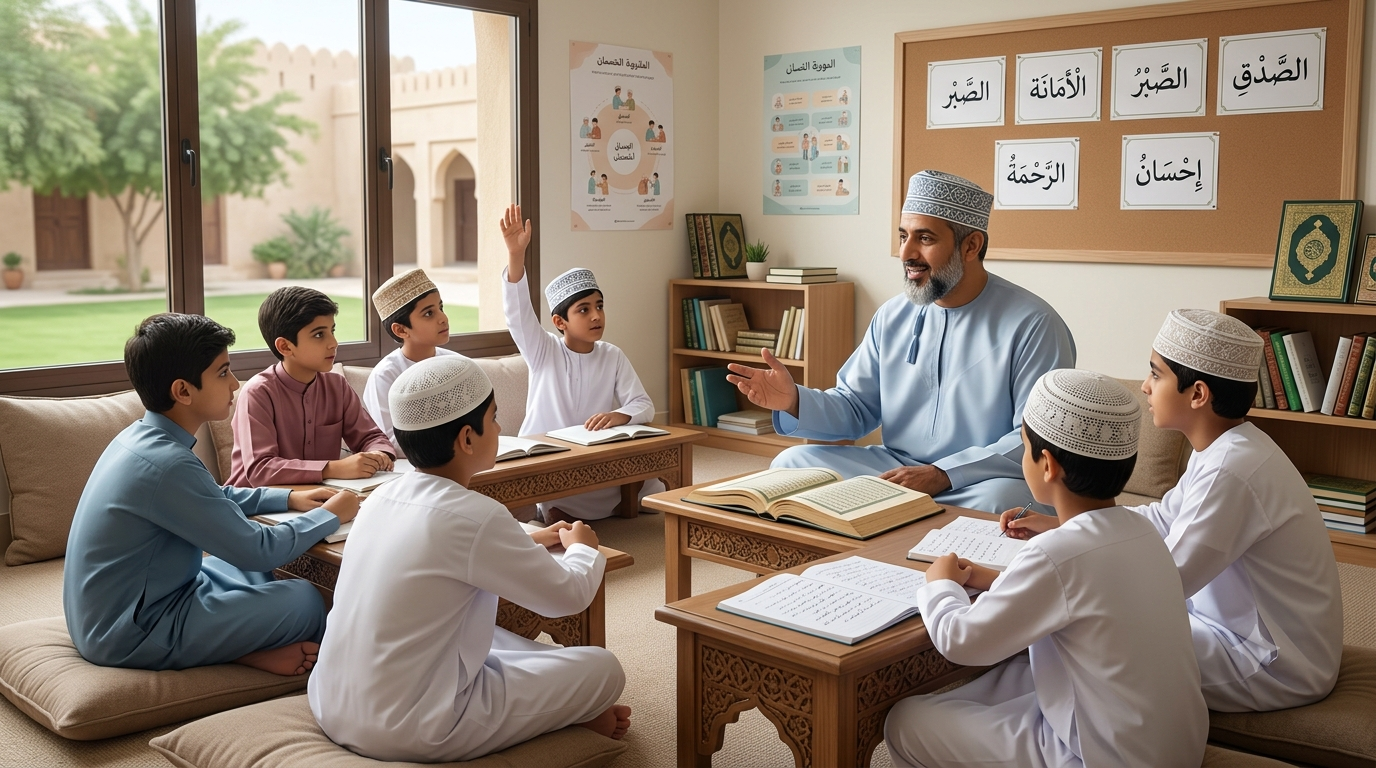
Core virtues emphasized throughout Islamic texts include: truthfulness (sidq), trustworthy (amanah), patience (sabr), gratitude (shukr), humility (tawadu’), compassion (rahmah), justice (‘adl), courage (shaja’ah), forgiveness (afw), generosity (jud), and purity (taharah). Each virtue receives extensive treatment in Quran, hadith, and scholarly elaboration. Comprehensive character education addresses this full spectrum.
Practical character training methods appear in prophetic practice. The Prophet didn’t lecture abstractly about patience—he demonstrated it under persecution. He didn’t just command generosity—he gave until nothing remained. He didn’t merely describe compassion—he responded tenderly to children, animals, and marginalized people. Experiential learning through modeling proved more effective than verbal instruction alone.
Discipline in Islamic education balances gentleness with firmness. The Prophet never hit anyone—child or adult—and prohibited facial striking entirely. Correction began with gentle reminder, progressed to stern look or word, involved temporary separation if needed, and reserved physical contact (light tap, never harsh) as absolute last resort for children over ten who persistently neglected prayer. This graduated approach respects dignity while maintaining necessary boundaries.
Environment shapes character powerfully. Schools (whether Islamic or secular) with cultures of respect, honesty, cooperation, and high expectations produce better character outcomes than those tolerating bullying, cheating, or mediocrity. Peer influence during formative years affects development significantly—making school culture crucial consideration for parents and educators.
Assessment of character development proves challenging but necessary. Standardized tests measure academic content retention poorly correlated with actual behavior. Alternative assessments include: behavioral observations over time, self-reflection journals, peer feedback, project-based evaluations revealing work ethic and integrity, and real-world problem-solving scenarios demonstrating applied values. Multiple assessment modes capture character complexity better than single instruments.
Extracurricular activities offer character education opportunities. Sports teach teamwork, perseverance, and graceful winning/losing. Service projects develop compassion and civic responsibility. Arts cultivate aesthetic sensitivity and creativity. Leadership positions build responsibility and accountability. Intentional reflection on these experiences extracts character lessons that passive participation misses.
Family role in character education exceeds any institutional contribution. Children observe parents’ honesty in small matters, patience in traffic, kindness to service workers, and anger management during conflicts. These everyday moments transmit more powerfully than formal instruction. Families wanting strong character in children must model it consistently—the most difficult but most effective educational method.
Character education faces modern obstacles. Social media models often contradict Islamic values—celebrating arrogance, materialism, superficiality, and instant gratification. Peer pressure encourages conformity
to lower standards rather than aspiration toward excellence. Academic pressure prioritizes grades over integrity (cheating becomes rationalized). Time scarcity reduces space for reflective character development. Countering these forces requires proactive, sustained effort.
Spiritual foundation strengthens character education. Connection with Allah provides motivation for right behavior when no one is watching. Prayer cultivates self-discipline. Fasting builds willpower. Charity develops generosity. Pilgrimage practice patience and equality consciousness. These worship forms aren’t separate from character development but integral components of comprehensive tarbiyah.
Measuring educational success should weight character heavily. A student with perfect grades but dishonest, arrogant, and selfish has failed educationally despite academic achievements. Conversely, a student of average academic ability but honest, kind, hardworking, and humble has succeeded substantially. Reorienting success metrics toward character would transform educational priorities meaningfully.
The ultimate character goal is attaining ihsan—excellence manifesting as worshipping Allah as though seeing Him, knowing that even if not seeing, He sees us. This God-consciousness (taqwa) produces automatically virtuous behavior flowing from internalized divine awareness rather than external constraint. When education achieves this transformation, it fulfills its highest purpose.