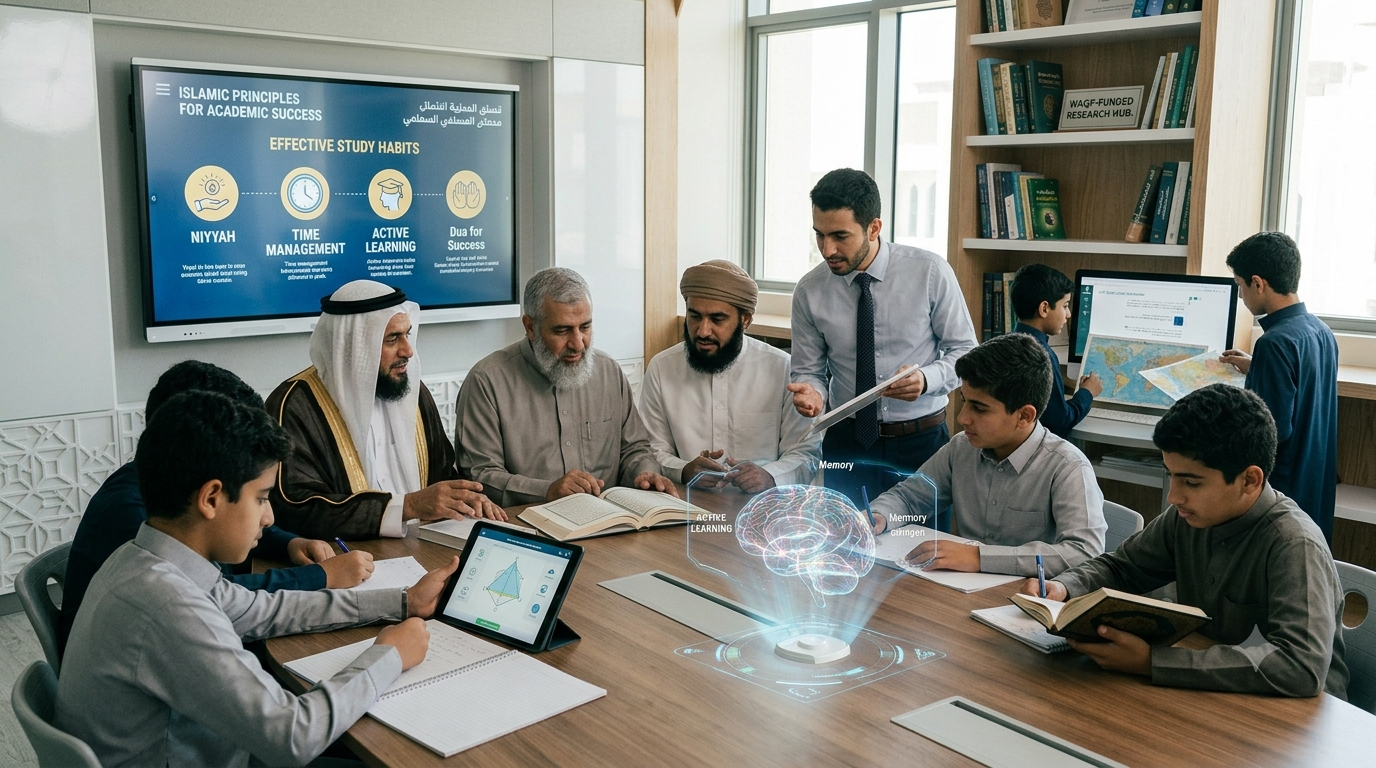

Digital technology revolutionizes education globally, and Islamic education is no exception. From Quran apps to online academies, virtual classrooms to AI-assisted learning, technology offers unprecedented opportunities for accessing Islamic knowledge while presenting challenges requiring thoughtful navigation. Understanding how to leverage digital tools effectively enhances educational possibilities while mitigating risks.
Quran applications represent perhaps most widespread Islamic technology adoption. Apps providing Arabic text with translations, audio recitation by various qaris, tafsir access, and memorization tracking tools have made Quranic study accessible to millions. Features like word-by-word analysis, repeat functions, and progress tracking support learning that previously required in-person instruction. Quality varies significantly among apps—users should seek those developed with scholarly oversight.
Online Islamic education platforms expand reach dramatically. Universities offering distance learning (Islamic Online University, Qalam Institute, others) bring structured curricula to students unable to attend physically. Lecture series on YouTube cover topics from introductory to advanced. Podcasts enable learning during commutes or exercise. This accessibility democratizes Islamic knowledge previously concentrated in specific geographic centers.
Social media serves dual educational role—both positively and problematically. Authentic scholar accounts share beneficial content; discussion groups facilitate peer learning; event announcements spread awareness. However, misinformation spreads easily, unqualified individuals claim authority, and distraction competes with learning. Critical evaluation of sources becomes essential digital literacy skill for Muslim learners.
Artificial intelligence begins impacting Islamic education. AI-powered search tools locate relevant hadiths or fatwas quickly. Language translation (still imperfect for classical Arabic) improves cross-cultural access. Personalized learning algorithms adapt content to individual progress. Chatbots answer basic questions. While AI cannot replace qualified human teachers, it augments their capabilities and scales their reach.
Virtual reality (VR) and augmented reality (AR) offer immersive learning possibilities. VR Hajj simulations prepare pilgrims before journey. AR apps overlay information on physical sites (identifying historical locations, displaying relevant texts). 3D models illustrate architectural concepts or anatomical details for relevant Islamic studies. These technologies remain emerging but show promise for experiential learning.
Digital memorization tools support Quranic preservation efforts. Apps tracking memorization progress, scheduling review based on spaced repetition algorithms, and connecting users with memorization partners address challenges of independent hifz programs. While traditional teacher-guided memorization remains gold standard, technology supplements effectively when direct instruction unavailable.
Challenges requiring attention include: screen time displacing other valuable activities, superficial engagement replacing deep study, verification difficulties for online content, loss of traditional teacher-student relationship depth, and digital divide excluding those without technology access. Balanced approach uses technology as tool rather than allowing it to dominate learning experience.
Authenticity verification becomes crucial skill. Not everything labeled “;Islamic”; online reflects sound scholarship. Checking author credentials, cross-referencing with known reliable sources, consulting local scholars about questionable content, and favoring established institutions over random channels protect against misinformation. Healthy skepticism serves Muslim learners in digital environment.
Blended learning models combine digital and traditional approaches effectively. Online content delivery frees class time for discussion, practice, and application. Flipped classroom format has students watch lectures at home then engage actively with teacher during meeting time. This hybrid approach captures technology’s efficiency while preserving irreplaceable human elements of education.
Accessibility improvements benefit diverse learners. Text-to-speech aids those with reading disabilities. Translation features assist non-Aabic speakers. Flexible scheduling accommodates working adults and parents. Mobile access reaches those without computer access. These inclusivity benefits align with Islam’s emphasis on accessible knowledge for all believers.
Developing digital literacy specifically for Islamic contexts involves: evaluating sources critically, using search effectively for Islamic topics, citing properly in Islamic academic work, participating constructively in online Islamic discussions, and protecting privacy while engaging digitally. These skills should be integrated into Islamic curricula alongside traditional content.
Future directions likely include greater AI integration, expanded VR/AR applications, blockchain verification of scholarly credentials, and global collaborative platforms connecting Muslim learners across borders. Staying current with technological developments while maintaining Islamic principles ensures Muslim education remains relevant and effective.
Technology ultimately serves educational goals—it doesn’t replace them. The aim remains developing knowledgeable, pious, capable Muslims who benefit creation. Digital tools are means toward this end, valuable when used wisely, potentially harmful when misused. Intentionality in technology use distinguishes productive from distracting application.